


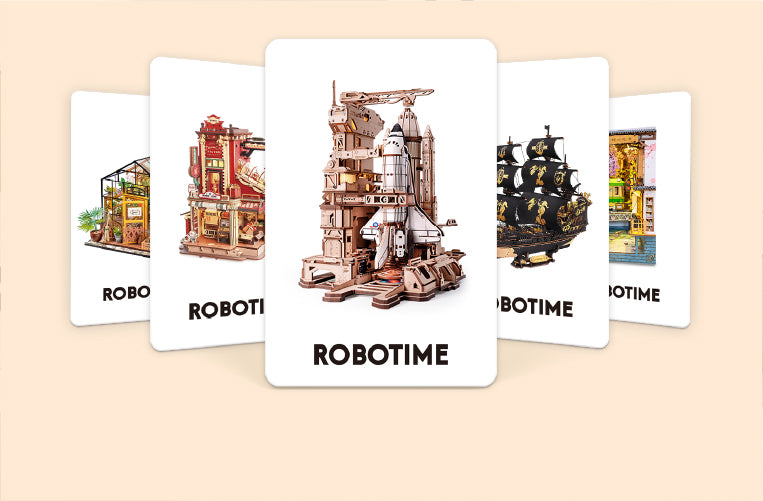


A tiny wooden gear clicks into place. You turn a crank, and suddenly dozens of precisely cut parts begin moving together in perfect rhythm. Wheels spin, pistons pump, music plays, and hidden mechanisms come alive - all without batteries, motors, or electronics. That moment is what makes mechanical wooden puzzles so addictive.
What looks like a simple hobby kit is actually a carefully engineered machine disguised as a puzzle. Behind every moving locomotive, marble run, clock, or music box is a fascinating combination of physics, precision design, and centuries-old mechanical principles.
So how do mechanical wooden puzzles actually work? Let's break down the engineering behind the build.
What Makes a Mechanical Wooden Puzzle "Mechanical"?
Not every wooden puzzle qualifies as a mechanical puzzle. Traditional puzzles focus on shape recognition or assembly, but mechanical wooden puzzles are designed to move.
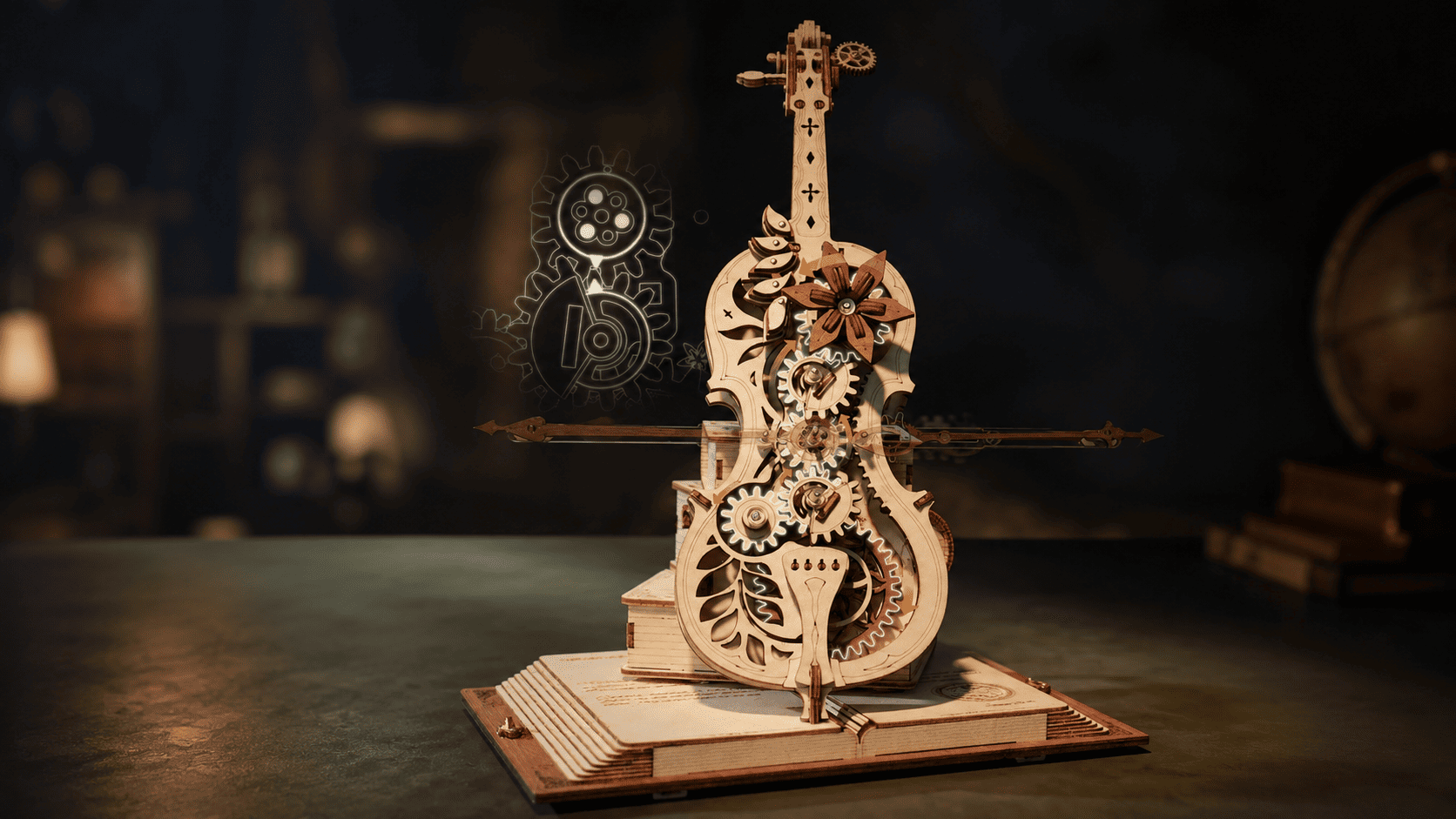
ROKR Magic Cello Mechanical Music Box 3D Wooden Puzzle
A mechanical puzzle contains functional systems that transfer energy and create motion. Instead of simply fitting together into a static display, the completed build performs an action:
- Gears rotate
- Wheels turn
- Levers activate
- Cranks transfer force
- Springs store energy
- Tracks guide moving objects
Think of them as miniature machines made from laser-cut wood.
Many modern kits recreate real-world engineering systems on a smaller scale. A mechanical clock puzzle demonstrates gear ratios and timing principles. A marble run teaches gravity and momentum. A music box reveals how rotational motion can create sound.
That's why these puzzles feel so satisfying: you're not just building a model - you're building a working mechanism.
How the Pieces Actually Fit Together: Joinery Without Glue
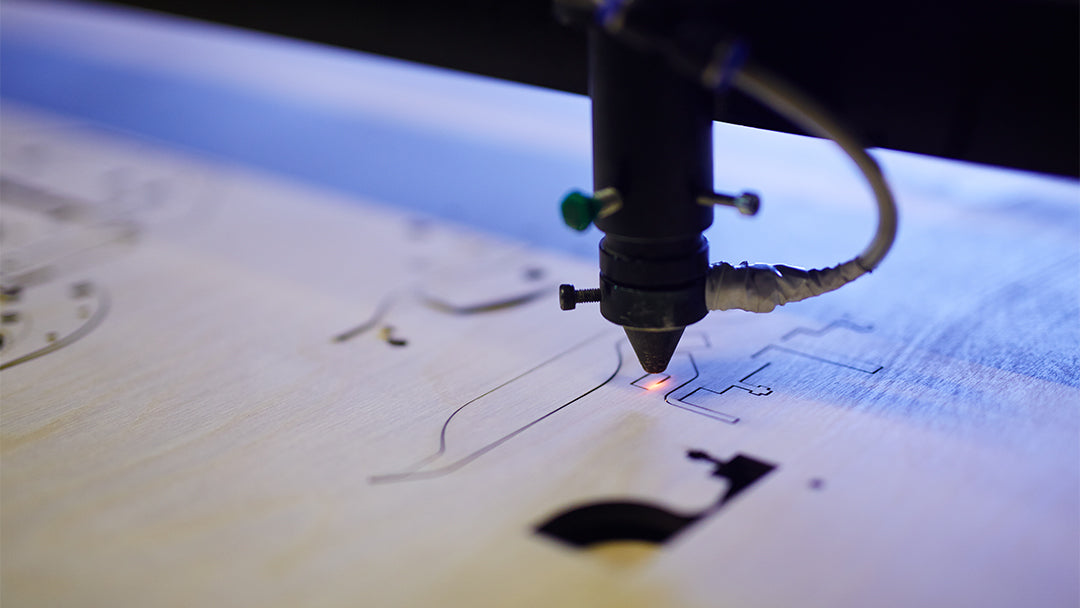
One of the most impressive engineering aspects of mechanical wooden puzzles is that many are designed to work without glue. At first glance, this seems impossible. After all, moving parts need stability and precision. So how do hundreds of tiny wooden components stay together?
Laser-Cut Accuracy
Most high-quality wooden puzzle kits use laser-cut plywood. Laser cutting allows manufacturers to create parts with extremely tight tolerances, meaning each piece is cut to fit snugly with another.
The friction between these precisely sized connections creates enough holding force to keep the structure stable.
Tab-and-Slot Engineering
Many kits use a tab-and-slot system where one piece slides securely into another. The tabs are intentionally engineered:
- Slightly wider for tension
- Flexible enough to avoid snapping
- Tight enough to reduce wobble
This creates a pressure-fit assembly system similar to techniques used in furniture making and structural engineering.
Interlocking Structural Design
Mechanical wooden puzzles often distribute stress across multiple connection points instead of relying on a single joint.
For example:
- Gear shafts may be supported from both sides
- Frames use layered reinforcement
- Rotating components are balanced to reduce strain
This keeps the mechanism aligned while allowing smooth movement over time.
The Core Mechanisms: How Motion Gets Created and Transferred
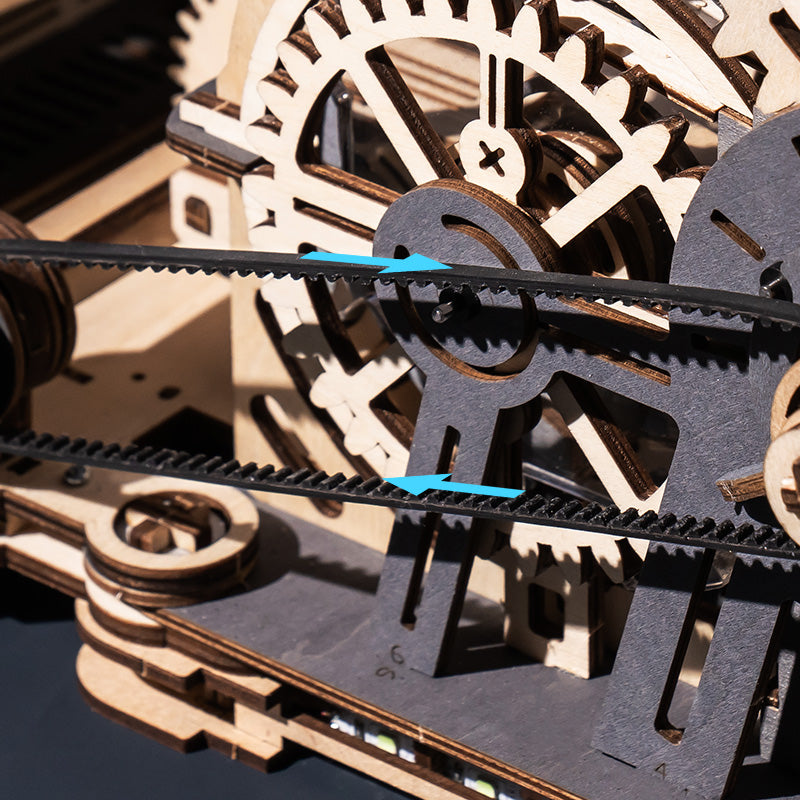
ROKR Marble Spaceport Marble Run 3D Wooden Puzzle
The true magic of mechanical wooden puzzles lies in motion transfer. Every spinning wheel or moving crank depends on mechanical systems working together efficiently.
Here are the core engineering principles behind most builds.
Gears
Gears are the heart of many mechanical wooden puzzles. They transfer rotational force from one component to another while controlling speed, torque, and direction. A large gear driving a smaller gear increases speed. A small gear driving a larger one increases torque.
Some advanced kits combine multiple gears into gear trains that synchronize entire systems. For example, in wooden locomotives or clocks, turning one crank can activate dozens of connected movements simultaneously.
This gear ratio relationship explains how rotational speed changes depending on the number of teeth on connected gears.
Rubber Band Motors
Many mechanical wooden puzzles use twisted rubber bands as a power source. When wound tightly, the rubber band stores elastic potential energy. As it unwinds, that energy transfers through gears and axles to create movement.
This simple mechanism powers cars, marble runs, airships, and music boxes. It's a clever way to create motion without electronics.
Crankshafts and Linkages
Some puzzles convert circular motion into linear movement using crankshafts and connecting rods. This principle is identical to how real steam engines and combustion engines operate.
For example:
- Rotating wheels drive pistons
- Turning handles animate figures
- Linkages synchronize moving parts
These systems help builders visualize real engineering concepts in a hands-on way.
Gravity-Powered Systems
Marble runs and kinetic tracks rely heavily on gravity. As the marble drops, gravitational potential energy converts into kinetic energy, allowing the marble to accelerate, trigger switches, and transfer momentum.
Why Wood, Specifically?
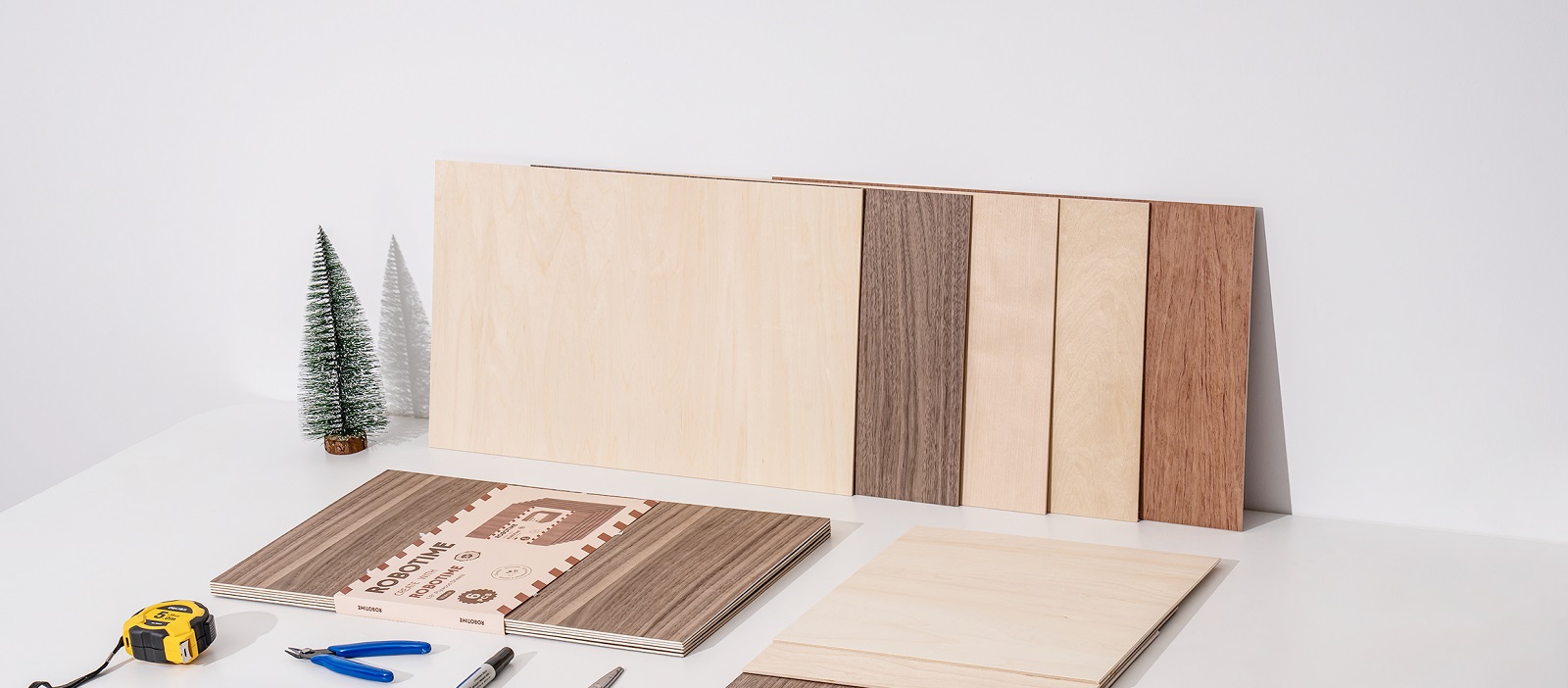
You might wonder why these intricate machines are made from wood instead of plastic or metal. The answer combines engineering, accessibility, and aesthetics.
Wood Is Lightweight but Strong
Plywood offers excellent structural stability while remaining lightweight enough for moving mechanisms. This balance reduces stress on gear teeth and rotating shafts. Lightweight components also make hand-powered motion easier.
Wood Has Natural Friction
Unlike slippery plastic, wood provides mild natural friction. This helps gears grip properly and prevents excessive slipping in mechanical systems. Controlled friction is actually beneficial in many puzzle designs because it improves stability and movement control.
Laser-Cut Wood Is Highly Precise
Modern laser cutting transforms wood into an engineering-grade material. Manufacturers can create tiny gear teeth, interlocking joints, and smooth racks with remarkable consistency. That precision is what allows mechanical wooden puzzles to function reliably without glue or metal fasteners.
Wood Enhances the Building Experience
Wood simply feels satisfying to work with. The texture, smell, and visual warmth create a more immersive hands-on experience than plastic kits. Builders often enjoy the craftsmanship aspect just as much as the engineering.
That blend of art and mechanics is part of what makes these puzzles so popular among both adults and kids.
Common Build Problems (And the Engineering Reason Behind Each)
Gears Won't Turn Smoothly
Engineering reason: Misalignment or excessive friction. If a gear sits slightly tilted or compressed too tightly, the teeth cannot mesh properly. This creates resistance and uneven motion.
Fix: Double-check axle alignment and avoid forcing pieces together too tightly.
Parts Keep Falling Out
Engineering reason: Insufficient tension fit. Wood expands and contracts slightly depending on humidity. In dry conditions, some joints may loosen.
Fix: Carefully re-seat the connection or apply a tiny amount of wax to stabilize movement without damaging the mechanism.
Rubber Band Motor Loses Power Quickly
Engineering reason: Energy loss through friction. If too many moving parts create resistance, the stored elastic energy dissipates before completing the intended motion.
Fix: Inspect moving parts for rubbing or binding.
Marble Runs Stall Midway
Engineering reason: Poor momentum transfer. Even slight track misalignments can slow the marble enough to stop movement entirely.
Fix: Ensure tracks are level and firmly connected.
Wooden Pieces Snap During Assembly
Engineering reason: Stress concentration. Thin wooden sections can crack if force is applied unevenly across the grain.
Fix: Remove pieces gently from the board and avoid twisting during installation.
FAQs
How long does it take to build a mechanical wooden puzzle?
Build times vary depending on complexity. Beginner-friendly kits may take 1-3 hours, while advanced mechanical models can require 8-15 hours or more. Intricate builds like marble runs, clocks, and locomotives typically take longer because they contain more moving parts and alignment steps.
Do mechanical wooden puzzles require glue?
Many modern mechanical wooden puzzles are designed to assemble without glue using precision-fit joints and interlocking parts. However, some advanced models may optionally recommend glue for additional long-term durability.
Can mechanical wooden puzzles be repaired if something breaks?
Yes, in many cases they can. Replacement parts are often available from manufacturers, and small issues like loose joints or stuck gears can usually be fixed through realignment or part replacement. Because the mechanisms are visible and modular, repairs are often easier than with sealed electronic devices.
Are mechanical wooden puzzles educational for kids?
Absolutely. Mechanical wooden puzzles teach engineering basics, spatial reasoning, and mechanical motion principles. They're particularly valuable because they turn abstract STEM concepts into hands-on experiences kids can physically see and interact with.


Quincy Ihendeson
Quincy is an experienced writer, passionate about creating engaging blogs. She has been researching and crafting high-quality content since 2023. She currently contributes to Robotime, sharing her DIY journey and stories.
Robotime is a creative lifestyle company dedicated to designing and developing 3D puzzles, toys, and wooden handicrafts. Subscribe to learn more.
Enjoy Robotime building guides and creative inspiration?
Add Robotime as a Preferred Source on Google to see more of our latest stories in Search.
 Add Robotime to your Preferred Sources
Quincy Ihendeson
Quincy is an experienced writer, passionate about creating engaging blogs. She has been researching and crafting high-quality content since 2023. She currently contributes to Robotime, sharing her DIY journey and stories.
Robotime is a creative lifestyle company dedicated to designing and developing 3D puzzles, toys, and wooden handicrafts. Subscribe to learn more.


Leave a comment
This site is protected by hCaptcha and the hCaptcha Privacy Policy and Terms of Service apply.