




A miniature cabin can feel finished when every piece is in place. It begins to feel lived in when its maker decides what the rooms still need.
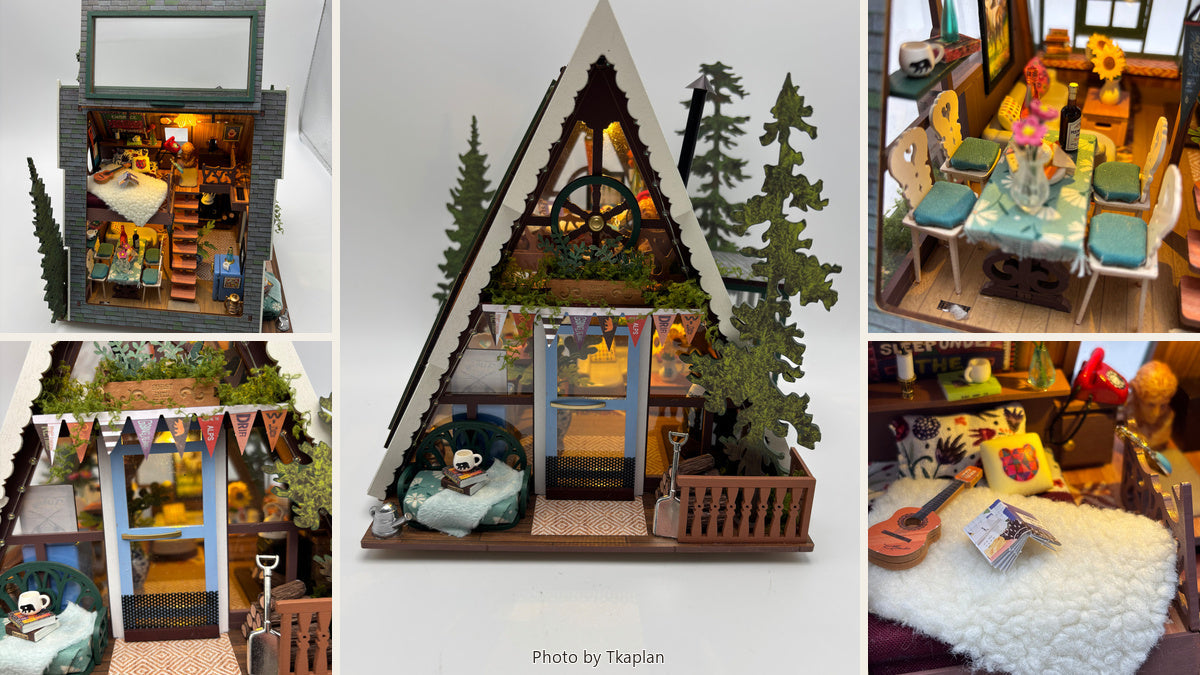
For Robotime Community member Tina, known as Tkaplan, that meant treating the Rolife A-Frame Cabin as a home with its own occupants, routines and comforts. She repainted much of the interior, added small everyday objects and—most importantly—gave the upstairs bedroom a second light.
The result shows how thoughtful customization can deepen a miniature’s story without overwhelming its original architecture.
Start with the way the room should feel
The A-Frame Cabin already creates a strong sense of place through its steep roof, tall windows, woodland planting and two-level interior. Tina’s changes did not replace that identity. They made the cabin feel warmer, calmer and more personal.
One of her clearest choices was repainting the original pink sofa beige. The quieter tone sits naturally beside the wood stairs and creamy bedding, allowing the plants, books and colorful bunting to provide the accents. She also repainted the kitchen table and chairs, refrigerator, front door, window trim and the exposed edges of many pieces.

Let one palette connect the whole cabin
Repainting several elements can easily make a build feel fragmented. Tina avoided that by repeating a compact palette: warm brown wood, soft beige textiles, muted blue-green furniture and small red or yellow accents.
The same principle carries outdoors. Added vines extend the cabin’s woodland character, while fabric on the front loveseat makes the seating area feel related to the softened interior. Painting visible edges also helps individual parts read as finished furniture and trim rather than separate assembly pieces.


Use lighting as part of the storytelling
The addition Tina was proudest of was a second light above the loft bed. It is a practical detail inside the miniature’s fiction: the upstairs space now reads as somewhere a person could settle in with a book or relax at the end of the day.
She also considered the wiring as part of the design. Hollow square tubing was used to conceal the added wire, then painted brown so it would blend with the wood beam behind it. That small finishing step makes the light appear integrated rather than added as an afterthought.
A useful customization principle: when adding a functional feature, plan both the feature and the route that supports it. Hidden wires, clean joins and matching finishes are what make an alteration feel native to the scene.


Add tiny signatures of everyday life
The cabin’s personality becomes clearest in the smallest objects. Tina hand-sewed her first miniature bed pillow, added a telephone and purse, and made food from clay for the dining table. She also chose to leave out a vase planned for the shelf above the front door because it did not feel right for her version of the room.
That last decision matters. Customization is not only about adding more. Editing an object out can create better balance or make a scene more believable to its maker.


Four ideas to try in your own miniature
1. Repaint for atmosphere, not novelty
Choose a small palette that supports the setting, then repeat it across furniture, trim and textiles.
2. Improve one everyday function
Ask what a miniature resident might need: another lamp, a place to set a bag, food on the table or a softer seat.
3. Hide the evidence of the modification
Plan how wires, seams and raw edges will be concealed or finished before installing the new detail.
4. Make one thing by hand
A pillow, clay snack, plant or paper object can become the detail that most clearly identifies the build as yours.
A cabin with its own rhythm
Tina described the project simply: “I had so much fun.” That sense of enjoyment is visible in the finished scene—not through one oversized transformation, but through a succession of attentive choices.
Her version of the A-Frame Cabin demonstrates that personalization can be both imaginative and practical. A calmer sofa color shapes the mood. An extra light changes how the loft functions. A stitched pillow and clay meal suggest someone has just stepped away.
Read Tina’s original Robotime Community post, or explore the Rolife A-Frame Cabin DG181 as a starting point for your own woodland retreat.

Creative build and photography by Robotime Community member Tkaplan (Tina). This project includes personal modifications and additional materials that are not included with the original kit.


Robotime Creative Team
As Robotime's earliest audience and testers, they start from user needs and are dedicated to sharing stories and insights about the brand and its products.
Robotime is a creative lifestyle company dedicated to designing and developing 3D puzzles, toys, and wooden handicrafts. Subscribe to learn more.
Enjoy Robotime building guides and creative inspiration?
Add Robotime as a Preferred Source on Google to see more of our latest stories in Search.
 Add Robotime to your Preferred Sources
Robotime Creative Team
As Robotime's earliest audience and testers, they start from user needs and are dedicated to sharing stories and insights about the brand and its products.
Robotime is a creative lifestyle company dedicated to designing and developing 3D puzzles, toys, and wooden handicrafts. Subscribe to learn more.


Leave a comment
This site is protected by hCaptcha and the hCaptcha Privacy Policy and Terms of Service apply.