




A miniature room can change completely when its maker begins with a feeling rather than a color chart. A softer palette might become moodier. Bright surfaces might take on the patina of age. Familiar furniture can suddenly feel as if it belongs to another place and time.
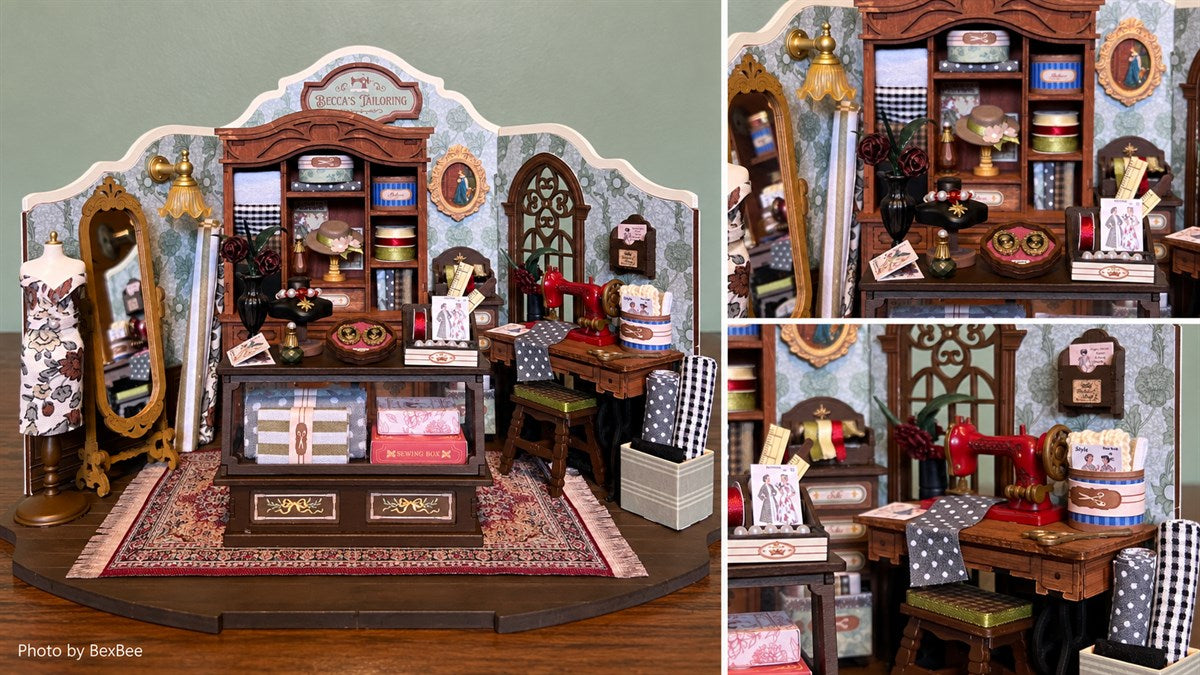
That was the creative direction behind BexBee’s first customized build. After receiving Rolife Elsa’s Tailoring as a birthday gift, she reimagined its romantic tailoring studio through her own dark academia style—and designed it to feel at home in her green sewing room.
The result is not simply a new colorway. It is a carefully coordinated miniature in which wallpaper, wood tones, textiles, printed details and tiny objects all contribute to the same story.
Begin with the world you want to create
Strong customization often starts before the first surface is painted. Instead of changing individual pieces one by one, BexBee began with a clear atmosphere: a darker, bookish tailoring studio with an elegant vintage character.
That direction gave each later decision a purpose. Deep brown furniture replaced the lighter feel of the original palette. Muted green wallpaper echoed the real sewing room where the miniature would be displayed. Black, burgundy, brass and patterned textiles added contrast without breaking the restrained mood.
Even the shop sign became part of the transformation. “Elsa’s Tailoring” turned into “Becca’s Tailoring,” making the studio feel less like a finished design to reproduce and more like a personal place with its own owner.

Give every detail the same visual language
A convincing miniature does not depend on one dramatic change. It depends on many small choices that appear to belong together.
BexBee redesigned several printed elements digitally, creating new graphics that suited the room’s darker palette. She also adapted a historic William Morris pattern found through the Art Institute of Chicago’s collection into wallpaper. The botanical repeat gives the walls quiet detail while allowing the cabinetry, fabrics and brass-colored accents to remain visually prominent.
The same language continues across the room. Checked and dotted fabrics sit beside illustrated hatboxes, fashion cards and sewing boxes. Warm wood connects the wardrobe, display counter and worktable. The red sewing machine becomes a concentrated accent rather than an isolated bright object.


Use aging to make the story believable
Dark academia is not created by dark paint alone. Its character comes from the suggestion that objects have been collected, handled and kept for years.
BexBee painted the build and experimented with aging the surfaces. That treatment softens the newness of the materials and helps the cabinetry, mirror and worktable feel as though they share a history. Brass-toned lighting and decorative elements introduce warmth, while the deep wood finish provides a stable backdrop for the smaller items.
The lesson is useful for many miniature styles: weathering works best when it supports the setting. A little variation around edges, hardware and frequently handled surfaces can suggest age without making every object look distressed.
Design one memorable signature piece
The dress on the mannequin is the clearest expression of BexBee’s personal point of view. Its patterned fabric belongs to the room’s palette, but its silhouette gives the scene a focal point and makes the fictional tailoring studio feel active.
BexBee developed the design as she worked rather than following a predetermined template. She imagined that the finished dress could even work at full scale—a playful idea that connects the miniature studio to real fashion design.

One signature feature can give a customized build its identity. It might be a handmade garment, a new sign, an altered piece of furniture or a tiny object connected to the maker’s life. The strongest choice is often the one that could only belong in that particular version of the model.
Four ideas to borrow for your own miniature
1. Choose the mood before the paint
Describe the finished world in a few words before selecting colors. A phrase such as “quiet vintage library” or “bright coastal workshop” can help you judge whether later choices belong together.
2. Repeat colors and materials
Use a small set of tones across furniture, textiles and printed details. Repetition creates cohesion even when the objects themselves are different.
3. Treat printables as part of the architecture
Wallpaper, labels, boxes and miniature artwork can change how a room reads. Test scale and color on ordinary paper before committing to the final print.
4. Create one focal point
Give the eye somewhere to land. A distinctive dress, dramatic cabinet, illuminated sign or handmade accessory can become the detail readers remember.
Make the miniature belong to you
This was only BexBee’s second miniature build and her first customization, yet the project shows the value of committing to a clear creative idea. Digital design, painting, aging and spontaneous problem-solving all supported the same imagined place.
“It was an absolute blast, and I learned so much along the way,” BexBee wrote in her original Community post.
A kit can provide the room, furniture and starting story. Personalization begins when you decide who might live or work there—and what that world should feel like.

Creative build and photography by Robotime Community member BexBee. This project contains personal modifications and additional materials that are not included with the original Rolife Elsa’s Tailoring kit.


Robotime Creative Team
As Robotime's earliest audience and testers, they start from user needs and are dedicated to sharing stories and insights about the brand and its products.
Robotime is a creative lifestyle company dedicated to designing and developing 3D puzzles, toys, and wooden handicrafts. Subscribe to learn more.
Enjoy Robotime building guides and creative inspiration?
Add Robotime as a Preferred Source on Google to see more of our latest stories in Search.
 Add Robotime to your Preferred Sources
Robotime Creative Team
As Robotime's earliest audience and testers, they start from user needs and are dedicated to sharing stories and insights about the brand and its products.
Robotime is a creative lifestyle company dedicated to designing and developing 3D puzzles, toys, and wooden handicrafts. Subscribe to learn more.


Leave a comment
This site is protected by hCaptcha and the hCaptcha Privacy Policy and Terms of Service apply.