


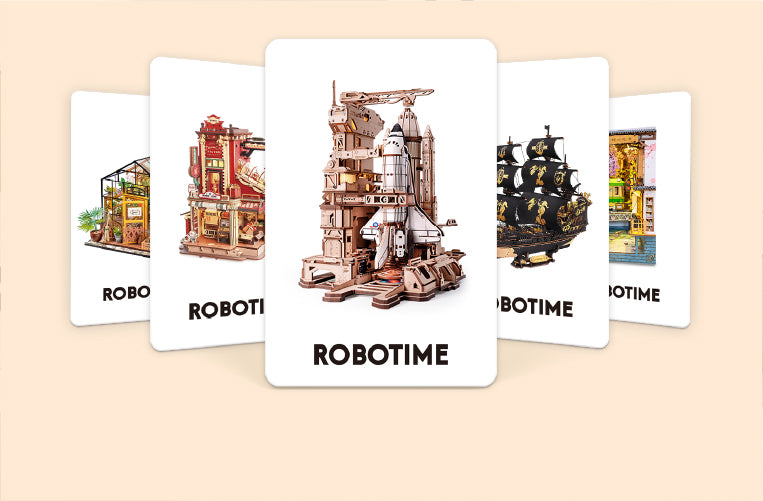


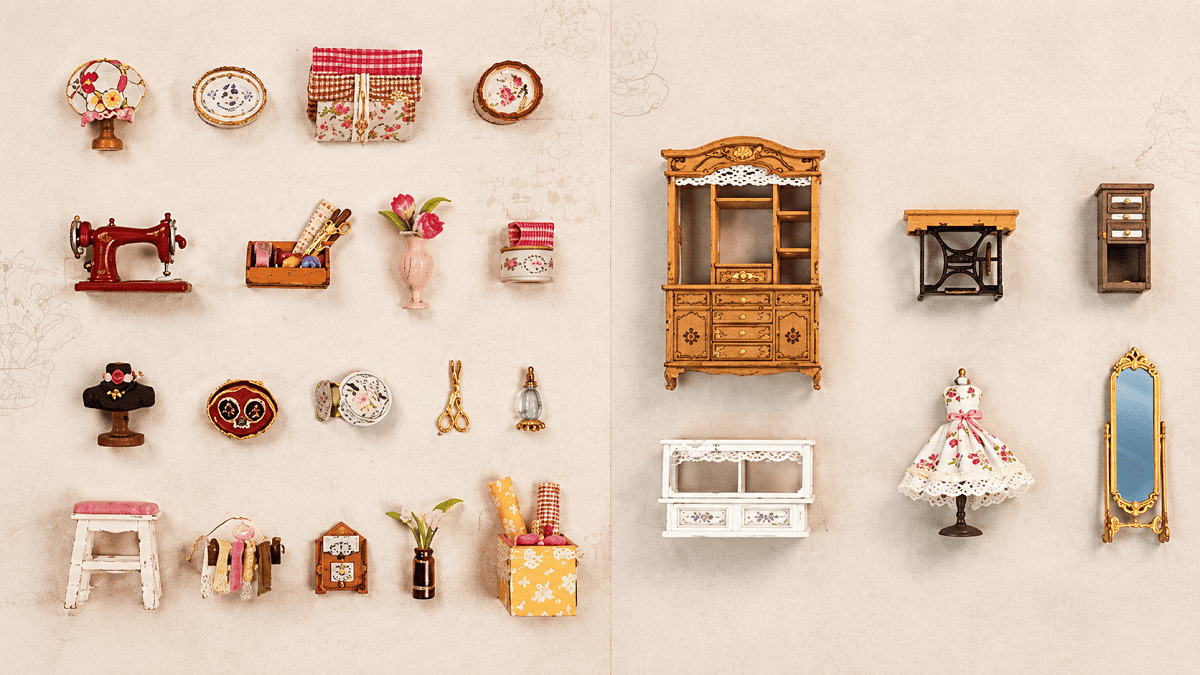
A finished miniature gets all the attention. People notice the glowing windows, the tiny furniture, the little world sitting on a shelf. What they almost never see is the part that does the work: the quiet hour or two you spent placing those pieces one at a time.
That is the odd thing about this hobby. The object is nice. The process is what changes your evening. Plenty of people pick up a kit expecting a craft project and walk away with something closer to a reset button, which is exactly why miniature buildings keep showing up on lists of relaxing hobbies for adults.
This piece looks at why that happens, what the science actually says, and how to set yourself up so the build stays soothing instead of fiddly. If you want to see what is out there first, the full range lives at Robotime.
What Makes Miniature Building So Relaxing

There is a specific reason this hobby settles people, and it goes deeper than "doing something with your hands." When you are fitting a miniature staircase or threading a wire of fairy lights, your attention narrows to one small task with a clear answer. There is a right place for the piece, and you find it. That kind of focus crowds out the mental noise that usually fills a quiet evening: the unanswered emails, the running to-do list, the low background worry. Psychologists call this absorbed, time-disappearing state flow, a concept introduced by psychologist Mihály Csíkszentmihályi, and it is the same mental gear people describe reaching during meditation.
The repetition helps too. Gluing, sanding, placing, repeating: these small rhythmic motions calm you down in much the same way knitting or kneading dough does. Research from University College London's MARCH network has linked hands-on creative activity to lower levels of cortisol, the body's main stress hormone. So if a kit leaves you feeling unwound, you are not imagining it. Your body is responding to it.
Why Therapeutic Hobbies Work on the Brain
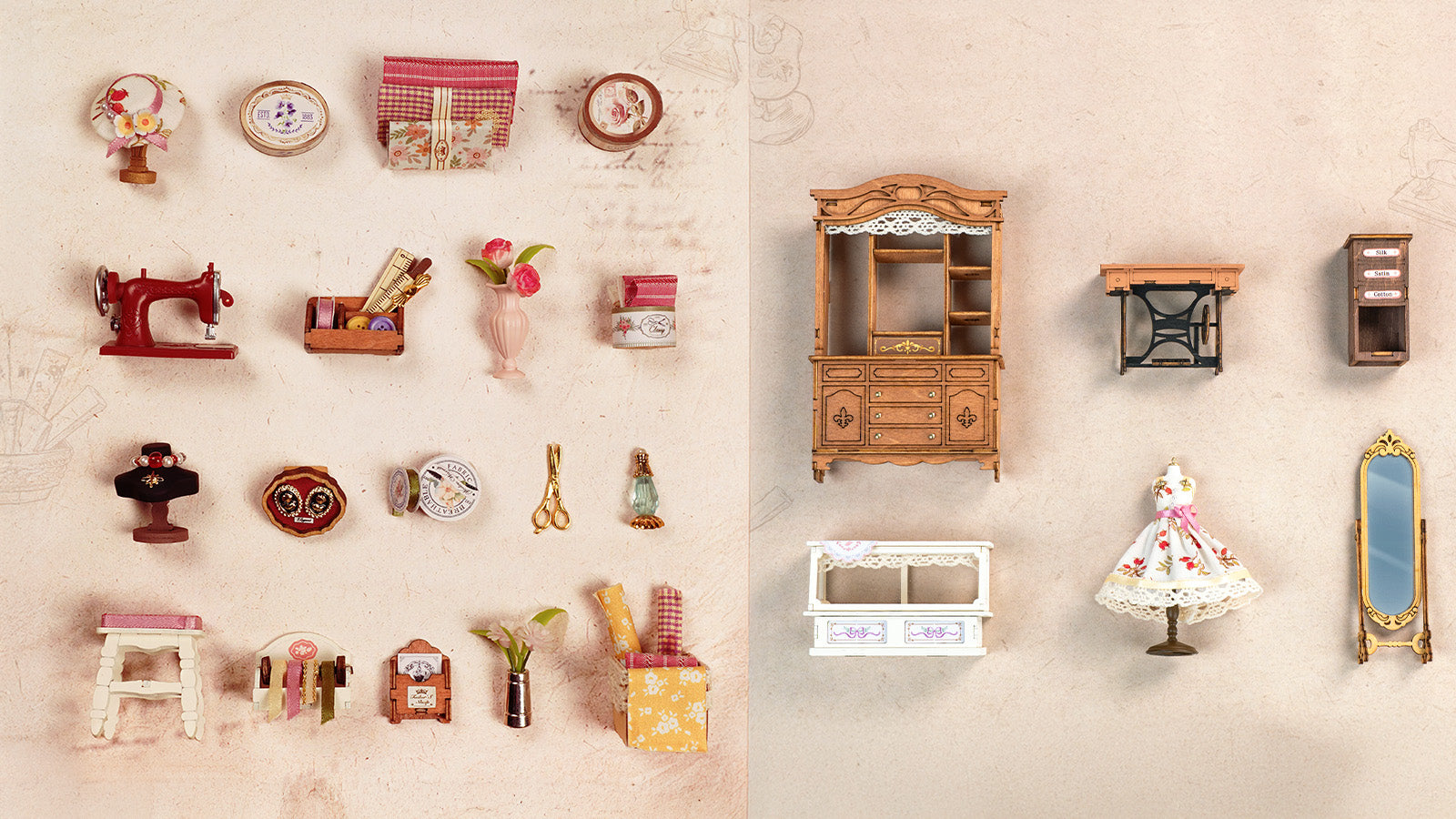
Most therapeutic hobbies share a handful of traits, and miniature building hits all of them. The first is steady, visible progress. Every piece you add is proof the thing is getting built, and that small repeated payoff nudges your brain to release dopamine, the chemical tied to motivation and reward. It is part of why finishing a section feels quietly satisfying rather than just done.
The second is an achievable challenge. A good kit is hard enough to hold your attention but not so hard it frustrates you, which is the exact balance that produces flow. A 2016 study published in the Journal of Positive Psychology found that people who spent time on small, everyday creative tasks reported feeling more enthusiastic the following day. Building a tiny room is about as everyday-creative as it gets.
None of this turns a craft kit into medical treatment, and it is not a replacement for real support if you are struggling. But as a low-pressure way to decompress after work, miniature hobbies earn the "therapeutic" label honestly.
What Sets Miniature Building Apart From Other Relaxing Hobbies

Rolife Baking Kitchen DIY Miniature House DG172
Lots of crafts relax people. Miniatures have a few advantages that make them especially easy to fall into. Everything comes in the box. No shopping trip, no guessing which supplies you need, no blank canvas staring back at you. You open the kit, follow the steps, and start. For anyone who likes the idea of crafting but freezes at the "where do I even begin" stage, that removes the hardest part before it can stop you.
The scale forces you to slow down. You physically cannot rush a two-centimeter shutter into place. The work sets the pace, and the pace happens to be slow, which is the entire point.
And the finish line is real. Unlike a hobby you could tinker with forever, a kit is done when it is done. You end up with a small, lit-up world you can set on a shelf, the kind of object that quietly reminds you that you made it. That mix of contained effort and a keepsake at the end is rare among relaxing hobbies.
How to Set Yourself Up for a Calmer Build

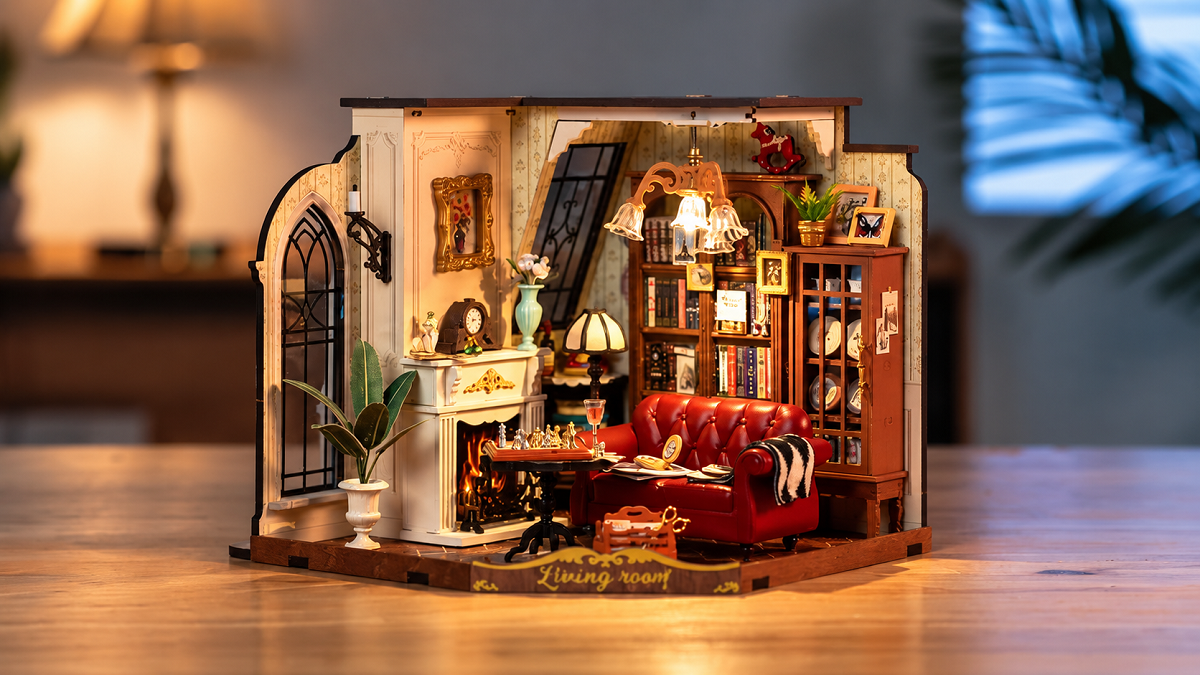
Rolife Warm Dining Room DIY Miniature House DW015B
A few small choices decide whether a kit relaxes you or annoys you. Match the kit to your patience, not your ego. If this is your first build, start with a self-contained scene rather than a 300-piece showpiece. The DIY miniature room kits are a sensible entry point: a single bedroom, library, or cafe with a manageable step count and a satisfying finish. Once you have one under your belt, the larger DIY miniature houses give you more rooms, more detail, and a longer build to sink into over a weekend.
Clear a real space and light it well. Good lighting cuts down on squinting and the small frustrations that come with it. A tray or mat keeps the tiny pieces from wandering off, which is the fastest way to break the calm you came for.
Split it across a few sittings. There is no prize for finishing in one marathon. An hour at a time keeps the build firmly in the relaxing zone and gives you something to look forward to the next evening.
Let it be imperfect. A slightly crooked picture frame will not be visible from across the room, and chasing perfection turns a soothing hobby into a stressful one. The goal is calm, not a flawless display piece.
FAQs
1. Are miniature kits really relaxing, or just fiddly?
For most people they relax more than they frustrate, as long as the difficulty matches their experience. The narrow focus and repetitive motions are what produce the calm, so the trick is starting with a kit you can finish comfortably.
2. How long does a miniature kit take to build?
A simple room scene usually takes a few hours, while larger detailed houses can run a full weekend. Spreading the build across two or three sittings tends to keep it relaxing rather than tiring.
3. Do I need experience or special skills to start?
No. Most kits come with everything you need and step-by-step instructions, so beginners can complete their first build without any prior crafting background. Starting small builds confidence quickly.
4. Can building miniatures actually help with stress?
Hands-on creative activity is associated with lower stress and a meditative flow state, so many people use it to wind down. It is a healthy form of self-care, though it is not a substitute for professional help if you are dealing with serious anxiety or depression.
5. What is the best first kit for relaxation?
A single-room kit is the easiest starting point because it gives you a clear finish without an overwhelming piece count. You can move up to a full miniature house once you know you enjoy the process.
6. Is miniature building a good hobby for adults?
Yes. The level of detail, the focus it requires, and the finished display quality make it firmly an adult-friendly hobby, and it is a popular screen-free way to relax in the evenings.
Final Thoughts
The appeal of miniature buildings is not really miniature. It is the hour you disappear into it: the narrow focus, the small wins, the quiet that settles in while your hands stay busy. Among all the relaxing hobbies competing for your evenings, few hand you that kind of calm and a finished keepsake at the end.
If you have been looking for a way to unplug that does not involve another screen, this is an easy one to try. Browse the kits at Robotime and start with whatever scene makes you want to slow down and build it. The first piece is usually the only hard part.


Priyanka Sharma
Priyanka is a content writer and SEO specialist with hands-on expertise in crafting blog posts, web copy, articles, product descriptions, newsletters, and ghostwritten content that ranks and resonates.
Robotime is a creative lifestyle company dedicated to designing and developing 3D puzzles, toys, and wooden handicrafts. Subscribe to learn more.
Enjoy Robotime building guides and creative inspiration?
Add Robotime as a Preferred Source on Google to see more of our latest stories in Search.
 Add Robotime to your Preferred Sources
Priyanka Sharma
Priyanka is a content writer and SEO specialist with hands-on expertise in crafting blog posts, web copy, articles, product descriptions, newsletters, and ghostwritten content that ranks and resonates.
Robotime is a creative lifestyle company dedicated to designing and developing 3D puzzles, toys, and wooden handicrafts. Subscribe to learn more.




Leave a comment
This site is protected by hCaptcha and the hCaptcha Privacy Policy and Terms of Service apply.