


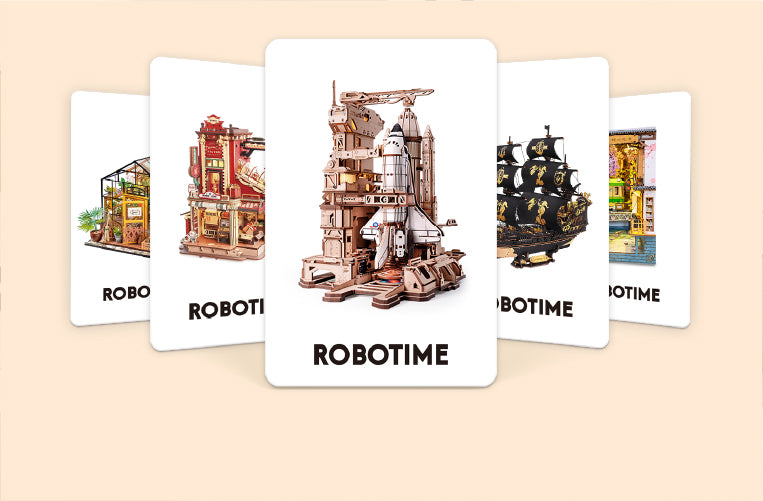



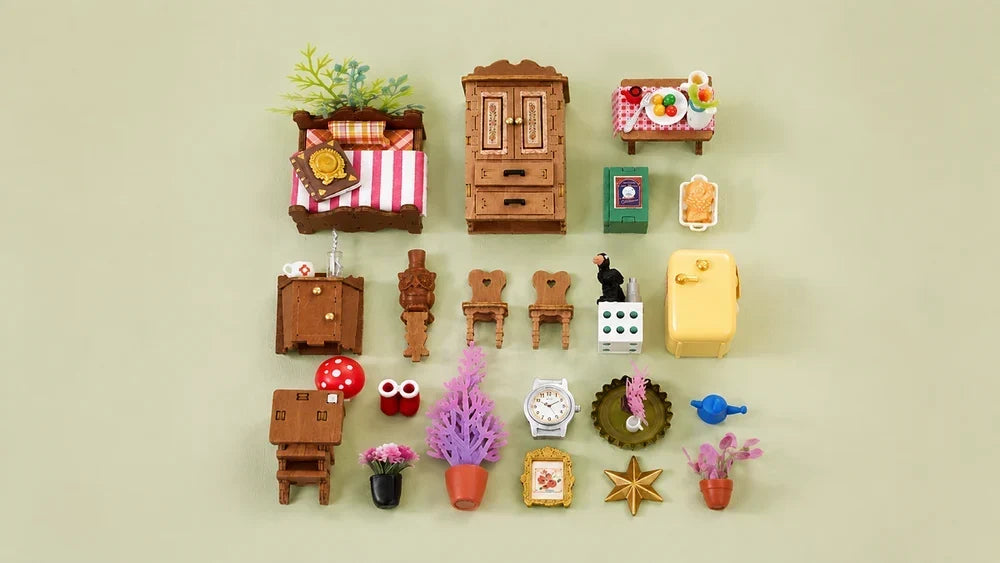
In a miniature scene, the smallest details often make the biggest difference. Tiny flowers, pastries, books, furniture, lamps and garden tools help establish the setting, show how the space is used and give the finished display its personality.
These miniature items can be used to decorate a dollhouse, complete a diorama or inspire an entirely new craft project. Some builders enjoy collecting and arranging individual accessories, while others prefer a complete DIY miniature house kit in which the structure, furniture and decorations are designed to work together.
Below, we explore some of the most popular miniature items for crafts, the scenes they suit and what to consider when choosing them. We have also matched these themes with several Rolife DIY miniature house kits available from Robotime.
In this article:
Popular Miniature Items for Crafts
Miniature Flowers and Potted Plants

Flowers and plants are among the most versatile miniature items. Tiny bouquets, potted plants, vines, flower baskets and plant stands can add color and texture to an otherwise plain scene. They also help soften shelves, counters and corners, making a miniature room feel more natural and lived in.
Botanical details work especially well in flower shops, greenhouses, garden rooms, cafés and home interiors. A single vase can act as a small accent, while a collection of plants can become the main feature of an entire miniature scene.
Miniature Food and Drinks

Miniature cakes, bread, pastries, fruit, coffee cups and tea sets can quickly communicate what happens in a space. A counter filled with desserts suggests a bakery, while cups, teapots and serving trays help establish the atmosphere of a café or tea room.
Food and drink miniatures are useful for visual storytelling because they represent familiar objects and everyday experiences. They can be arranged on tables, displayed behind counters or used as small finishing details that make a scene feel active and welcoming.
Miniature Furniture

Tables, chairs, sofas, shelves, cabinets and desks form the foundation of many miniature interiors. They define how the room is organized and help establish whether the space is a study, living room, shop, café or creative workspace.
Furniture placement also affects the visual balance of a miniature scene. A desk can create a focal point, while shelves and cabinets make use of vertical space and provide places to display smaller accessories. Choosing pieces with compatible proportions helps the finished setting feel cohesive.
Miniature Books and Stationery
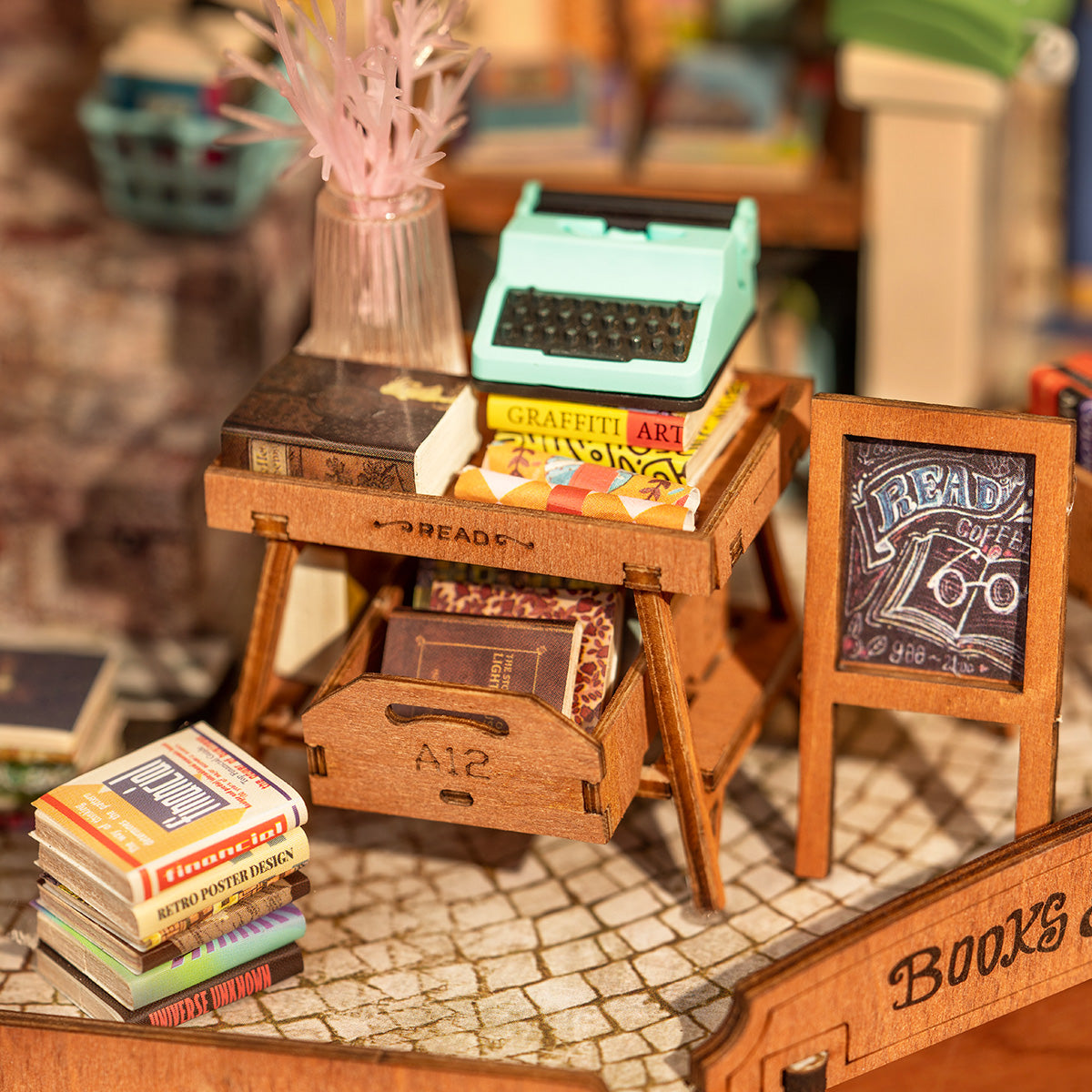
Tiny books, notebooks, letters, posters and desk accessories are popular choices for libraries, studies, bookshops and reading corners. They help create a sense of activity and personality without taking up much space.
Books can be stacked on tables, arranged across shelves or left open as part of a storytelling detail. Combined with a desk, chair and lamp, they can turn a simple corner into a recognizable study or miniature library.
Miniature Lighting

Miniature table lamps, pendant lights, wall lights and illuminated shop signs can change the mood of a scene. Warm lighting often makes a room feel cosy, while focused lighting can draw attention to a counter, workbench or display shelf.
If you are adding lighting to an existing project, consider where the wires, battery box and switch will be placed before assembling the scene. In a complete DIY kit, these components are usually planned as part of the overall structure.
Miniature Shop and Café Accessories

Display counters, menu boards, cash registers, signs, crates and product shelves help turn a general room into a recognizable shop or café. These details do more than decorate the space: they explain what is sold there and how the miniature world is used.
A florist can be defined by bouquets and plant shelves, while a café comes to life through menus, serving trays and food displays. Builders can combine these items to create anything from a traditional storefront to a modern specialty shop.
Miniature Garden Accessories
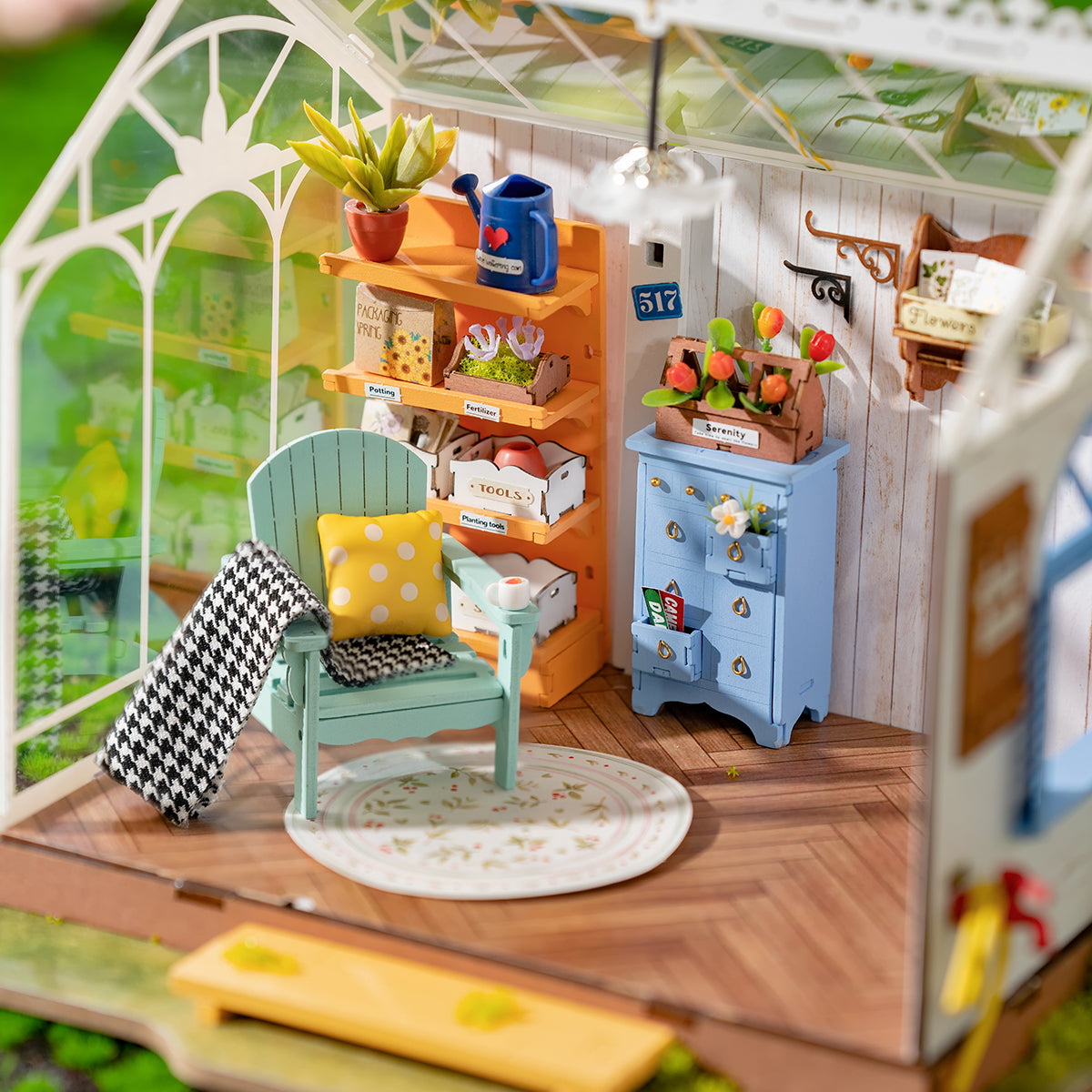
Watering cans, plant pots, gardening tools, fences, benches and greenhouse shelves are useful for outdoor and nature-inspired scenes. Unlike flowers and plants, which provide the botanical elements, garden accessories show how the space is cared for and used.
These pieces work well in greenhouses, flower shops, garden houses and patios. They can also be added to an interior as small decorative details that connect the room to the outdoors.
How to Choose Miniature Items
Check the Scale and Proportion
Scale is one of the most important considerations when combining miniature items. A chair that is too large for its table or a plant pot that overwhelms a doorway can make the scene feel less believable.
If you are adding accessories to an existing dollhouse or diorama, check its scale before buying new pieces. Products made to the same stated scale may still vary slightly in proportion, so it is also helpful to compare the listed dimensions.
Begin With a Theme
Choosing a theme first makes it easier to decide which miniature items belong together. A flower shop may need bouquets, potted plants, worktables and garden tools, while a study may rely on bookshelves, lamps, a desk and stationery.
A clear theme does not mean every item needs to match perfectly. It simply provides a visual direction and helps prevent the finished scene from feeling like a random collection of accessories.
Consider the Material and Finish
Wood, paper, fabric, plastic and metal can each create a different visual effect. Mixing materials often adds realism, but their colors and finishes should still feel appropriate for the setting.
For example, unfinished wood may suit a rustic garden room, while glossy counters and colorful plastic details may work better in a modern shop. Consider whether you want to use the items as supplied or customize them with paint, fabric or other decorative finishes.
Think About Assembly and Customization
Some miniature accessories arrive ready to display, while others need to be cut, folded, painted, glued or assembled. Check the required tools and construction method before choosing a project, especially if you are new to miniature crafts.
Builders who enjoy customization may prefer individual pieces that can be repainted or rearranged. Those who want a guided building experience may find a complete kit more convenient.
Plan for the Available Display Space
Before starting, consider where the finished miniature will be displayed. Measure the shelf, desk or cabinet and leave enough room to view the scene comfortably. If the model includes doors, a dust cover or lighting controls, allow extra clearance for access.
Loose Miniature Items or a Complete DIY Kit?
Loose miniature items are a good choice when you already have a dollhouse, diorama or display and want to add more detail. They give you more freedom to mix themes, change the layout and personalize individual elements.
A complete DIY miniature house kit is often easier when you want to build a coordinated scene from the beginning. Its structure, furniture, decorations and lighting are selected to fit the same theme and proportions. You can follow the intended design or use it as a starting point for your own customization.
If the individual items above have inspired you but sourcing every flower, chair, book or café accessory feels overwhelming, a themed Rolife kit can bring those details together in one project.
Prefer a Complete Project? Try a Rolife Miniature Kit
If you enjoy miniature details but do not want to source every flower, chair, book or café accessory separately, a themed DIY kit can provide the coordinated pieces needed to create a complete scene. The recommendations below correspond directly to the seven miniature item types introduced above.
| Miniature Item Theme | Recommended Complete DIY Kit | Main Miniature Details |
|---|---|---|
| Flowers and potted plants | Oxygen Oasis | Diverse plants, potted greenery, greenhouse architecture and botanical displays |
| Food and drinks | Becka's Baking House | Bread, cakes, desserts, bakery shelves, baskets and a display counter |
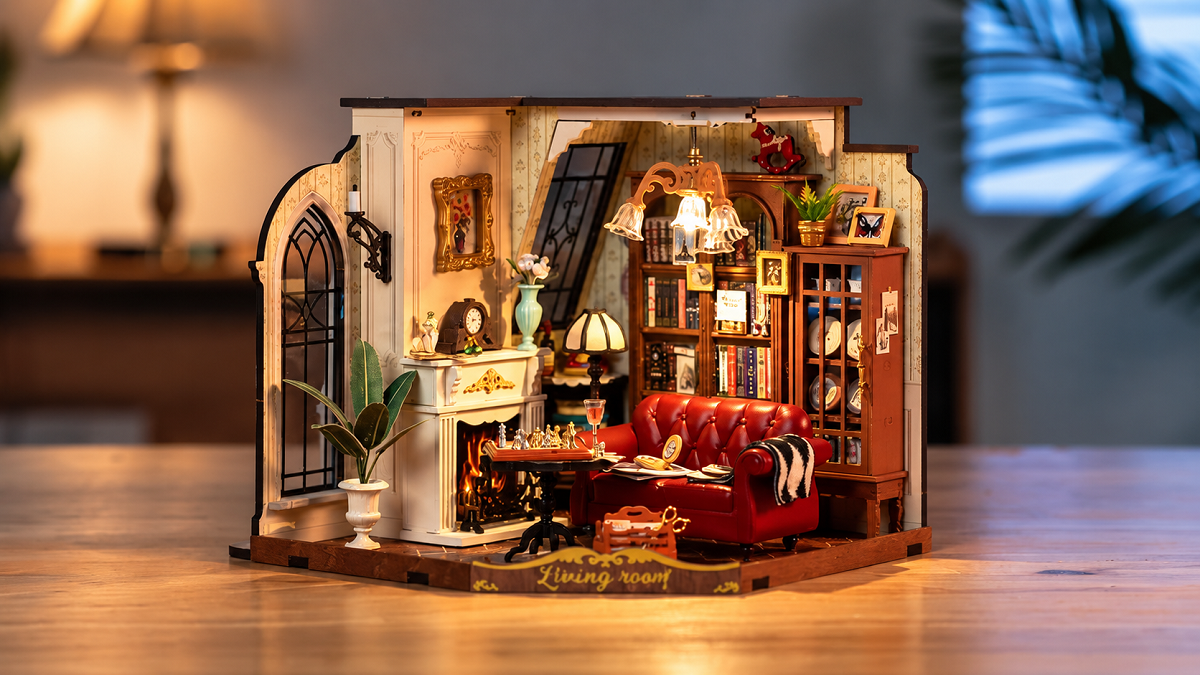
| Furniture | Catherine's Living Room | Leather sofa, fireplace, chess table, bookcase, floor lamp and classic furniture |
| Books and stationery | Corner Bookstore | Miniature books, shelves, display window, antiques, desk items and shop signs |
| Lighting | The Magic Study | Warm lamp lighting, a crystal ball, potion cabinet, books and wizard-workbench details |
| Shop and café accessories | Tipsy Restaurant | Bar counter, stools, menus, signs, utensils, bottles, mugs and outdoor seating |
| Garden accessories | Dreamy Garden House | Garden furniture, pots, plants, gardening tools and greenhouse features |
Recommended Rolife DIY Miniature House Kits by Theme
Each of the following kits brings one of those miniature item groups into a coordinated scene. You can choose according to whether you most enjoy botanical details, food miniatures, furniture, books, lighting, shop accessories or garden decor.
Best for Flowers and Potted Plants: Rolife Oxygen Oasis
Oxygen Oasis is an advanced greenhouse project built around varied plants and intricate botanical displays. Its potted greenery, layered planting areas and greenhouse architecture show how miniature plants can become the main subject of a complete scene.
This kit is the strongest match for builders who want a plant-focused project and enjoy arranging a large number of detailed botanical elements.

Best for Shop and Café Accessories: Rolife Tipsy Restaurant
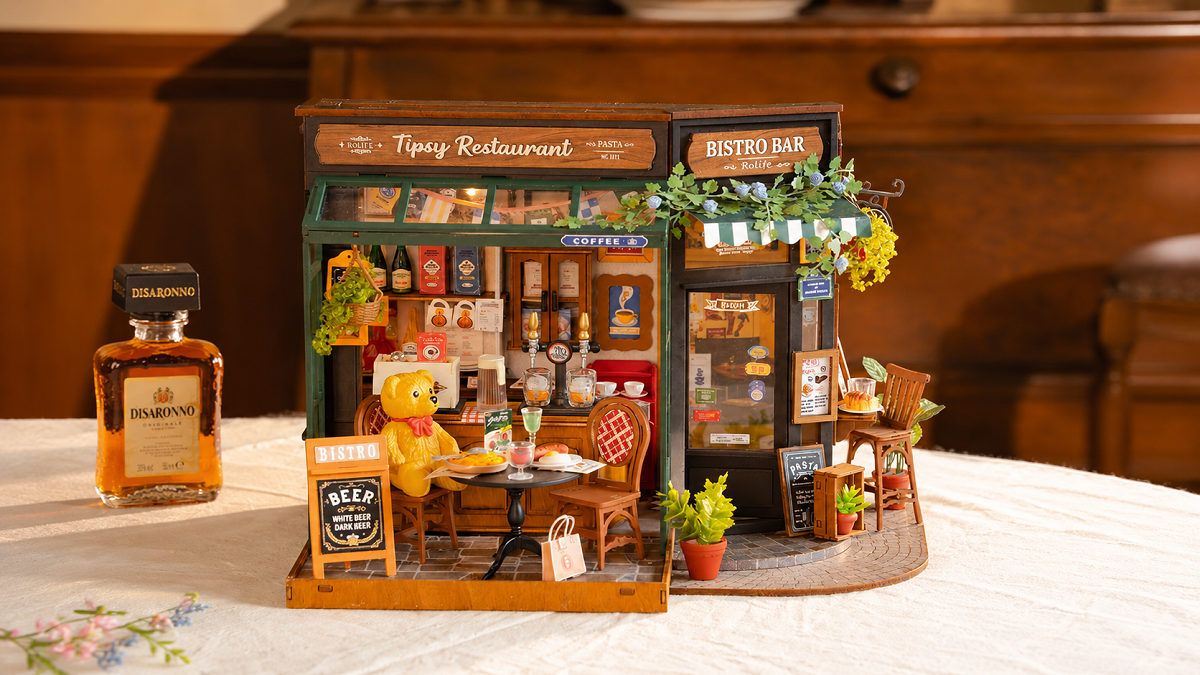
Tipsy Restaurant brings together a storefront, bar counter, stools, menus, utensils, bottles, mugs and outdoor seating. These accessories clearly define how the miniature restaurant operates and give every part of the space a recognizable purpose.
Choose this kit if you enjoy the small functional details that make a shop, café or restaurant scene feel active and ready for customers.

Best for Food and Drink Miniatures: Rolife Becka's Baking House
Becka's Baking House fills a vintage bakery with miniature bread, cakes and desserts arranged across counters and shelves. Baskets, cabinets and serving accessories support the food display and make the bakery easy to recognize.
It is a strong choice for builders who most enjoy making and arranging tiny food items as the focal point of a complete scene.

Best for Miniature Furniture: Rolife Catherine's Living Room
Catherine's Living Room is organized around a richly furnished classic interior. Its leather sofa, fireplace, chess table, tall bookcase, floor lamp and smaller decorative objects show how furniture establishes both the layout and personality of a miniature room.
It is the better choice for builders who want furniture to be the main visual feature rather than a supporting part of a shop or garden scene.

Best for Books and Stationery: Rolife Corner Bookstore
Corner Bookstore uses miniature books, shelves, a display window, antiques and small desk items to create an open-layout second-hand bookshop. Its layered book displays make reading-related objects the most visible part of the scene.
This kit suits builders who enjoy book-related themes and want more than a single reading corner or study desk.

Best for Garden Accessories: Rolife Dreamy Garden House
Dreamy Garden House combines botanical elements with greenhouse architecture, garden furniture and gardening tools. The result is a nature-inspired display in which both the plants and the objects used to care for them contribute to the story.
It is well suited to builders who like decorative gardens but also want a structured house-style project.

Best for Miniature Lighting: Rolife The Magic Study
The Magic Study uses a realistic lampshade to cast a soft, warm glow across its wizard's workbench, crystal ball, books and potion cabinet. The lighting has a clear visual role: it reveals the small details and establishes the room's mysterious atmosphere.
This kit is a good choice for builders who want lighting to play a visible role in the storytelling and mood of a complete miniature scene.

Final Thoughts
The appeal of miniature crafts often lies in how much meaning can be expressed through very small objects. A flowerpot can suggest a greenhouse, a pastry display can establish a bakery, and a shelf of books can turn an empty room into a personal study.
When choosing miniature items, begin with the scene you want to create and then consider scale, material, assembly requirements and display space. If you enjoy the details but would rather build a complete coordinated setting, Rolife kits bring the structure, furniture and themed accessories together in one project.
Explore Robotime's full range of Rolife DIY miniature house kits and find a miniature world that matches the details you enjoy building most.


Laraib Shahzad
Laraib is a freelance writer who specializes in creating clear, engaging, and research-driven content.
Robotime is a creative lifestyle company dedicated to designing and developing 3D puzzles, toys, and wooden handicrafts. Subscribe to learn more.
Enjoy Robotime building guides and creative inspiration?
Add Robotime as a Preferred Source on Google to see more of our latest stories in Search.
 Add Robotime to your Preferred Sources
Laraib Shahzad
Laraib is a freelance writer who specializes in creating clear, engaging, and research-driven content.
Robotime is a creative lifestyle company dedicated to designing and developing 3D puzzles, toys, and wooden handicrafts. Subscribe to learn more.


Leave a comment
This site is protected by hCaptcha and the hCaptcha Privacy Policy and Terms of Service apply.