




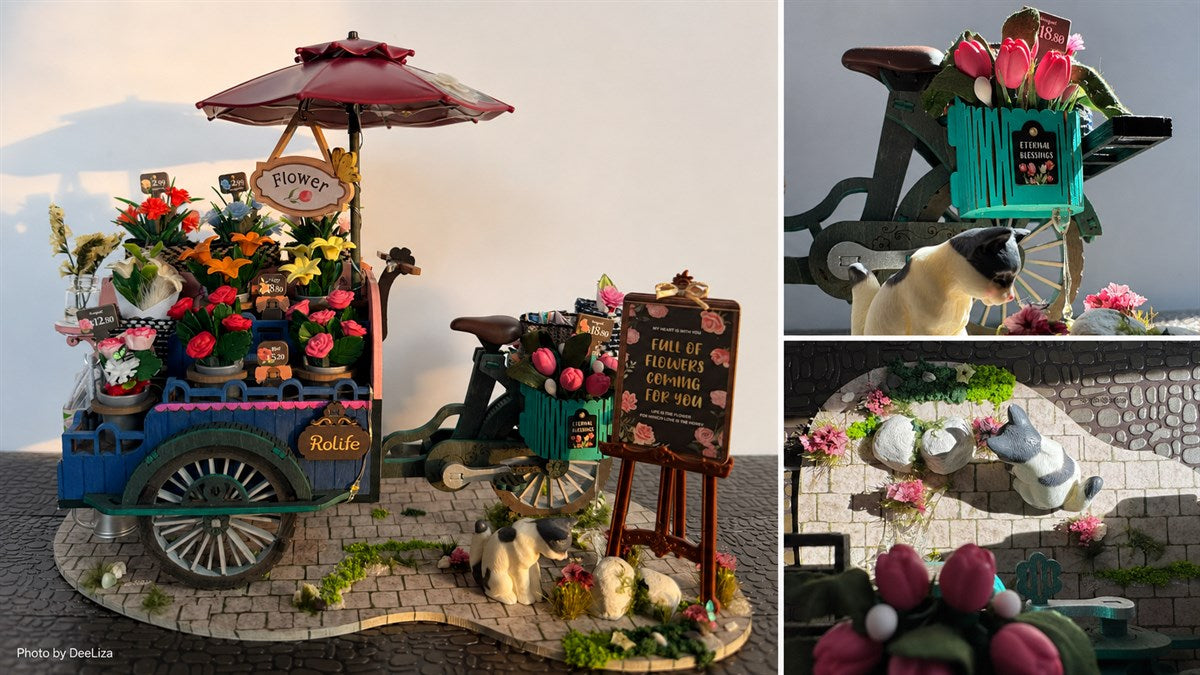
A flower cart already holds the promise of a story. Where is it going? Who arranged the bouquets? And what little treasures might be waiting among the flowers?
For Robotime Community member DeeLiza, the Rolife Blossom Cart offered more than a finished scene—it offered a place to begin imagining.
After spending a few months away from creating MOCs, or “My Own Creations,” she chose the Blossom Cart as the project that would bring her back to the craft table. Soon, the original kit had grown into a richly detailed miniature world featuring abundant bouquets, woven baskets, handmade terrariums, dimensional landscaping and even a puddle with a story of its own.
Her creation shows that personalization does not always begin with a complete plan. Sometimes the best ideas emerge while we are building.
Finding a way back into making
Returning to a creative hobby after time away can feel both exciting and unfamiliar. DeeLiza found that the simple physical experience of working with wood helped bring that familiar feeling back.
“It felt great making that first cut in the wood—and smelling the sawdust,” she wrote in her original Robotime Community post.
As the build progressed, ideas began to arrive. DeeLiza tested different possibilities before deciding which ones belonged in the final scene. She allowed the design to develop gradually, responding to the cart whenever it seemed to need more color, balance, texture or story.
By the time the project was complete, the Blossom Cart had become unmistakably her own.
Creative principle 1: Build in layers
One of the most striking qualities of DeeLiza’s cart is its visual depth.
She colored the wooden surfaces with Sharpie water-based acrylic markers and colored pencils, using the existing layers of the model to create a richer finish. Instead of letting each component read as a single flat surface, she emphasized edges, textures and overlapping details.
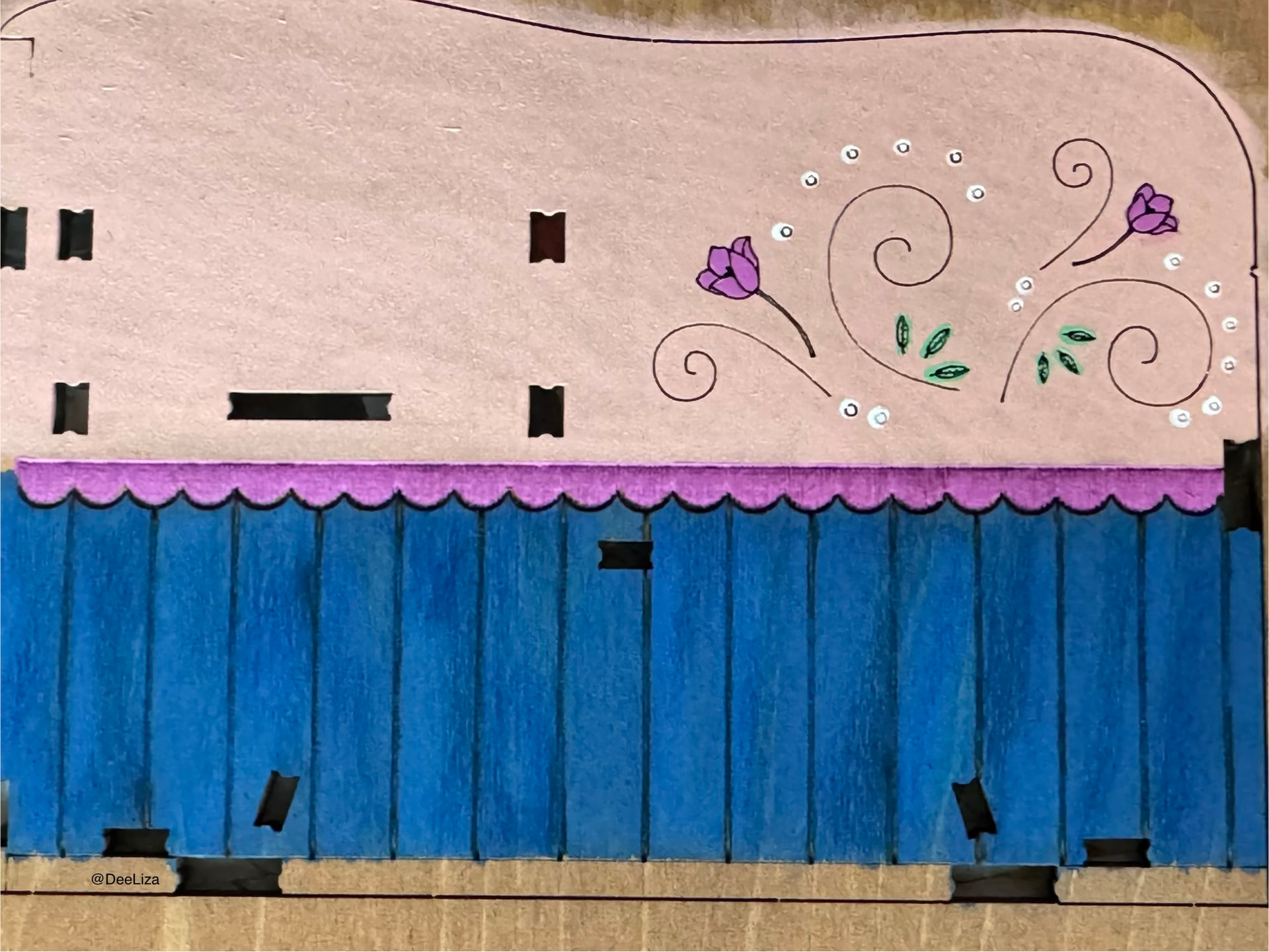
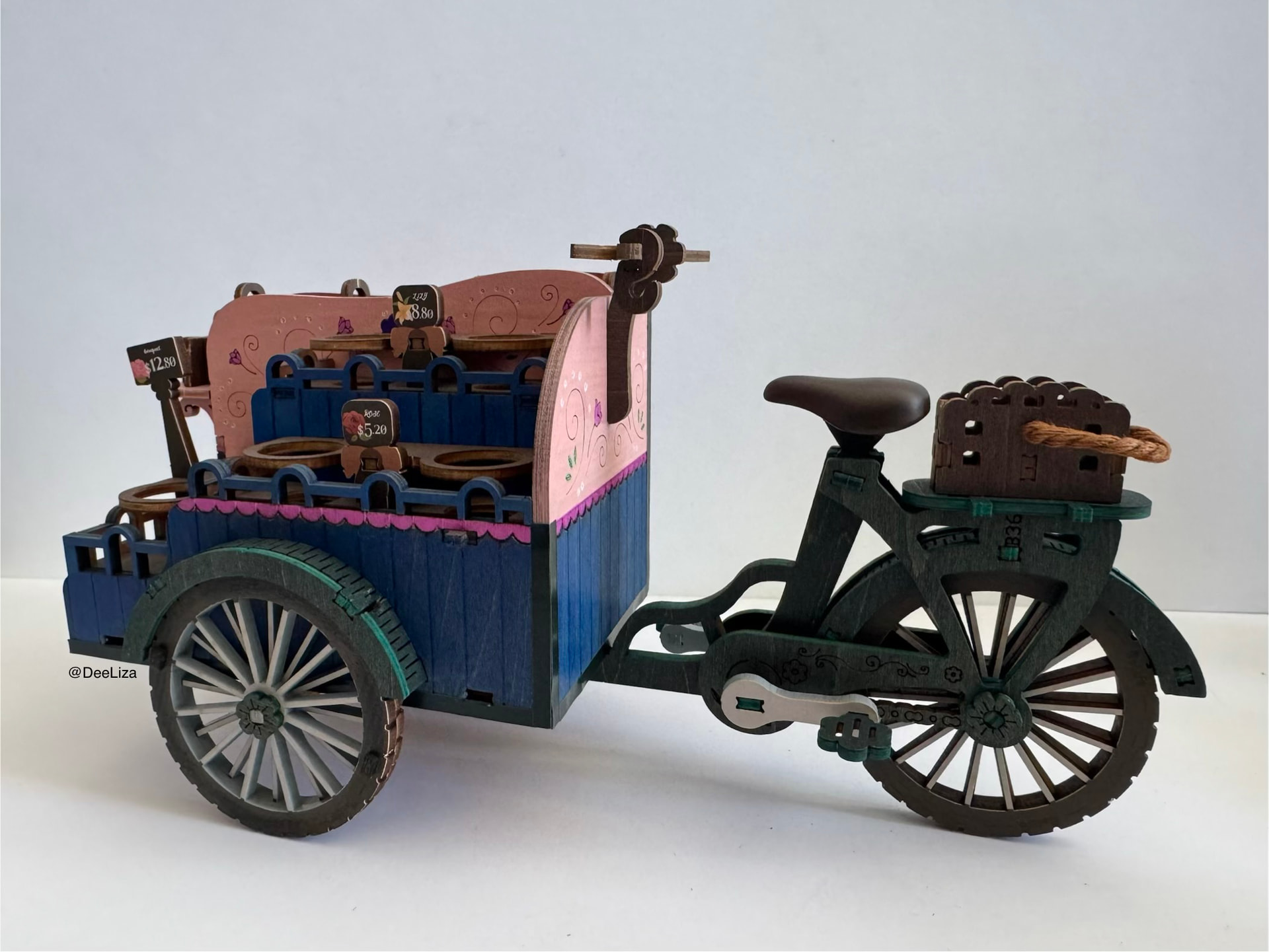
Markers and colored pencils give the cart greater color variation and depth.
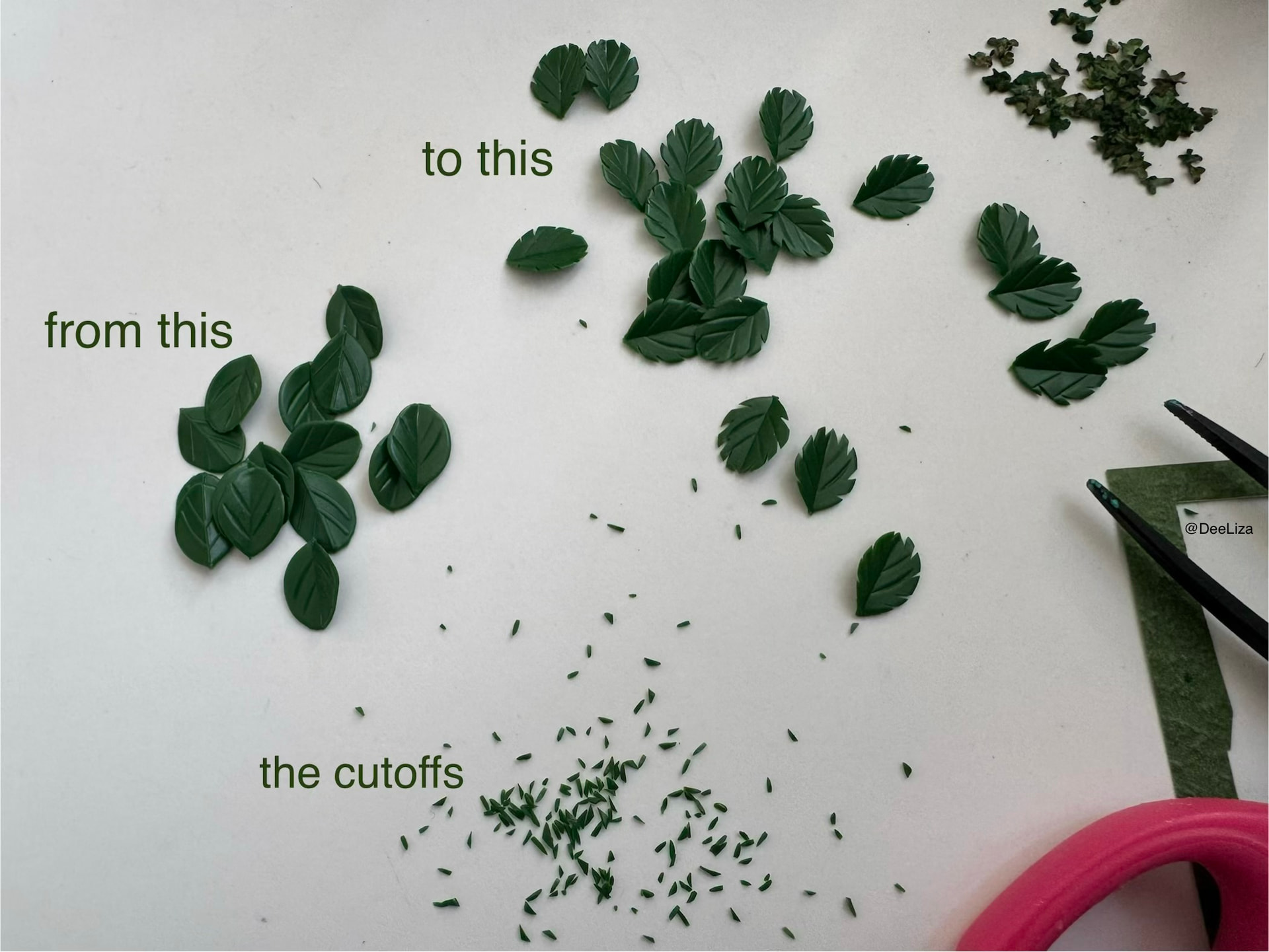
She continued that layered approach throughout the flower display. Additional leaves made the bouquets appear fuller, with the greenery tailored to complement the different flowers. Woven baskets introduced another texture and helped the cart feel more like a working flower stall.
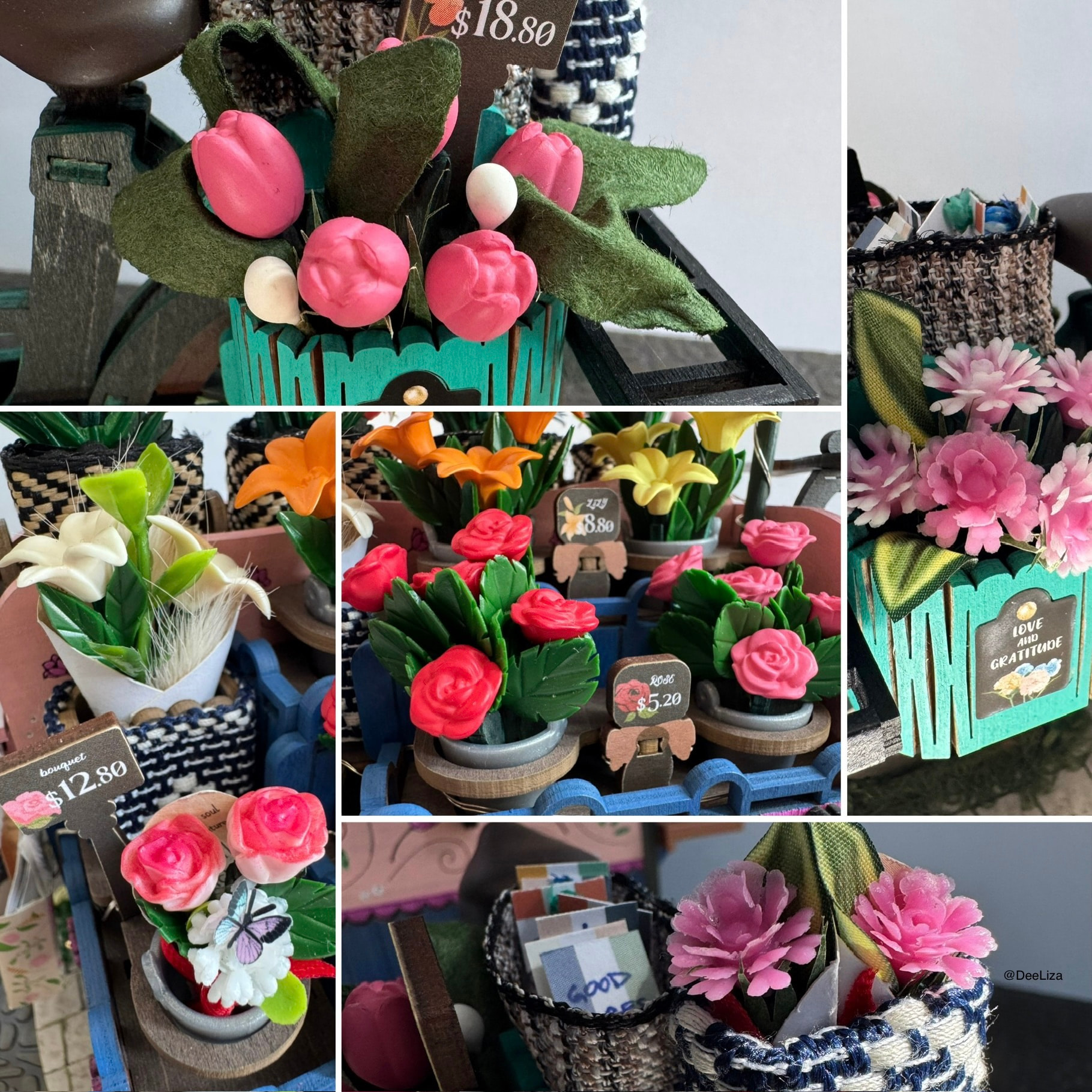
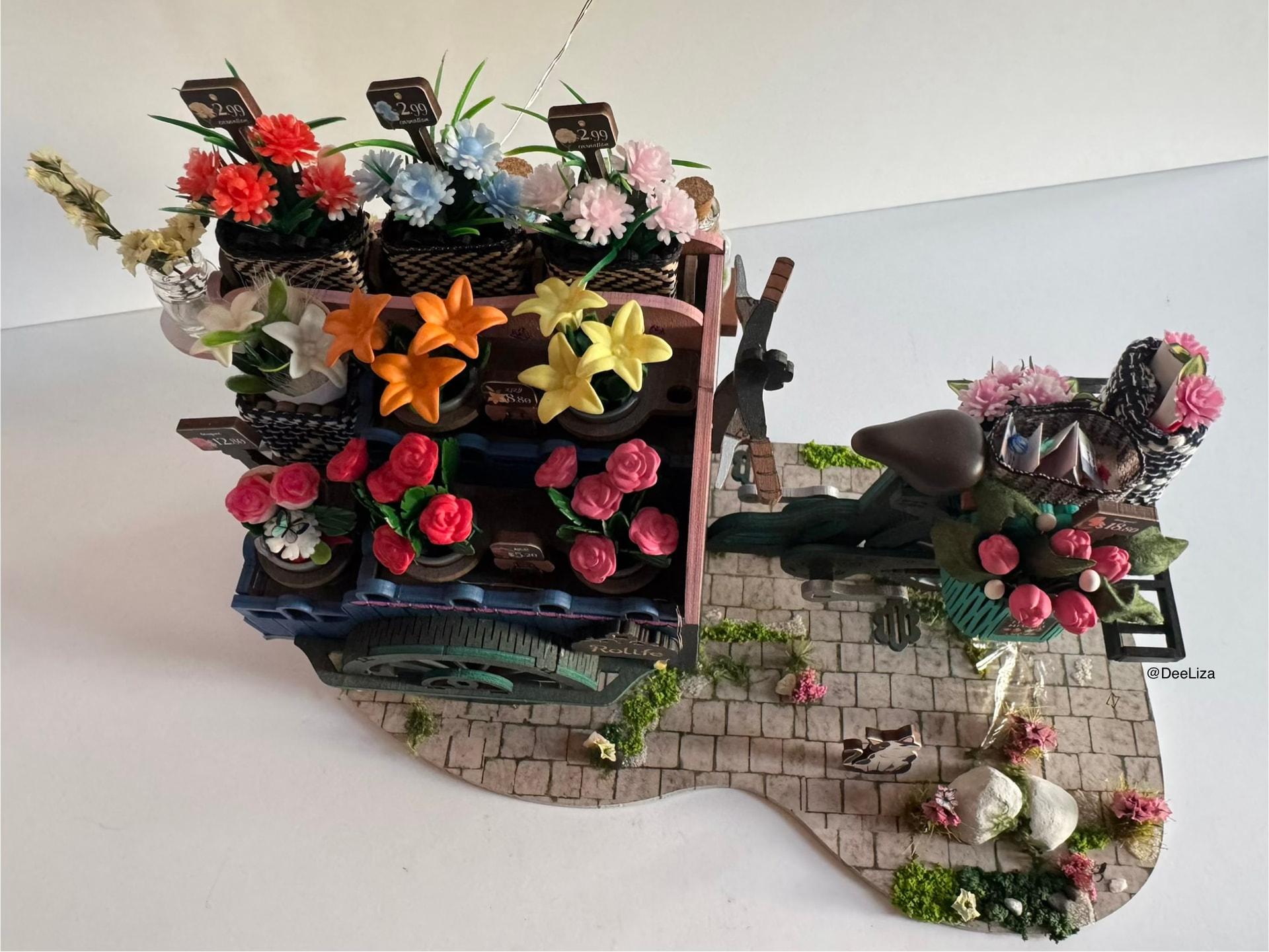
Extra leaves and woven baskets create fuller displays with tactile detail.
This approach offers a useful idea for other miniature makers: greater detail does not always require rebuilding the model. Color variation, carefully placed foliage and contrasting materials can add depth while preserving the character of the original design.
Creative principle 2: Let function shape the story
DeeLiza did not add details simply to fill empty space. Many of her changes helped explain how the imaginary flower vendor might use the cart.
A new rack behind the bicycle created additional display room. When the opposite side began to feel visually unbalanced, she added two more shelves: one for displaying tiny terrariums and another that could serve as a surface for wrapping flowers and gifts.
The terrariums themselves began with a storytelling question. If this vendor sold more than bouquets, what other small gifts might customers find at the cart?
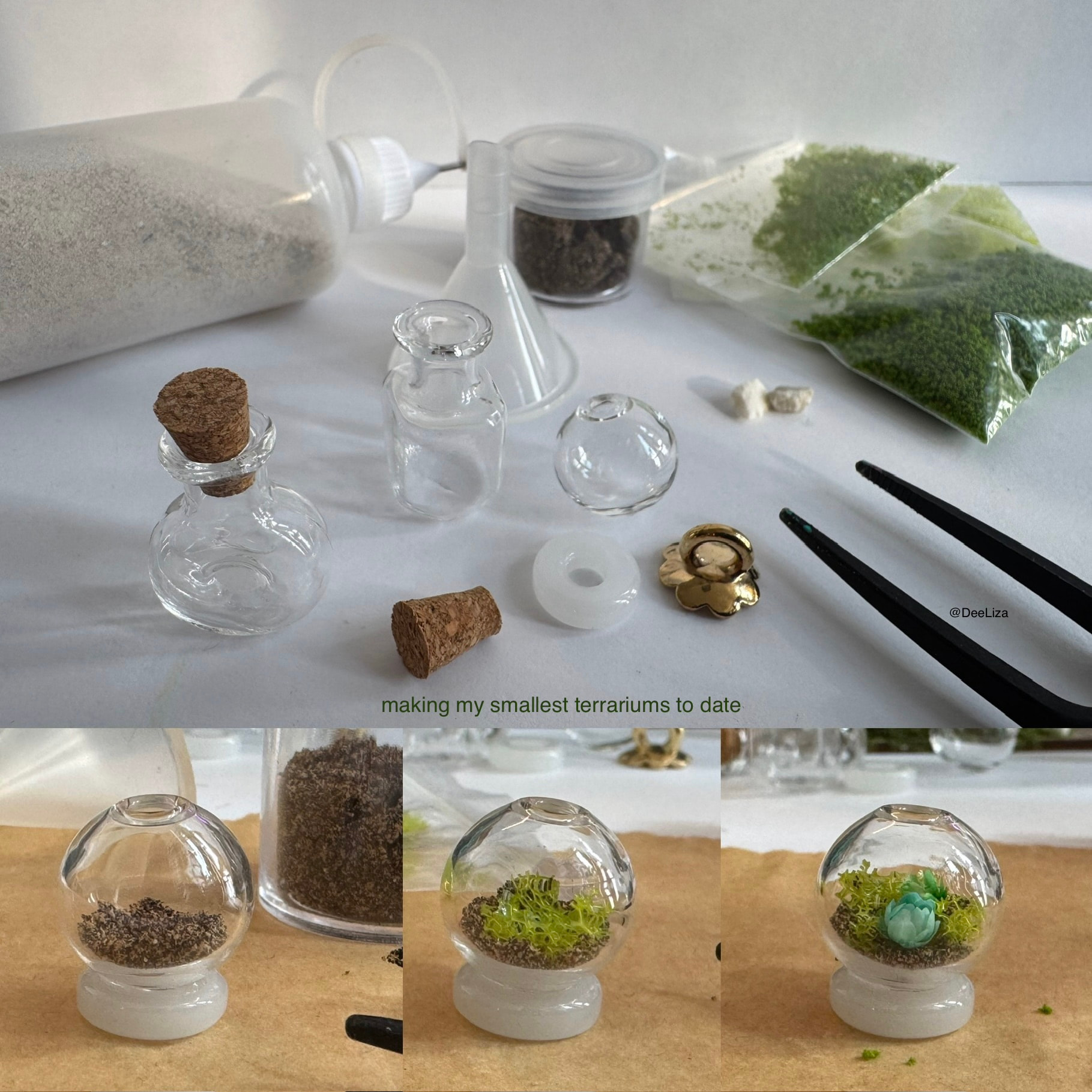

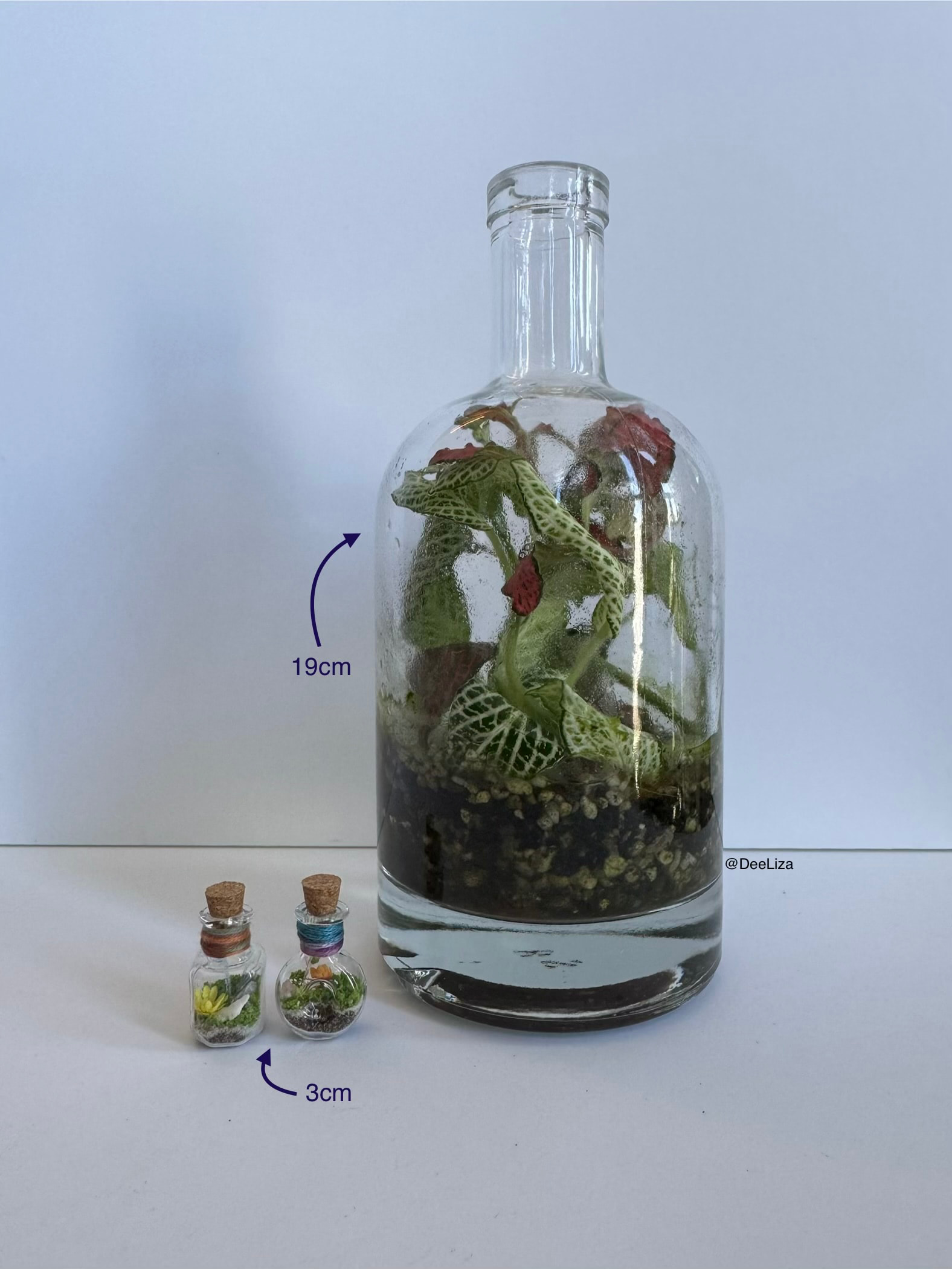
Tiny handmade terrariums expand the flower cart into a miniature gift shop.
These additions transform the scene from a decorative vehicle into a believable little business. The shelves suggest activity; the wrapping surface suggests a customer; the terrariums suggest a vendor with a creative personality.
When personalizing a miniature, it can help to think beyond what an object looks like and consider how someone inside that world would use it. That question often leads to details that feel natural rather than decorative.
Creative principle 3: Connect the model to its setting
The cart may be the center of the build, but DeeLiza gave just as much attention to the ground beneath it.
Inspired by the printed design on the base, she extended the scene with moss, sand, stones and individual blades of grass. She also painted around the edge to continue the cobblestone pattern beyond the top surface.
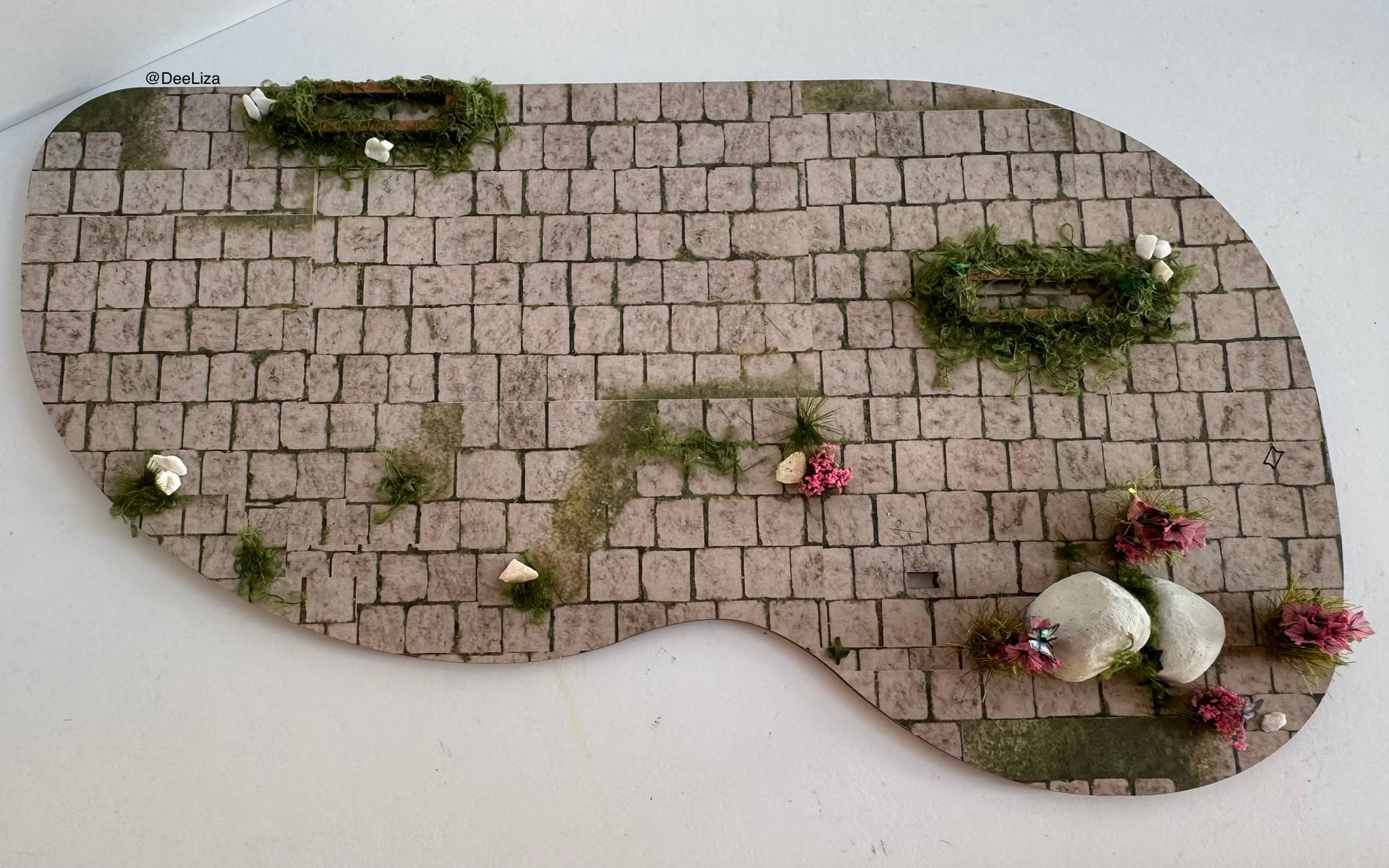
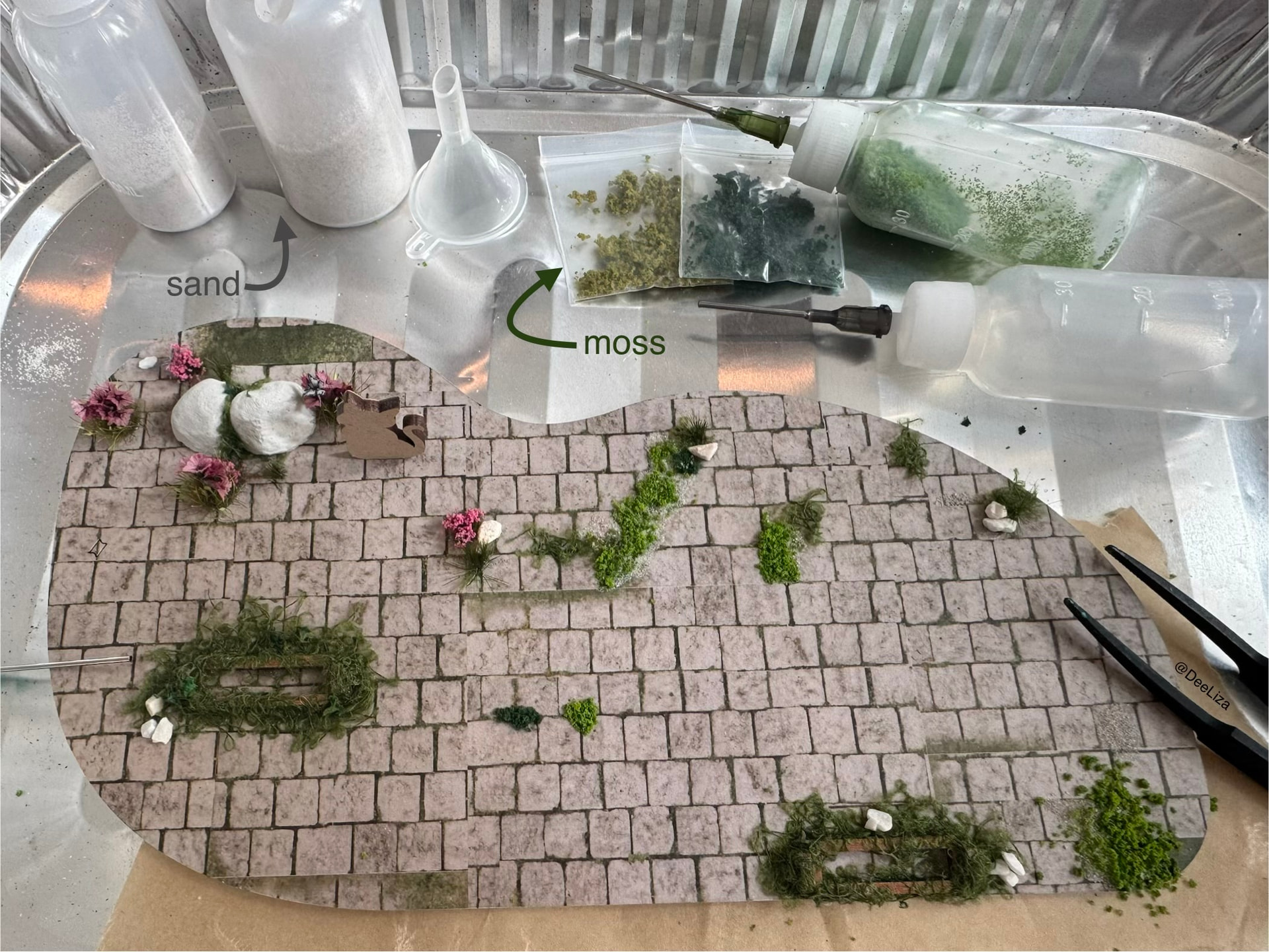
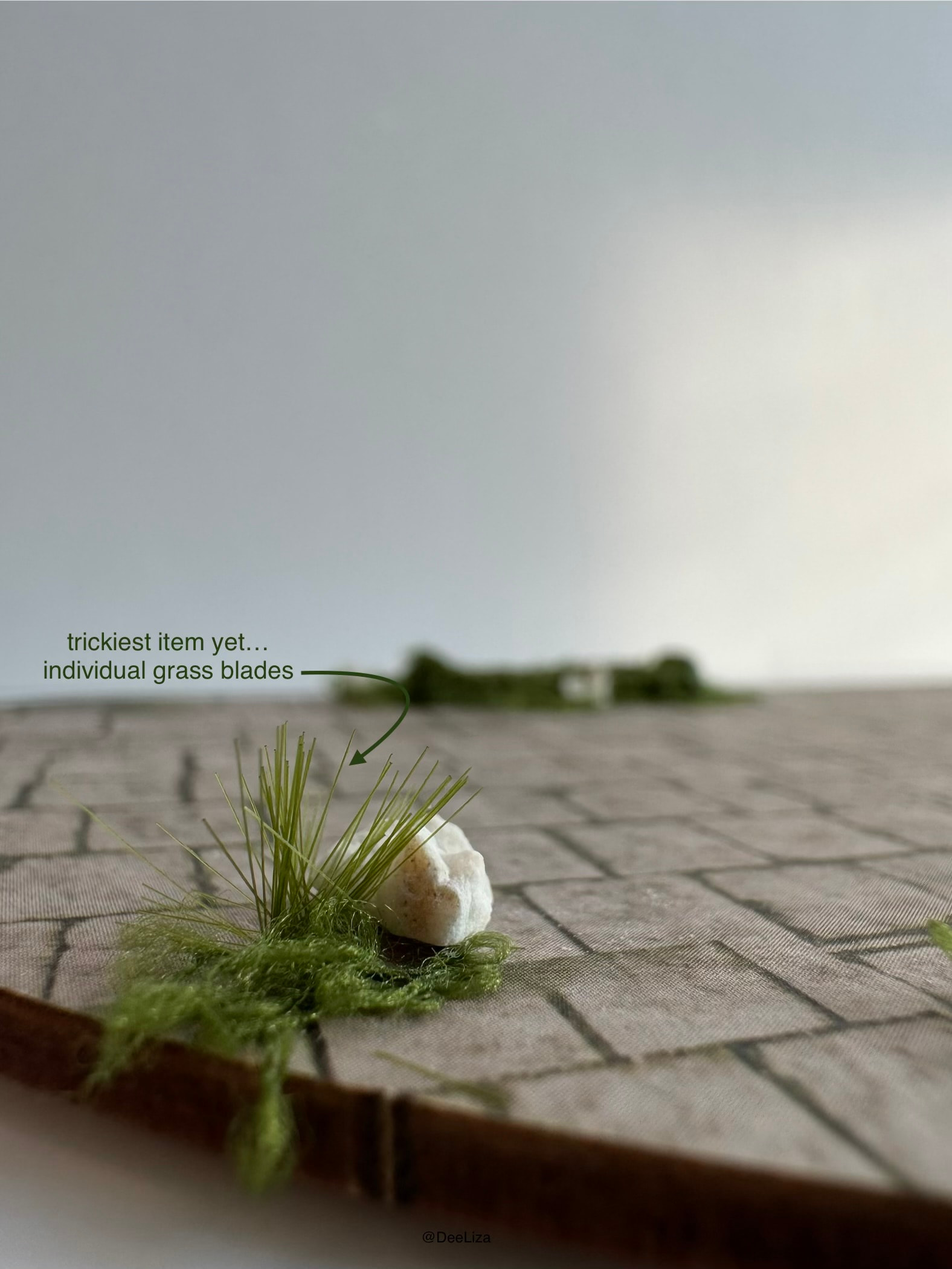
Natural materials help the printed base become a dimensional miniature landscape.
These materials softened the boundary between the wooden model and its illustrated setting. Flat graphics gained texture, while the cart appeared to occupy a real outdoor space.
When a playful suggestion becomes the best feature
After watching the project grow over several days, DeeLiza’s supportive—and, in her own description, “smart-aleck”—husband requested a puddle on the ground.
The suggestion immediately set her imagination in motion. Where should the puddle be? What had caused it? Should the water look clear or muddy?
Challenge accepted.
DeeLiza added the puddle to the landscaped base, where it became a natural part of the scene. The playful addition ultimately turned into her favorite feature of the entire build.
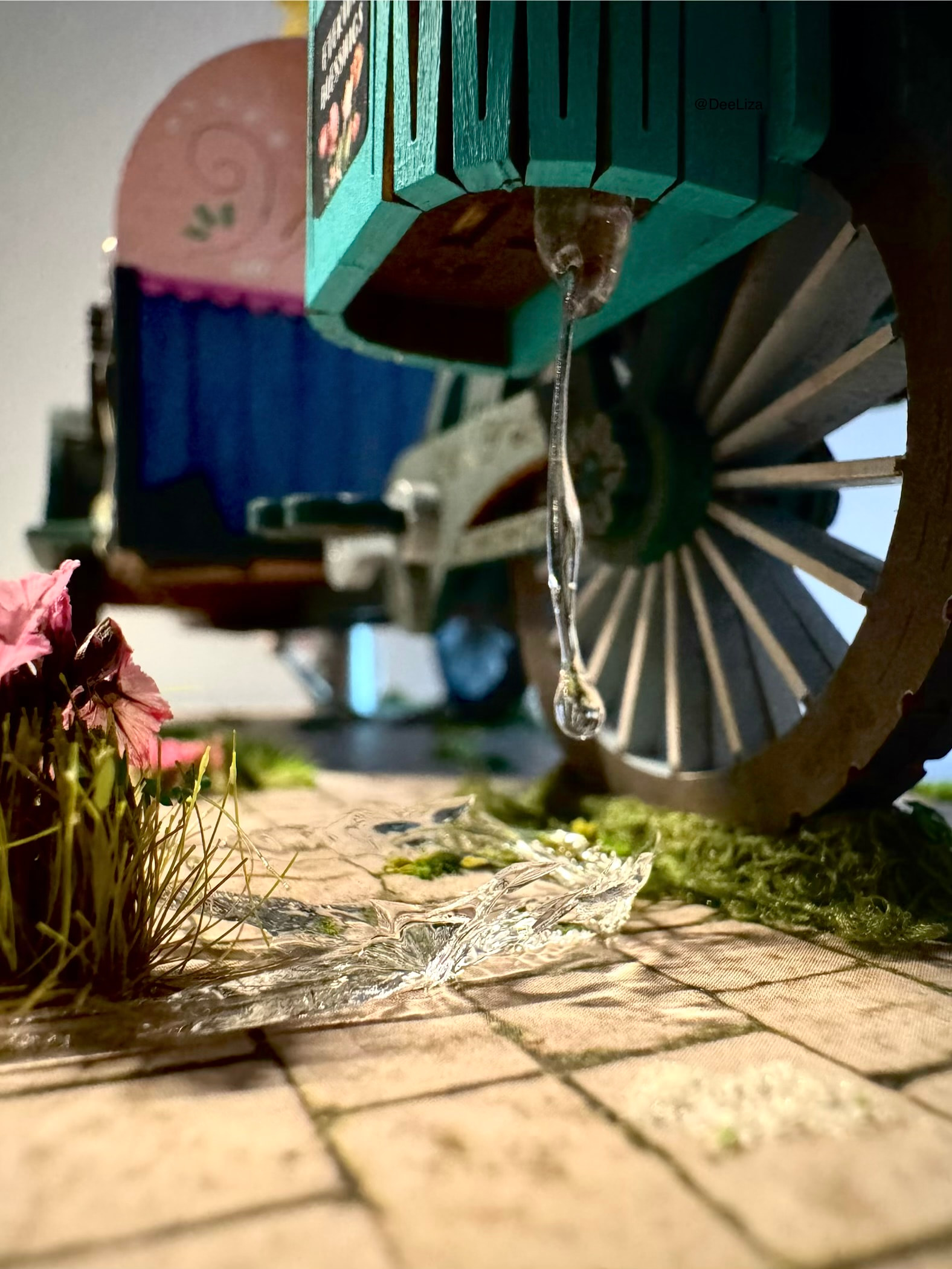
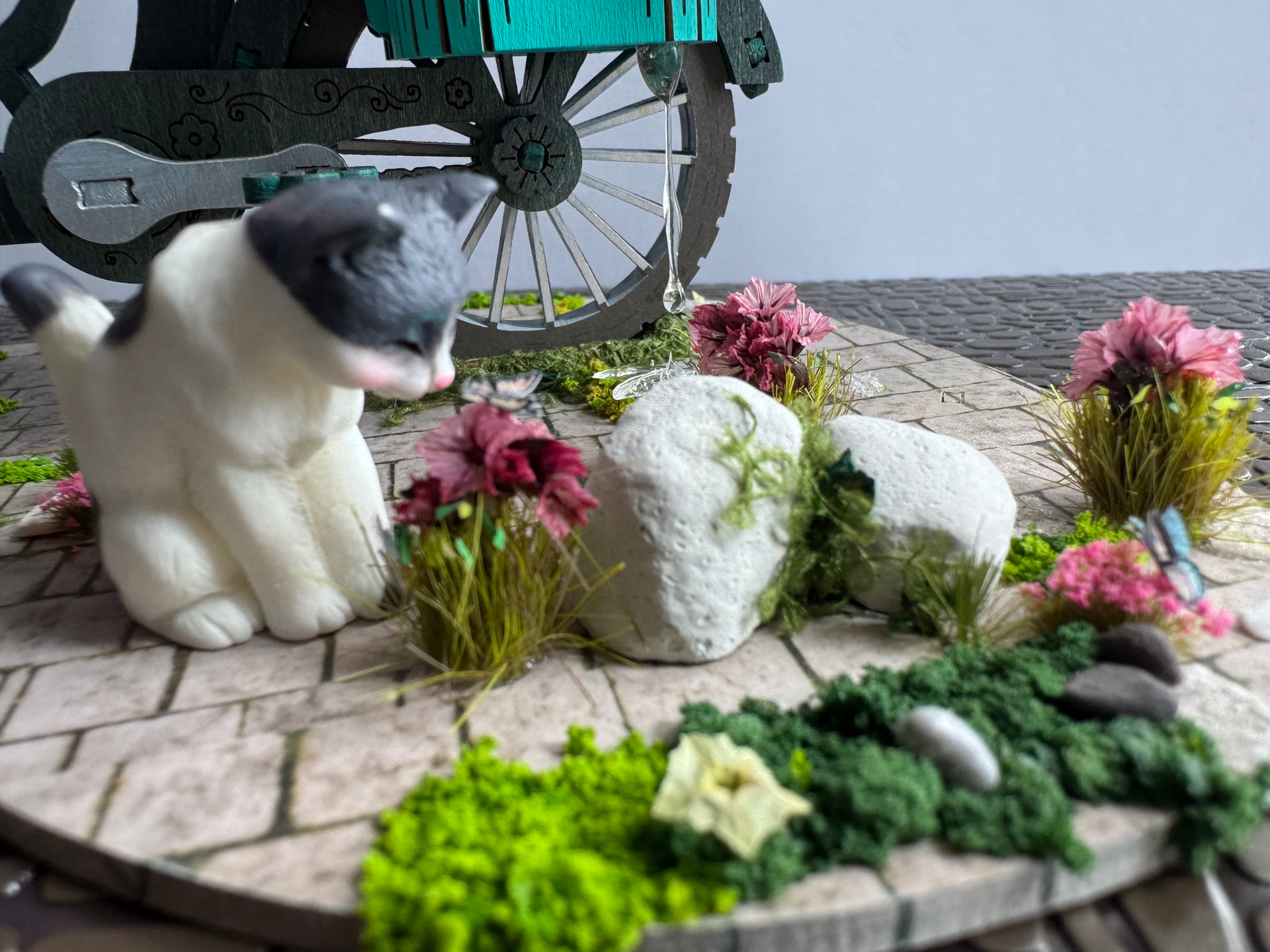
A playful family suggestion became DeeLiza’s favorite feature of the project.
That was not the project’s only unexpected creative turn. When she accidentally pushed in two small pieces that connected flowers to the front of the cart, she embraced the moment as a Bob Ross-inspired “happy little accident.” Two gold beads turned the mistake into a new decorative accent.
Both moments reveal something important about creative customization: a change does not have to follow the original plan to feel right.
A different mood after dark
To complete the scene, DeeLiza added lighting. During the day, the custom colors and handcrafted textures take center stage. At night, the illuminated cart feels warmer and more atmospheric.
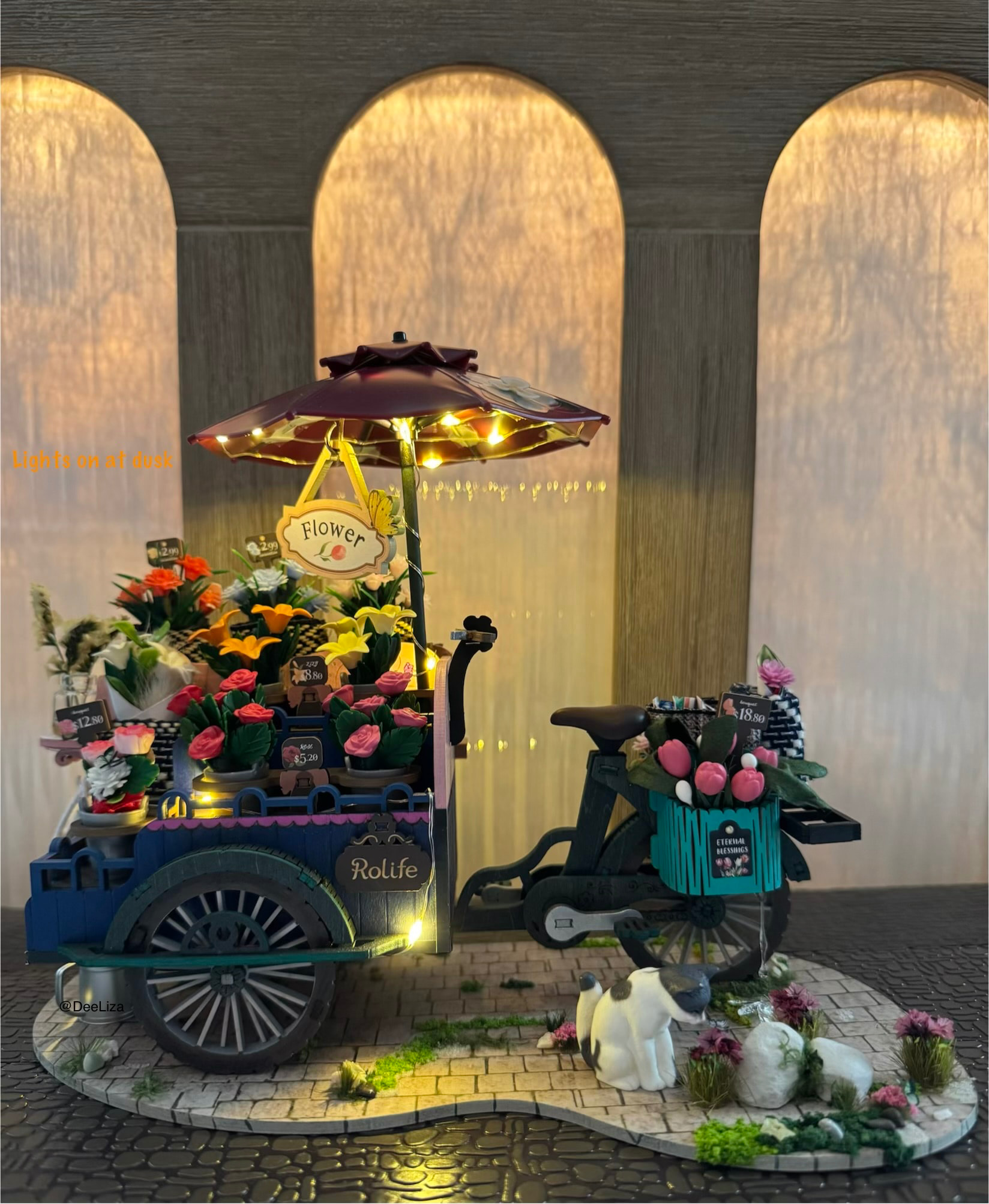
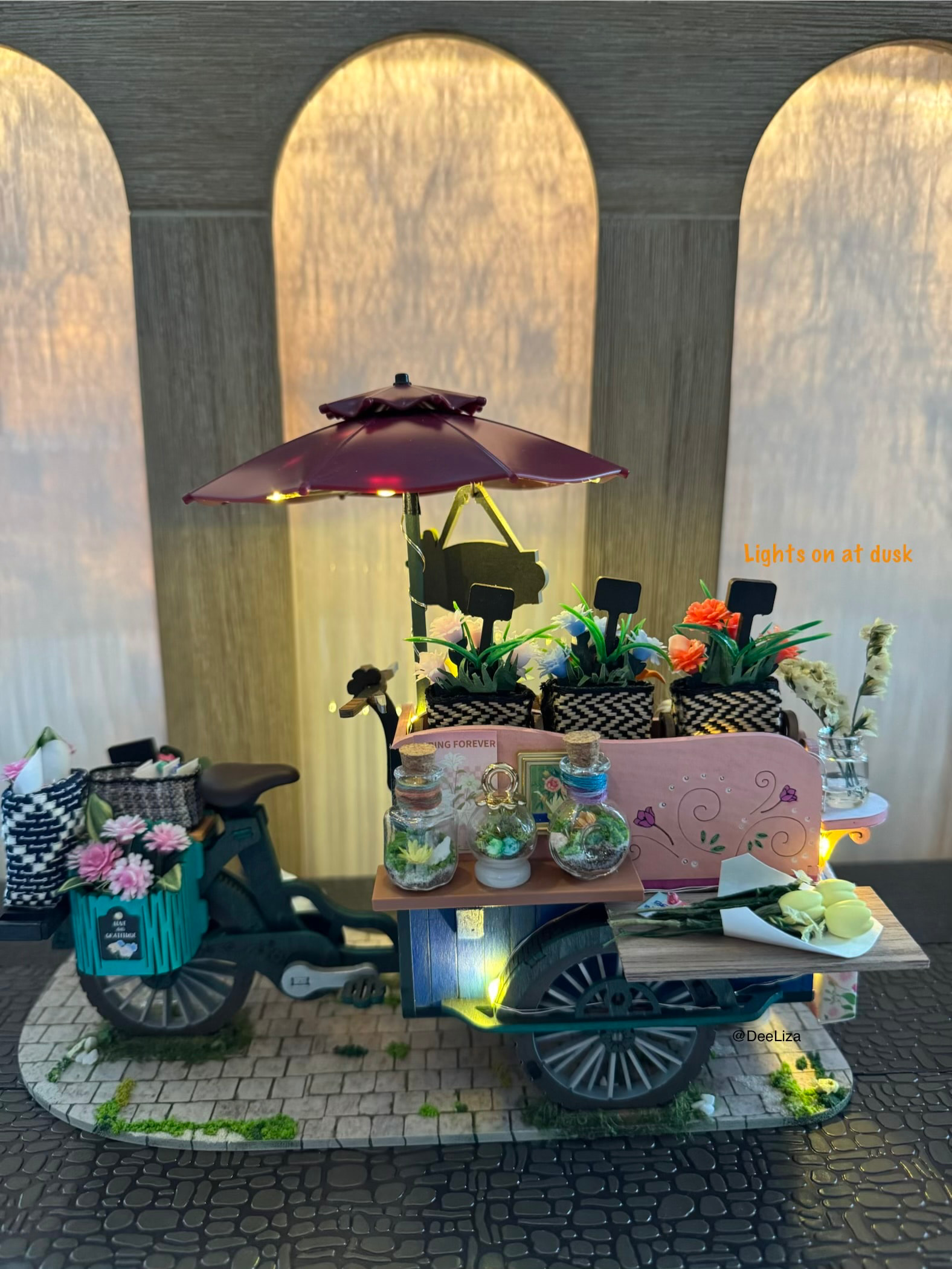
Added lighting gives the flower cart a second personality after dark.
The lighting does more than make the model visible in the dark. It creates a second way to experience the finished scene, demonstrating how one carefully chosen modification can change the mood of an entire build.
Five ideas to borrow for your next miniature
1. Use color to emphasize construction
Markers and colored pencils can add shading, contrast and variation without hiding the model’s layered design. Test colors on leftover material first.
2. Give decorative additions a purpose
Imagine how a character in the scene might use each object. A shelf, basket or work surface can contribute to both the composition and the story.
3. Combine flat details with natural textures
Moss, sand, stones and handmade grass can help printed scenery feel more dimensional. Begin with small amounts so the textures support rather than overwhelm the model.
4. Look for visual balance
If one side feels heavier, consider adding height, color or a functional feature to the quieter area. Balance does not require perfect symmetry.
5. Leave room for unexpected ideas
Not every decision needs to be made before the build begins. Experimentation—and the occasional happy accident—can lead to the most personal feature.
Start with the kit, then follow your imagination
DeeLiza’s Blossom Cart is memorable because its details belong together. The fuller bouquets suit the woven baskets. The terrariums give purpose to the new shelves. The textured base supports the outdoor setting, while the puddle and lights extend its story.
The kit provided the foundation, but curiosity shaped the finished world. If you are considering your own personalized build, pay attention to what the model seems to need, test an idea before committing to it and do not be afraid to let the design change along the way.
Your favorite feature might be the one you never planned.

Explore the Rolife Blossom Cart or discover more projects in the Rolife 3D Wooden Puzzle collection.
See DeeLiza’s original Community post and complete photo collection.
Creative build and photography by Robotime Community member DeeLiza. This project contains personal modifications and additional materials that are not included with the original Rolife Blossom Cart kit.


Robotime Creative Team
As Robotime's earliest audience and testers, they start from user needs and are dedicated to sharing stories and insights about the brand and its products.
Robotime is a creative lifestyle company dedicated to designing and developing 3D puzzles, toys, and wooden handicrafts. Subscribe to learn more.
Enjoy Robotime building guides and creative inspiration?
Add Robotime as a Preferred Source on Google to see more of our latest stories in Search.
 Add Robotime to your Preferred Sources
Robotime Creative Team
As Robotime's earliest audience and testers, they start from user needs and are dedicated to sharing stories and insights about the brand and its products.
Robotime is a creative lifestyle company dedicated to designing and developing 3D puzzles, toys, and wooden handicrafts. Subscribe to learn more.



Leave a comment
This site is protected by hCaptcha and the hCaptcha Privacy Policy and Terms of Service apply.