




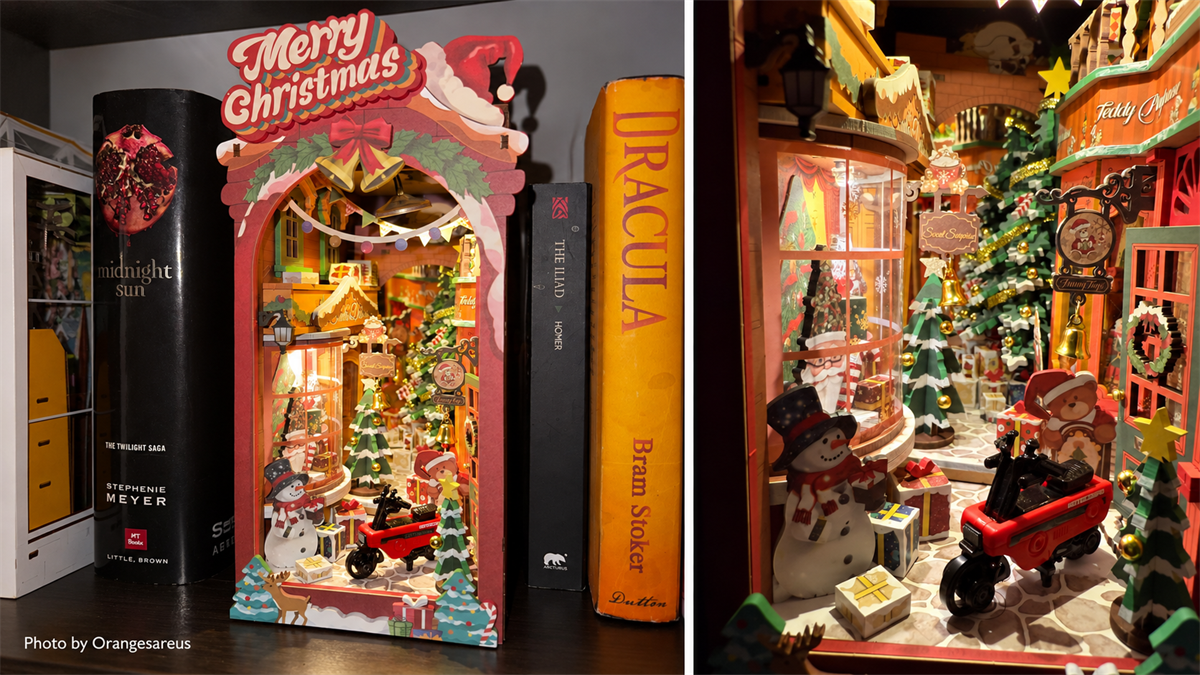
A Christmas street can feel festive straight from the box. It begins to feel personal when its maker decides where the snow should settle, which edges need color, and which tiny details deserve a little more time.
For Robotime Community maker Orangesareus, customizing the Rolife Christmas Street DIY Book Nook TGC06 became a slower, more restorative way to build after busy workdays. With green-painted edges, striped candy canes, snowy accents, and miniature clamps holding freshly painted pieces upright, the familiar shopping lane gradually took on a finish of its own.
The transformation is subtle but remarkably cohesive. Rather than redesigning the scene, Orangesareus used repeated color and carefully placed texture to make its trees, signs, storefronts, and winter details feel as though they had always belonged together.
A Slower Way to Work
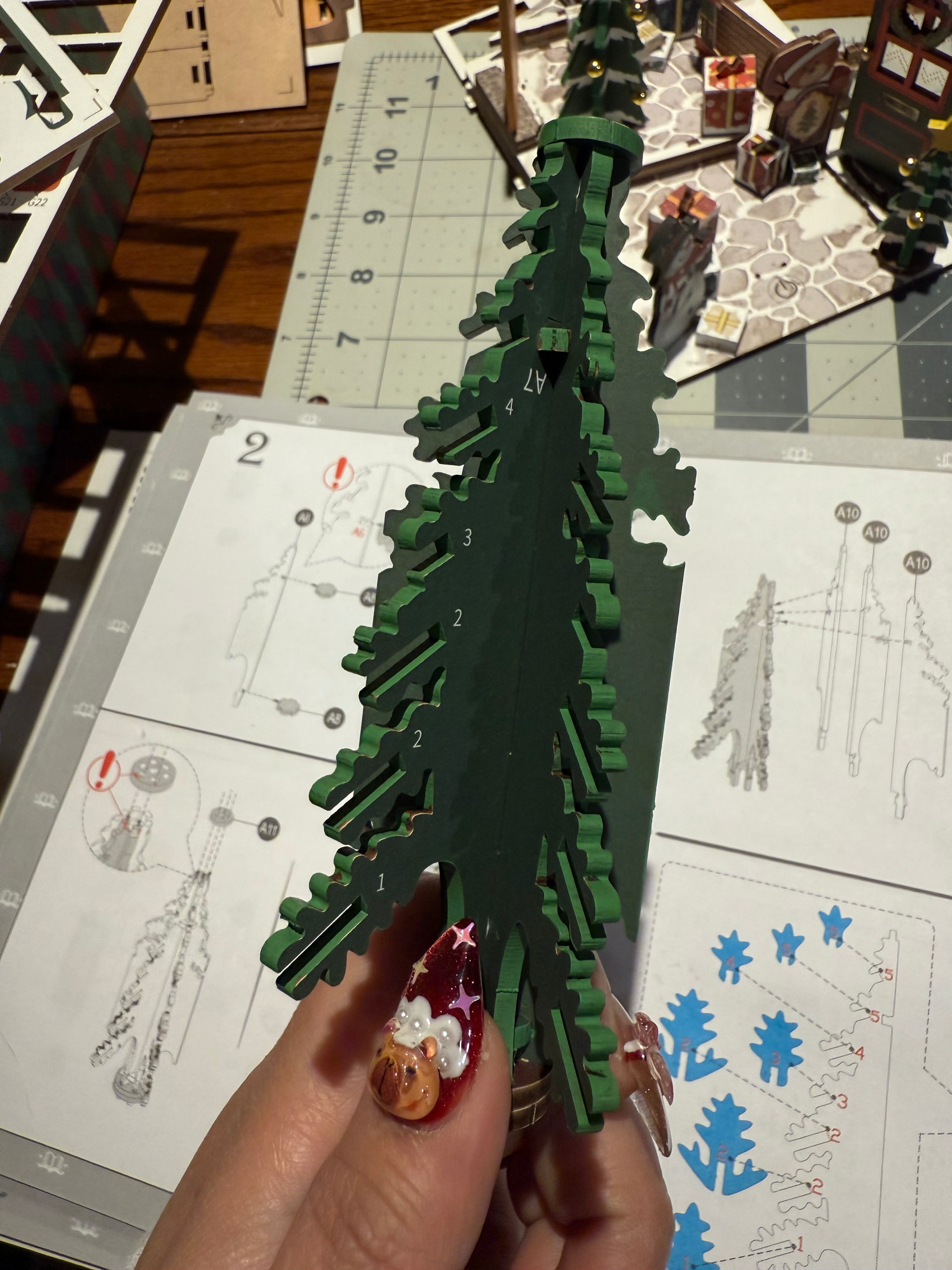
Orangesareus described the project as a welcome respite after long days. Instead of rushing from one assembly stage to the next, the maker paused to paint small components and let them dry properly. Miniature clamps—repurposed as tiny holders—kept tree pieces upright and left both hands free for controlled brushwork.
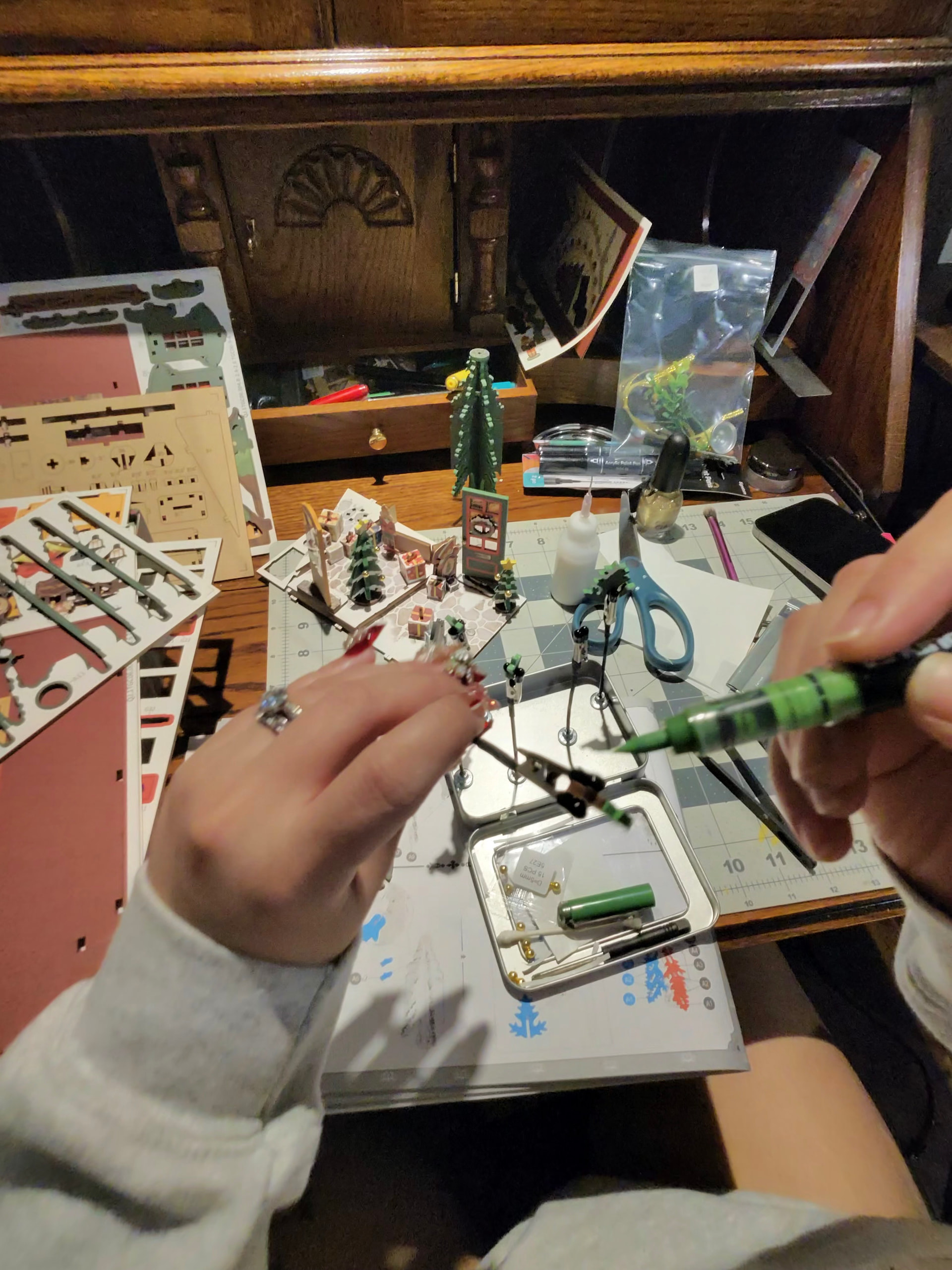
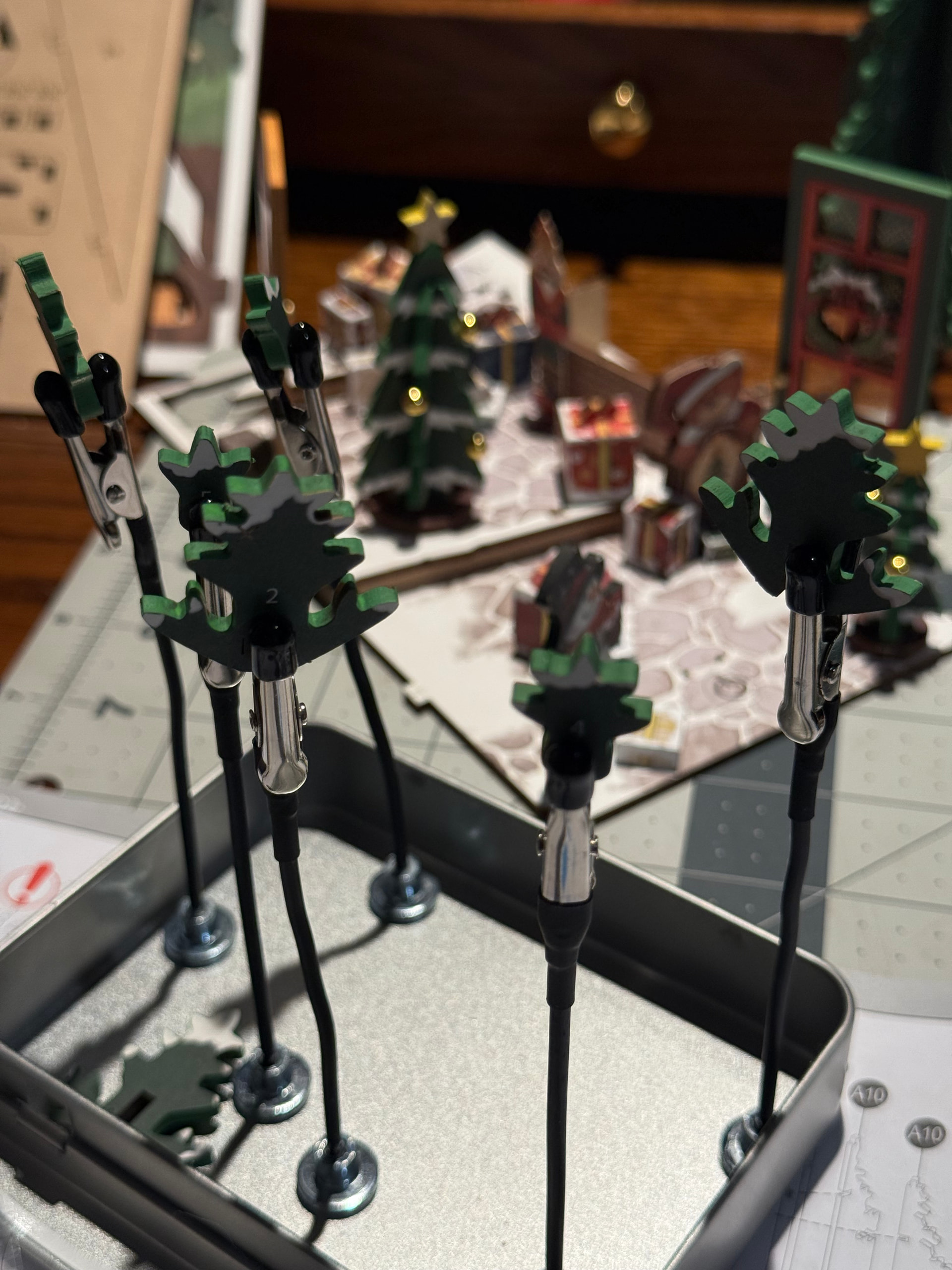
The worktable view shows the coloring process itself, while miniature clamps keep several freshly painted tree pieces upright. Photos by Orangesareus.
This slower rhythm became part of the creative decision-making. Time between stages made it easier to reconsider color, notice unfinished surfaces, and choose where a little more work would have the most visible effect.
“Sometimes slow progress really is the best kind of progress.” — Orangesareus
Painted Edges Create Visual Continuity
Laser-cut wooden kits naturally reveal pale edges. Leaving them visible can emphasize the material and the pleasure of construction. Painting them changes the reading of the scene: separate layers begin to merge into fuller trees, roofs, signs, and storefronts.
Orangesareus tested that choice throughout the build rather than treating it as a rule. Green was added around tree sections, white was used where snow would collect, and other exposed edges were colored to match their printed faces. The maker even questioned whether every edge needed paint—a useful reminder that customization can remain selective.


Green edge color visually joins the trees and curved Teddy Playhouse sign, while white accents strengthen the impression of settled snow. Photos by Orangesareus.
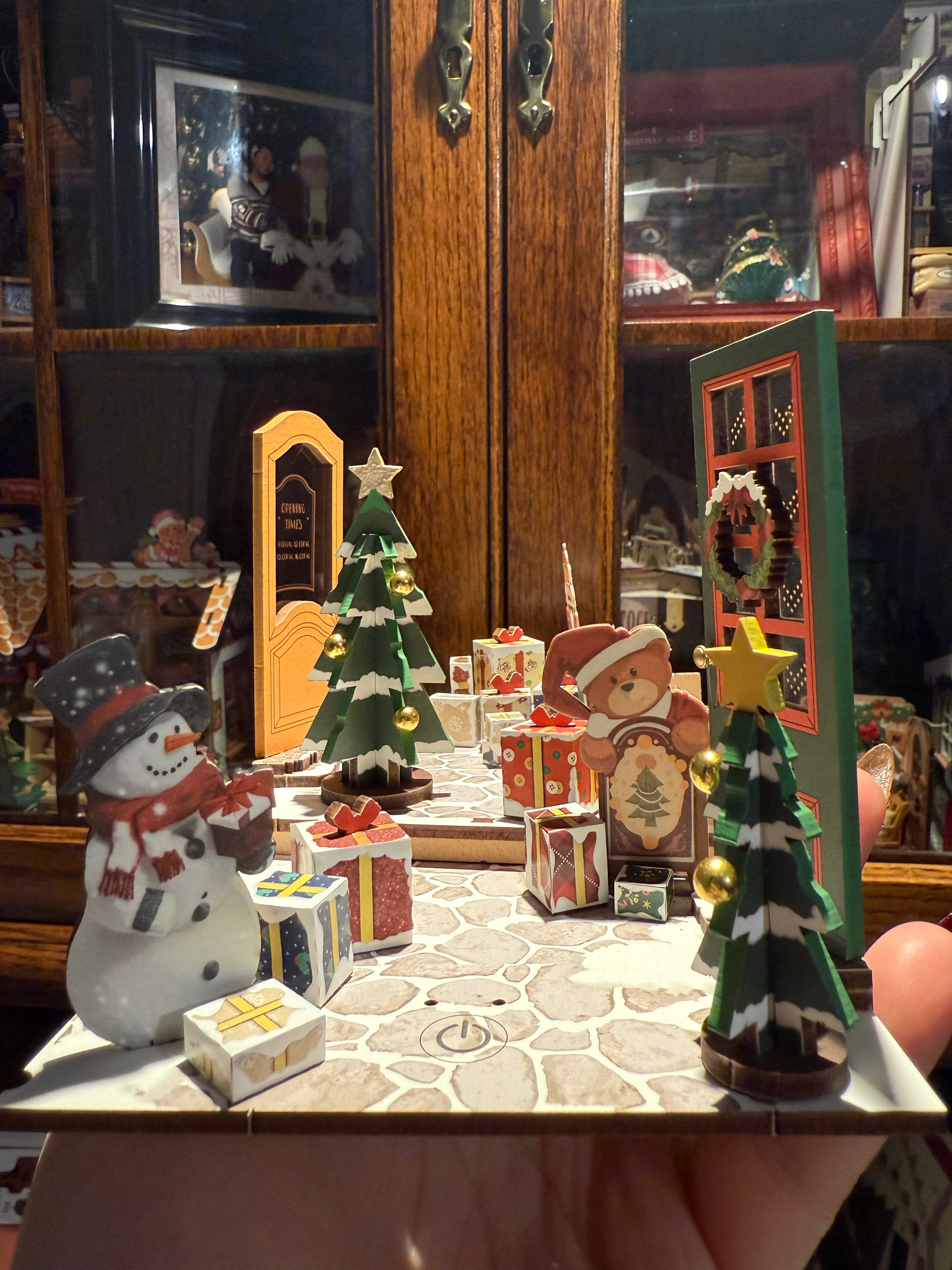

Two progress views show how the painted pieces begin as separate accents and gradually settle into a connected street scene. Photos by Orangesareus.
Small Marks, Large Effect
Some of the most memorable changes are also the smallest. Red stripes turn two curved pieces into unmistakable candy canes. White accents on miniature flowers and foliage suggest snow caught on raised surfaces. Neither treatment requires rebuilding the structure, yet both reinforce the holiday story wherever the eye lands.


Hand-painted stripes and localized snow add seasonal texture without changing the book nook’s underlying structure. Photos by Orangesareus.
For another builder, the practical takeaway is not to copy every mark. It is to identify a small visual language and repeat it. Here, green edges, red-and-white striping, and snow on horizontal surfaces connect many separate pieces into the same winter setting.
Finishing the Street Without Hiding the Build
Once illuminated, the painted details support rather than compete with the built-in shop windows and layered street. Warm light draws attention into the stores, while the brighter snow and edge colors keep foreground details legible. Displayed upright between books, the narrow scene works as both a book nook and a small Christmas decoration.


The finished topper and shelf display show how the personalized details remain readable when the model is lit and placed among books. Photos by Orangesareus.
Start With the Story Already There
A successful customization does not have to replace a kit’s original identity. Orangesareus worked with the Christmas Street’s existing palette and winter setting, then reinforced them through finish, repetition, and patience. That approach makes the project useful beyond this particular model: look for exposed edges, repeated motifs, and natural places where weather or texture would collect.
Explore the full sequence in Orangesareus’ Community posts: the slower painting process, the detail-painting update, and the final reveal.


Robotime Creative Team
As Robotime's earliest audience and testers, they start from user needs and are dedicated to sharing stories and insights about the brand and its products.
Robotime is a creative lifestyle company dedicated to designing and developing 3D puzzles, toys, and wooden handicrafts. Subscribe to learn more.
Enjoy Robotime building guides and creative inspiration?
Add Robotime as a Preferred Source on Google to see more of our latest stories in Search.
 Add Robotime to your Preferred Sources
Robotime Creative Team
As Robotime's earliest audience and testers, they start from user needs and are dedicated to sharing stories and insights about the brand and its products.


Leave a comment
This site is protected by hCaptcha and the hCaptcha Privacy Policy and Terms of Service apply.