



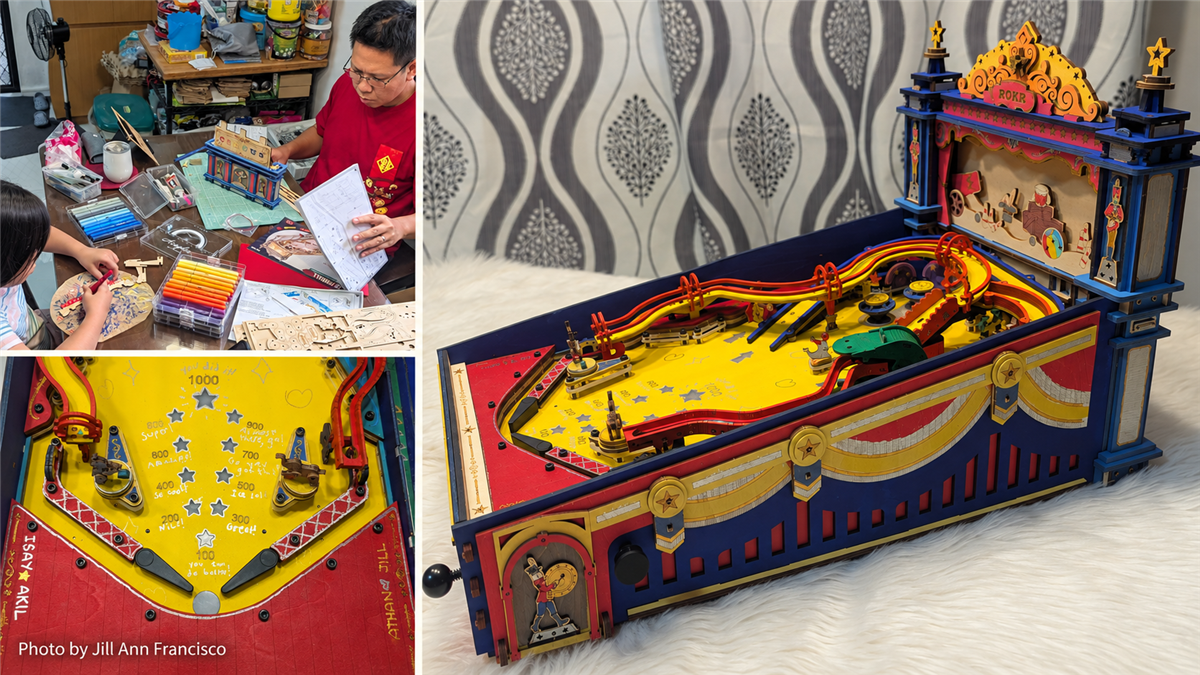
On a family dining table, a wooden pinball machine slowly changed from an intricate mechanical kit into something far more personal. Its circus-inspired frame gained deep blue sides, a bright yellow playfield, red rails, hand-drawn scoring notes, and—most importantly—the marks of the people who built it together.
Community maker Jill Ann Francisco first received the ROKR 3D Pinball Machine EG01 as a prize. Her husband took on the mechanical assembly, while their daughter helped paint and decorate the wooden parts. Jill documented the project from the unopened box to the family's colorful finished game.
The result is a useful reminder that customization does not have to begin with a perfect plan. It can grow through shared decisions, trial and error, and the small signatures that turn a model into a family keepsake.
From prize to family project
When the kit arrived, Jill was excited but unsure whether to paint it. The box felt substantial, the build looked challenging, and adding color would create another layer of work. Her children, however, were already looking forward to the finished game.
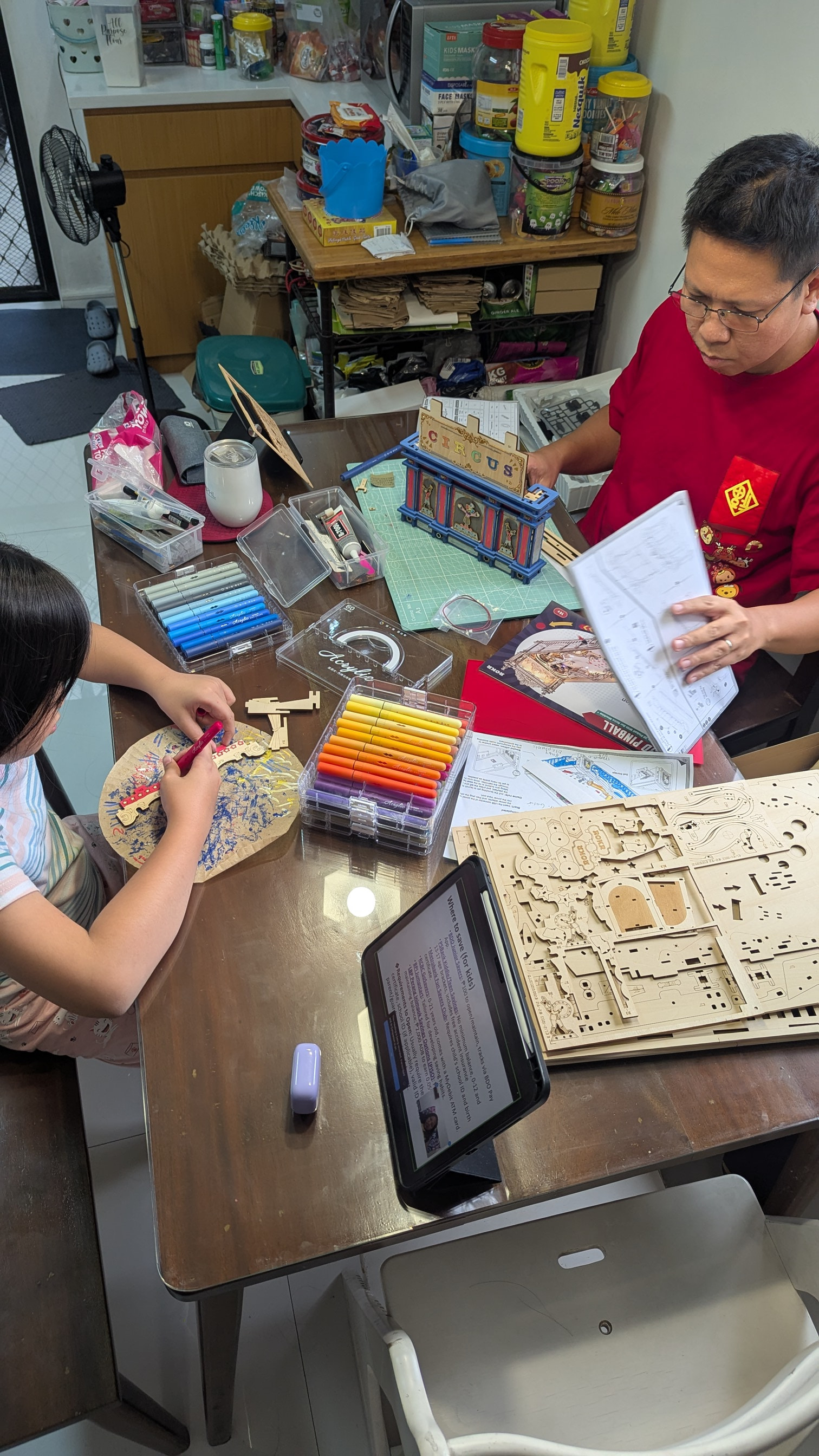
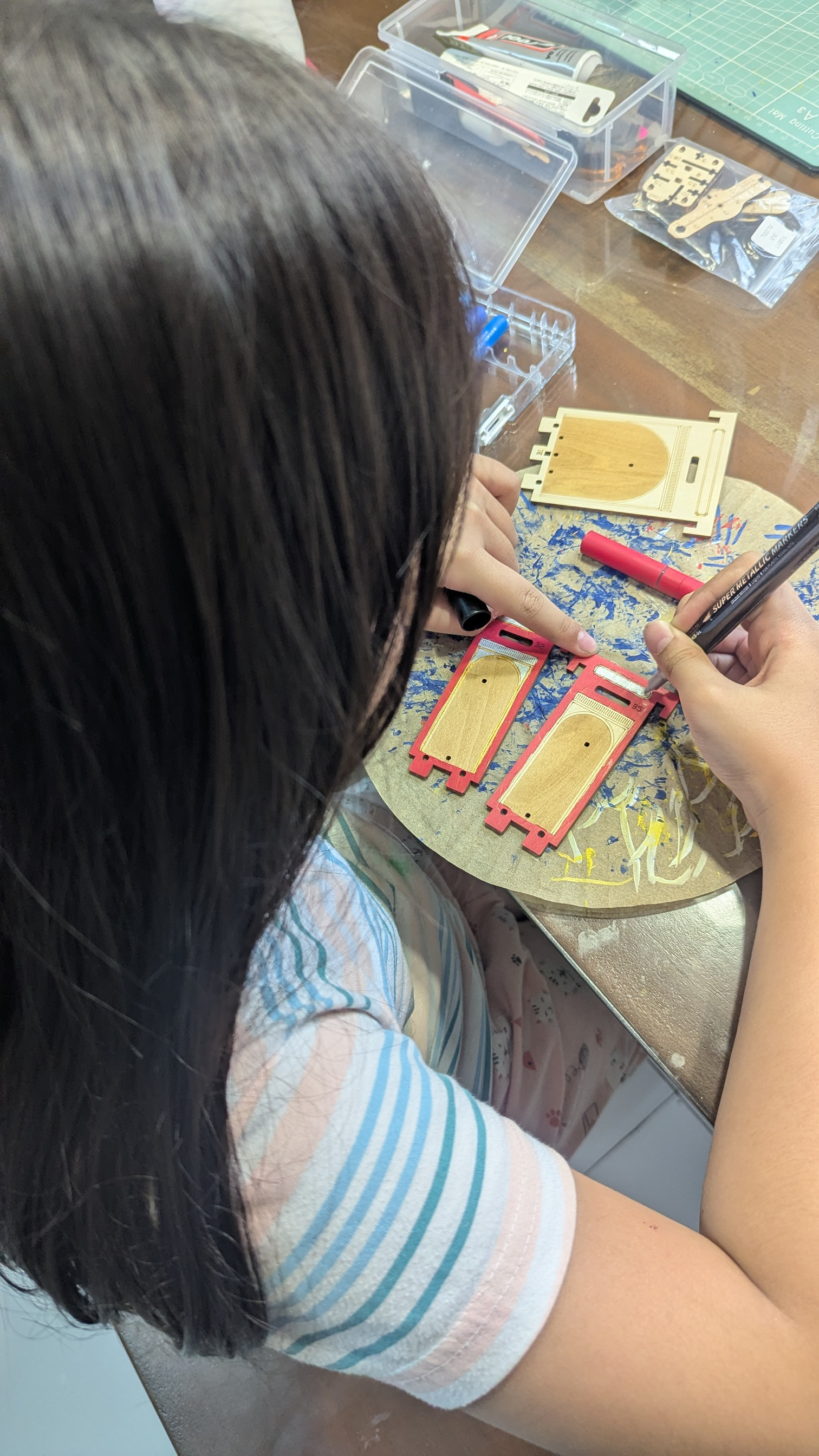
Several months later, Jill's husband began the assembly at the family's dining table. Their daughter joined him because she wanted to paint the parts. What started as Jill's prize became a project with distinct roles: one person followed the mechanical construction, another developed the color and decorative details, and Jill recorded the story as it unfolded.
Painting through trial and error
The family did not aim for factory-like uniformity. They experimented. Some colors varied as the build progressed, and the paint finish changed as they learned what worked on the wooden surfaces. Jill later noted that small rollers produced a more even result than brushes—a practical lesson discovered through the project rather than decided in advance.
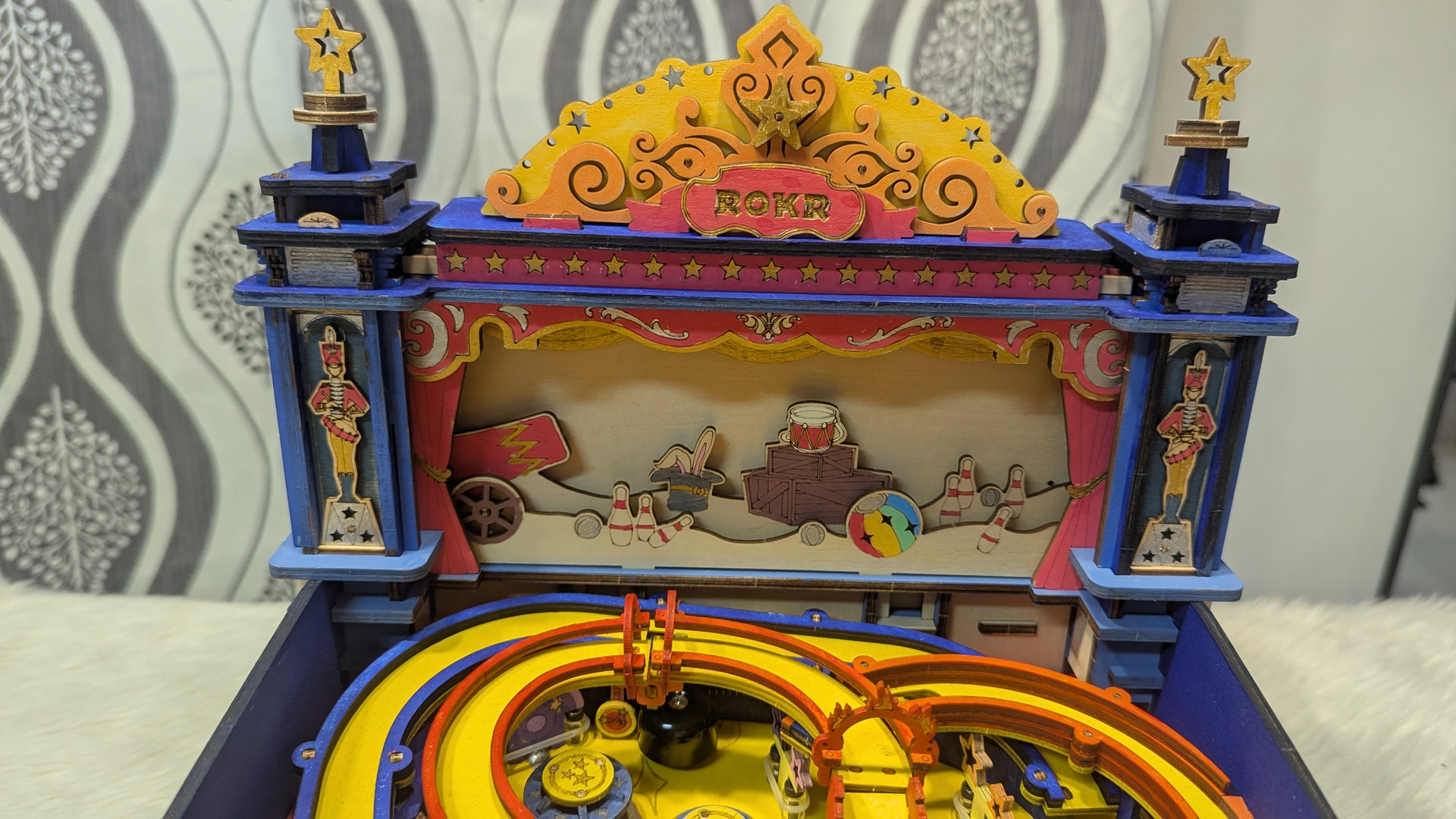
The completed palette is bold enough to change the character of the original model. Blue structural panels frame a yellow playfield, while red, orange, pink, gold and silver accents make the ramps and circus architecture easy to follow. The color does more than decorate the machine: it visually separates the ball paths, flippers, targets and surrounding structure.

Details that belong to the family
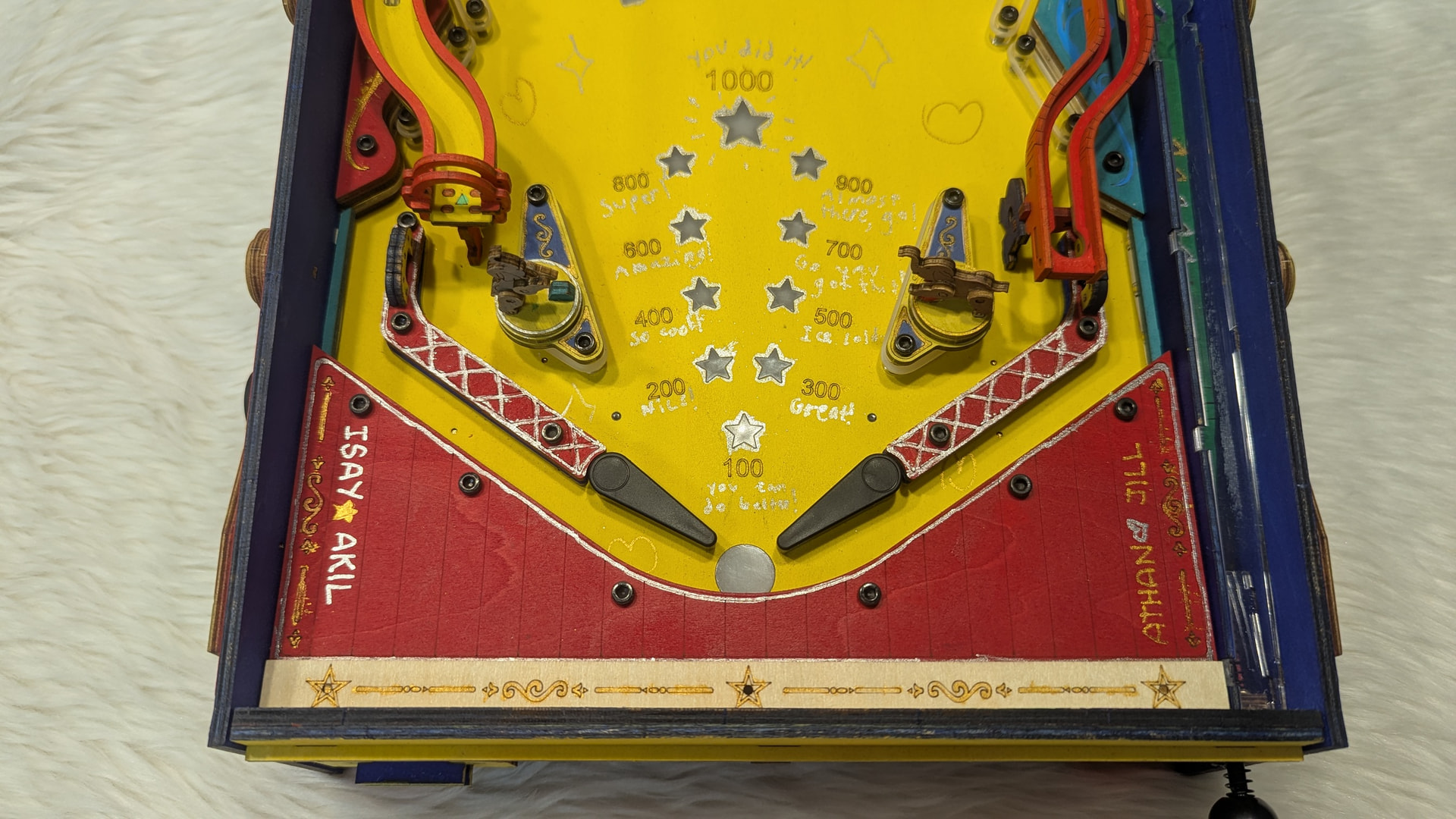
The most meaningful customization is found on the playfield. Jill's daughter wrote playful reactions beside the scoring positions, turning each landing point into a miniature message. Jill's husband added the family's names near the lower corners. These marks are not decorative extras supplied with the kit; they are personal additions that record who participated.
Instead of hiding the irregularities created during painting, the family accepted them as part of the build. Jill described the finished machine as having “beautiful imperfections.” That attitude gives other makers a useful principle: a shared project can preserve evidence of the hands that made it. Exact color matches and flawless lines may matter less than the memories attached to them.
A game made to be remembered
After assembly, the project became a playable object rather than a display-only model. Jill's family enjoyed the game, although she reported that their ball launcher was difficult to use because a nearby ramp interfered with the launch path. While looking for a solution, they temporarily tilted their machine to move the ball into play. This was their experience with their individual build, not a general claim about every EG01 kit.
Jill also photographed the pinball machine beside the family's painted ROKR Gear Ball Challenge. The matching colors make the two mechanical builds feel like a small home arcade collection, but the connection runs deeper: both record time spent making and playing together.
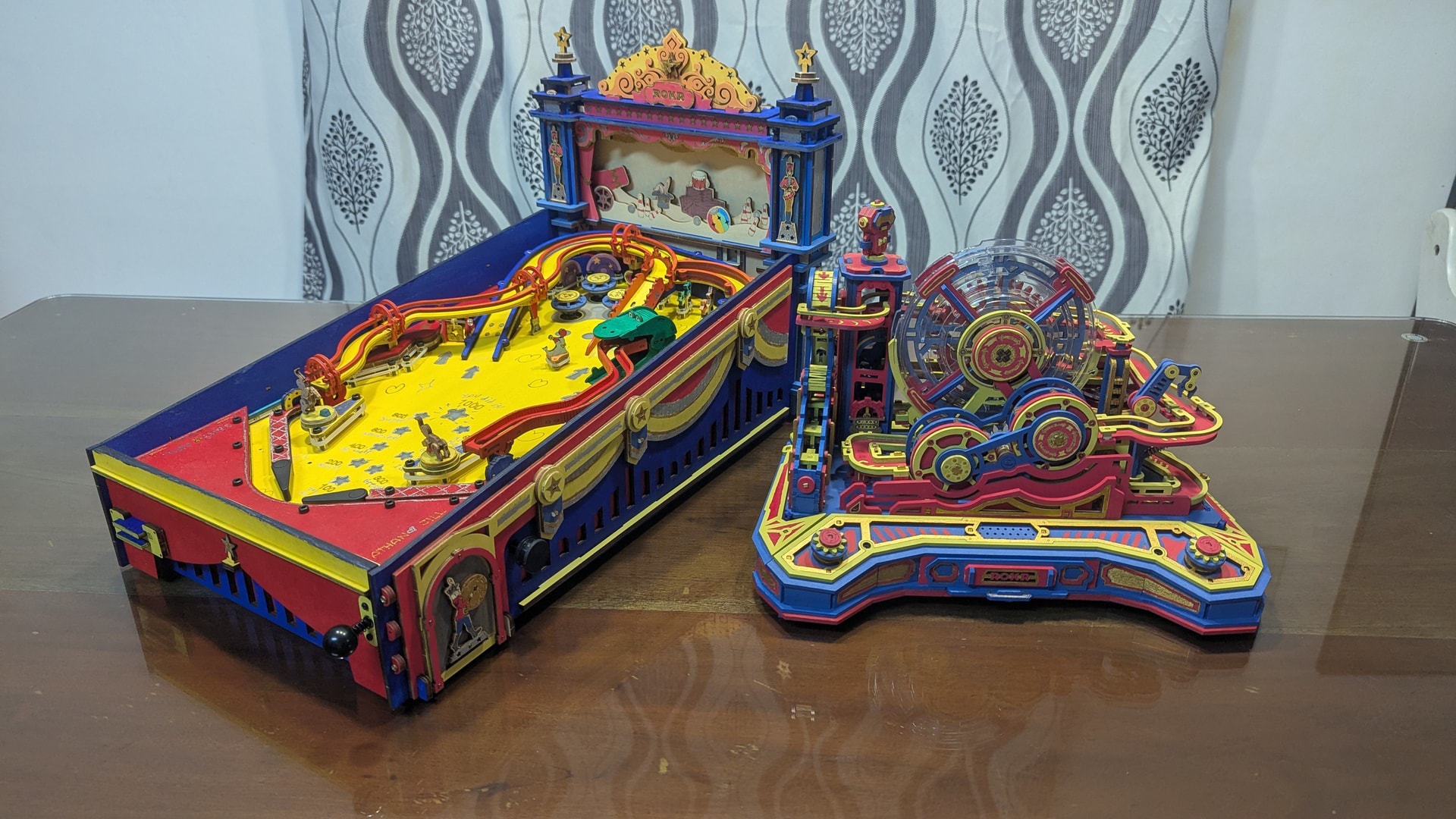
Jill hopes the models will stay with the family long enough for her children to share them with children of their own. That hope captures what makes this project memorable: the machine is both a working mechanical build and a record of a particular season at the family table.
For makers inspired by the story, the original ROKR 3D Pinball Machine EG01 begins with a natural wood finish, leaving plenty of room for a custom palette—or for the wood itself to remain the main visual feature.

Creator and photo credit: Jill Ann Francisco. Personal paint, handwritten details and family customizations shown in this story are not included with the kit. Read Jill's complete series on Robotime Community: prize arrival, family build, painting progress, near completion, and final reveal.


Robotime Creative Team
As Robotime's earliest audience and testers, they start from user needs and are dedicated to sharing stories and insights about the brand and its products.
Robotime is a creative lifestyle company dedicated to designing and developing 3D puzzles, toys, and wooden handicrafts. Subscribe to learn more.
Enjoy Robotime building guides and creative inspiration?
Add Robotime as a Preferred Source on Google to see more of our latest stories in Search.
 Add Robotime to your Preferred Sources
Robotime Creative Team
As Robotime's earliest audience and testers, they start from user needs and are dedicated to sharing stories and insights about the brand and its products.
Robotime is a creative lifestyle company dedicated to designing and developing 3D puzzles, toys, and wooden handicrafts. Subscribe to learn more.


Leave a comment
This site is protected by hCaptcha and the hCaptcha Privacy Policy and Terms of Service apply.