


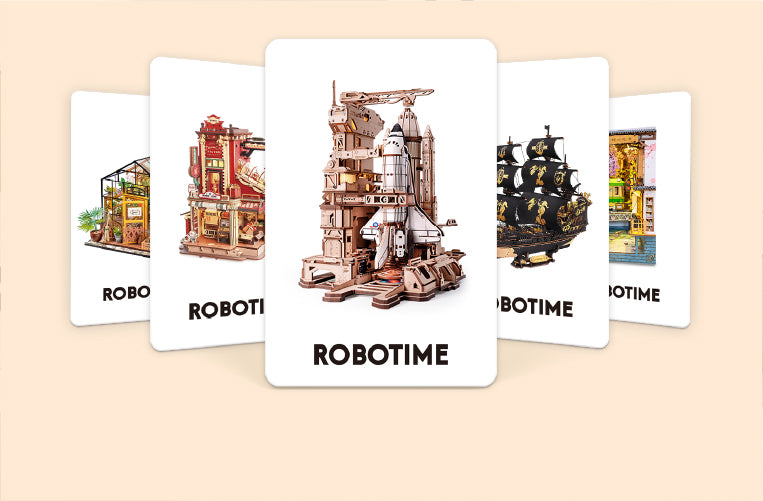



In recent years, a powerful cultural shift has been reshaping the world of hobbies, creativity, and consumer behavior. Adults are no longer satisfied with passive entertainment. Instead, they are turning toward hands-on experiences, such as building, crafting, assembling, and creating with intention.
Interestingly, this movement has a name: Kidults.
From intricate 3D wooden puzzles to detailed miniature houses, more adults are rediscovering the joy of building. DIY craft brands are seeing a surge in interest from grown-ups who want more than screen time and streaming queues. They want focus. They want a challenge. They want something tangible at the end of their effort.
This comprehensive guide explores what “kidults” really means, why the trend is growing so rapidly, and why building kits is becoming the hobby of choice for modern adults.
What Does “Kidults” Mean?
In simple terms, kidults are adults who intentionally engage in play-based hobbies—such as building, collecting, or crafting—not as escapism, but as a way to relax, focus, and create meaningful personal experiences.
The term “kidults” blends two words: kids and adults. But its meaning goes far beyond playful wordplay.
Kidults are adults who actively choose to engage in activities traditionally associated with childhood—not out of regression, but out of intention. They buy toys, build models, collect figures, assemble puzzles, and embrace hobbies that spark creativity and joy. Importantly, kidults are not rejecting adulthood. They are redefining it.
Kidults are categorized into the following distinct types:
- Enthusiast kidults: The enthusiast kidults are avid collectors that own a good number of DIY models. These are the backbone of the kidult community. They often enjoy complex mechanical builds and detailed assembly processes, finding satisfaction in longer projects that challenge both precision and patience.
- Casual kidults: The casual adults have a moderate collection of DIY models, blending leisure with their collecting passions. They typically prefer weekend builds or shorter projects, using hands-on assembly as a way to relax, reduce stress, and step away from screens.
- Selective kidults: Selective kidults are individuals who focus on two or three types of DIY models, often driven by deep-seated nostalgia. They are usually drawn to themed or story-driven kits that connect to personal memories, interests, or meaningful life experiences.
The Origin of the Term “Kidults”
The concept of adults engaging in playful hobbies isn’t new. However, the formal recognition of “kidults” as a major consumer segment has gained significant momentum in recent years, especially in global toy industry reports and market research.
Industry analyses from international trade organizations such as Spielwarenmesse have identified kidults as one of the fastest-growing segments in the global toy and hobby market. What was once considered a niche—adult collectors or hobbyists—has evolved into a dominant force influencing product design, marketing, and retail strategies.
Several factors accelerated this shift:
- Greater social acceptance of “geek culture”
- The rise of nostalgic reboots in media
- Increased disposable income among millennials and Gen Z
- Pandemic-era hobby exploration
What started as a quiet consumer behavior is now a full cultural trend.
Kidults Are Not Children Playing — They’re Adults Choosing How to Play
There’s a misconception that kidults are adults clinging to childhood. That framing misses the point. Kidults approach hobbies differently from children:
- They value craftsmanship and detail.
- They appreciate complexity and design.
- They seek intentional relaxation, not distraction.
- They’re willing to invest in quality.
When an adult builds a miniature café or assembles a mechanical wooden model, it’s not about pretend play. It’s about:
- Cognitive engagement
- Emotional restoration
- Personal achievement
This is deliberate play. Structured creativity. Focused immersion.
In many ways, kidults represent a more evolved relationship with play—one that integrates maturity, curiosity, and self-awareness.
Why Are Kidults Growing So Fast Right Now?
The rapid growth of the kidult segment isn’t accidental. It’s a direct response to how modern life has changed.
According to industry insights highlighted by Spielwarenmesse, kidults are now one of the fastest-growing segments in the global toy and hobby market. Adults now account for a significant and expanding portion of toy and hobby sales globally. This shift is reshaping entire product categories, from collectibles to advanced building kits.
Here are some statistics:
- In the United States, consumers spent $13.4B on toys for recipients aged 12 or more from October 2024 to September 2025. Additionally, there is a 12% increase year over year on models. The U.S. is now making up 30.2% of all toy sales.
- During that same period, $5.7B was spent on toys for recipients aged 12 or more in Germany, Italy, France, GB, and Spain. Furthermore, there is a 14% increase year over year on models. These countries now make 32% of all toy sales.
- Both regions recorded sales increases in the last 12 months to September 2025.
- Looking at the reports, it is projected the market could reach between €6.9B & €7.8B by 2030.
But why is there rapid growth?
Adults Are Spending More on Themselves, Not Just on Gifts
For decades, toys were purchased primarily for children. Adults were buyers—but not users. That’s changed.
Millennials and Gen Z consumers increasingly prioritize experiences, personal growth, and hobbies that enrich their daily lives. Rather than viewing hobbies as indulgent or childish, they see them as essential to well-being.
Key drivers include:
- Higher average marriage age and delayed parenthood
- Increased single-person households.
- Growing emphasis on self-care
- More flexible work lifestyles
- Increased purchasing power and higher disposable income to spend on premium collectibles.
- Nostalgia and emotional wellness
- Stress relief
- Cultural shift and social media
- Industry strategy
Adults now spend intentionally on themselves—not only on necessities, but also on activities that bring satisfaction and meaning. Building kits, mechanical models, and miniature houses fall perfectly into this category: affordable luxury experiences that deliver hours of engagement.
Screen Fatigue Is Driving People Back to Hands-On Activities
We live in a hyper-digital world. Work, communication, entertainment, and social interaction often happen on screens.
The result? Screen fatigue.
Many adults report:
- Difficulty concentrating
- Burnout from constant notifications
- Reduced attention spans
- Mental exhaustion
Hands-on building offers a powerful antidote.
When assembling a wooden mechanical model or constructing a detailed miniature house, your hands are busy. Your phone is down. Your mind narrows its focus to one tactile task.
This analog experience provides:
- A break from blue light exposure
- A slower cognitive rhythm
- A sense of physical interaction missing from digital life
In a world dominated by pixels, building offers something real.
What Kidults Are Actually Looking For (It’s Not Just Fun)

It’s easy to assume that kidults are simply chasing nostalgia or lighthearted entertainment.
In reality, their motivations run much deeper.
Focus — A Break From Endless Notifications
Modern life fragments attention. Emails, social media, group chats, streaming platforms—everything accumulates in the brain and causes mental breakdown if not taken care of. Building kits, on the other hand, demand focus.
When following step-by-step instructions, aligning wooden components, or installing miniature furniture pieces, attention becomes singular. This creates a state similar to “flow,” where:
- Time feels suspended
- External worries fade
- Concentration deepens naturally
For many adults, this focused immersion is profoundly restorative. It’s not about escape—it’s about mental recalibration.
Challenge — Without Pressure
Work provides challenge, but often with stress attached. Deadlines, performance reviews, financial consequences. Kidult hobbies offer a different kind of challenge:
- Problem-solving without professional stakes
- Skill-building without competition
- Learning without evaluation
Building kits strike a sweet spot between complexity and achievability. They require patience and precision—but mistakes are reversible. There is no boss grading your work. Only personal progress. This “safe challenge” is deeply appealing to adults who crave growth without burnout.
Mastery — The Satisfaction of Finishing Something Real
Many modern tasks feel intangible. You send emails. Attend virtual meetings. Update spreadsheets. But what do you hold at the end of the day? Often times, the day isn’t really satisfactory. And the next day, you have to repeat the same routine.
Kidult hobbies offer visible proof of effort.
Completing a mechanical wooden clock model or a detailed miniature bookstore provides:
- Tangible accomplishment
- A display-worthy object
- A reminder of patience and skill
Mastery is powerful. Especially when it results in something you can see, touch, and share.
Why Building Kits Fit the Kidult Mindset Perfectly

Among all hobby categories—collectibles, gaming, and crafting—building kits stands out as uniquely aligned with the kidult mindset.
Why? Because they combine structure, creativity, logic, and artistry in one cohesive experience.
Building Is Structured Play for Adult Brains
Children often engage in open-ended play. Adults, however, frequently prefer structure.
Building kits provide:
- Clear instructions
- Defined steps
- Progressive milestones
- Predictable outcomes
This structure reduces decision fatigue while still allowing creativity in execution.
For adults accustomed to organized workflows, this balance feels intuitive and satisfying. You’re not starting from a blank canvas. You’re guided—but still actively constructing. It’s creativity with rails.
Mechanical Kits Combine Creativity With Engineering Thinking

Mechanical wooden models elevate the building experience further.
These kits often include:
- Gears
- Springs
- Moving components
- Functional mechanisms
When assembled, they don’t just sit on a shelf—they move, tick, rotate, or operate.
DIY brands specialize in intricate designs that blend art with engineering logic. Builders experience both aesthetic pleasure and intellectual stimulation.
This appeals strongly to adults who enjoy:
- Problem-solving
- Technical systems
- Precision work
- Logical sequencing
Mechanical kits satisfy the analytical side of the brain while still delivering visual beauty.
You Don’t Need to Be an Engineer to Enjoy Building
A common hesitation among adults is the belief that building kits are only for technically inclined individuals. That’s a myth.
Modern DIY kits are designed with accessibility in mind:
- Pre-cut wooden pieces
- Illustrated instructions
- No advanced tools required
- Clear, step-by-step assembly
DIY brands create miniature houses and scenes that are intricate yet approachable. You don’t need formal training—just patience and curiosity. The goal isn’t perfection. It’s engagement.
And every completed kit builds confidence for the next one.
Kidults Are Redefining What “Adult Hobbies” Look Like

For generations, adult hobbies were categorized narrowly: golf, gardening, knitting, woodworking, and fitness. Today, the boundaries are dissolving.
Play Is No Longer the Opposite of Productivity
Modern research on creativity and well-being increasingly shows that play enhances productivity rather than detracting from it.
Play:
- Boosts cognitive flexibility
- Encourages problem-solving
- Reduces stress
- Improves mood
When adults build models or assemble miniatures, they’re not wasting time. They’re restoring mental energy.
The cultural narrative is shifting. Play is no longer childish—it’s strategic.
For Many Kidults, Building Is a Form of Personal Time
In a hyper-connected world, personal time is scarce.
Kidult hobbies create intentional solitude:
- No scrolling
- No multitasking
- No algorithmic interruptions
Just you and the build.
For some, it’s a quiet evening ritual. For others, it’s a weekend reset. For many, it becomes a meditative practice—a way to disconnect from digital noise and reconnect with physical creativity.
This is not escapism. It’s boundary-setting.
Final Thoughts: Being a Kidult Is Not About Age — It’s About Choice
The rise of kidults signals something deeper than a toy industry trend. It reflects a generational shift in how adults define fulfillment.
To be a kidult is to choose engagement over passive consumption. It is to choose creativity over constant scrolling, choose mastery over monotony, and choose joy without apology.
Building kits, miniature houses, and mechanical models resonate because they align with this mindset. They offer structure without rigidity. Challenge without pressure. Creativity without chaos.
In a world moving faster than ever, kidults are slowing down—piece by piece. And in doing so, they are rediscovering something powerful: The simple, profound joy of building real—slowly, intentionally, and with their own hands.

Quincy Ihendeson
Quincy is an experienced writer, passionate about creating engaging blogs. She has been researching and crafting high-quality content since 2023. She currently contributes to Robotime, sharing her DIY journey and stories.
Robotime is a creative lifestyle company dedicated to designing and developing 3D puzzles, toys, and wooden handicrafts. Subscribe to learn more.
Enjoy Robotime building guides and creative inspiration?
Add Robotime as a Preferred Source on Google to see more of our latest stories in Search.
 Add Robotime to your Preferred Sources
Quincy Ihendeson
Quincy is an experienced writer, passionate about creating engaging blogs. She has been researching and crafting high-quality content since 2023. She currently contributes to Robotime, sharing her DIY journey and stories.


Leave a comment
This site is protected by hCaptcha and the hCaptcha Privacy Policy and Terms of Service apply.