


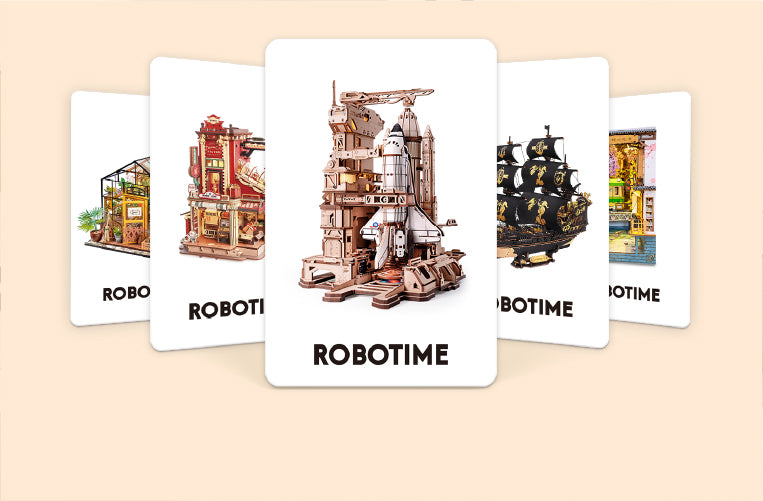


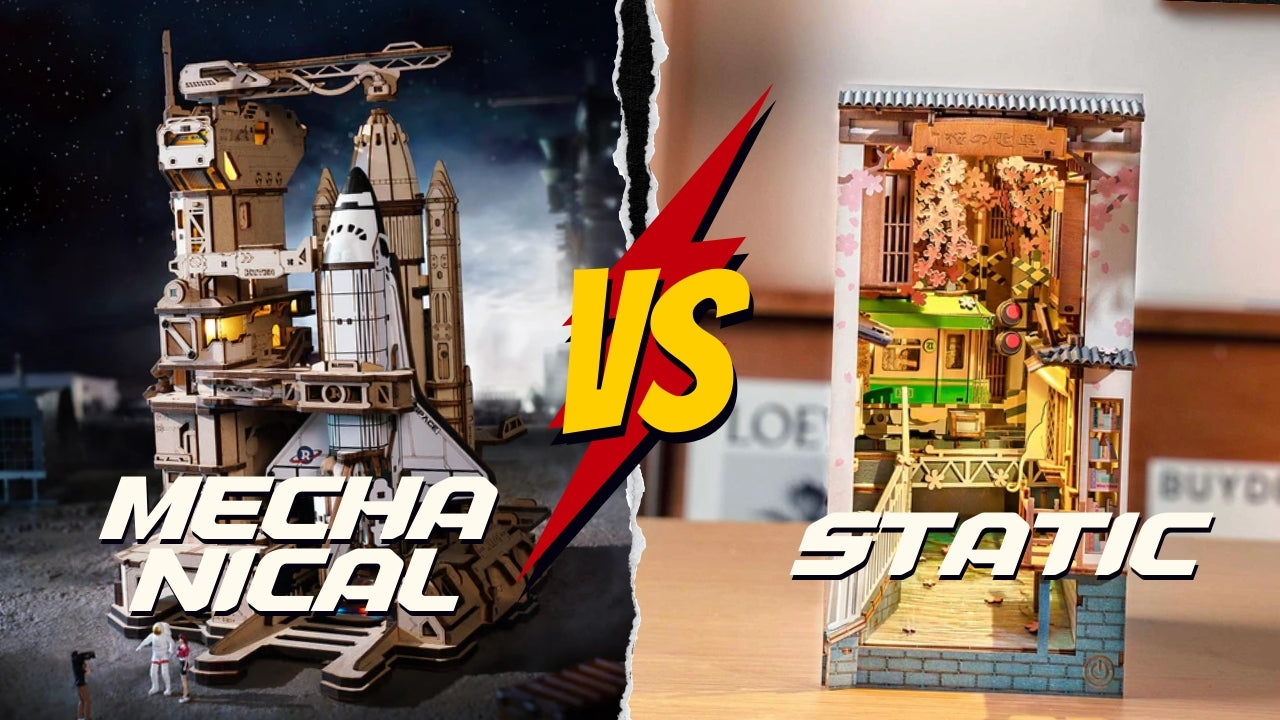
DIY model kits have evolved far beyond simple decorations. Today, builders are no longer deciding whether to build, but how they want to engage, through motion or through visual storytelling. Among the most popular options are mechanical model kits that move and miniature or decorative model kits that focus on atmosphere and display.
Both offer hands-on satisfaction, but they engage the mind in very different ways. Mechanical model kits emphasize how things work, while miniature and decorative kits focus on how things look and the story they create.
In this article, we’ll take a clear, practical look at how mechanical model kits differ from miniature and decorative model kits, and what each type offers.
What is a Mechanical Model Kit?
A mechanical model kit is a build that includes functional components such as gears, shafts, cranks, and linkages. Once assembled, the finished model becomes functional — turning, lifting, rolling, or cycling through motion.
Mechanical model kits are designed to demonstrate real-world engineering principles in a hands-on way. In other words, you don’t just build a model; you activate it and watch it come to life.

Mechanical model kits typically feature:
- Visible internal mechanisms
- Functional movement after completion
- A focus on logic, sequencing, and cause-and-effect
What are Miniature & Decorative Model Kits?
Miniature and decorative model kits are designed around structure, storytelling, and visual presentation. Once completed, they remain still and serve as display pieces. Popular examples include miniature house kits, book nook kits, and wooden display model kits.
These types of builds are sometimes referred to as static models because they do not include moving mechanisms. Instead, they emphasize artistic detail, lighting, and scene composition.
Miniature and decorative model kits typically feature:
- No functional moving parts
- Simplified internal structure
- Display-focused and story-driven design

Comparison of Mechanical and Static Models
| Aspect | Mechanical Models | Miniature & Decorative Model Kits |
| Movement | Functional motion after completion | No movement |
| Internal Structure | Gears, linkages, transmission systems | Minimal or decorative structural elements |
| Build Experience | Logic-driven, system-based | Detail-driven and assembly-focused |
| Interaction | Can be operated and observed in motion | Primarily designed for display |
| Learning Value | Demonstrates mechanical and engineering principles | Primarily visual |
| Long-Term Engagement | Ongoing interaction experience | Satisfaction focused on the building and display result |
How Motion Changes the Building Experience
Motion transforms a model from a one-time project into an interactive object. Mechanical model kits reward precision. If one gear is placed incorrectly, the entire system may fail. However, when everything aligns properly, the model becomes fully functional.
This adds challenge, depth, and a strong sense of accomplishment when the finished model operates as intended. Many DIY builders describe mechanical model kits as immersive because the reward continues every time the model is activated.
Display Value: Moment vs Atmosphere
Miniature and decorative model kits excel at visual storytelling. A miniature house or book nook draws attention through layered detail, warm lighting, and thoughtful composition.
Mechanical model kits, on the other hand, capture interest through motion. The moving parts naturally invite curiosity and interaction, making them engaging conversation pieces.
While decorative kits are ideal for calm and atmospheric display settings, mechanical kits are often appreciated as dynamic artistic builds.
Which Type of Model Kit Is Right for You?
Choose a mechanical model kit if you:
- Enjoy problem-solving and understanding how systems function
- Want a model that offers long-term interactive enjoyment
- Are fascinated by engineering and motion
Choose a miniature or decorative model kit if you:
- Prefer detail-oriented and relaxing assembly
- Appreciate aesthetics, storytelling, and creative environments
- Want a visually striking display piece
Mechanical Design vs Static Design: Two Different Philosophies
Mechanical design is rooted in function. Every component exists to support movement and system performance.
Decorative and miniature design focuses on atmosphere, artistic expression, and visual storytelling. The emphasis is placed on composition, detail, and presentation.
Neither approach is superior, they simply represent different creative directions within the DIY model-building hobby.
Final Thoughts
Mechanical model kits and miniature decorative model kits offer two unique ways to experience hands-on creativity. One helps you understand how systems move and interact, while the other invites you to explore storytelling and visual craftsmanship.
Whichever path you choose, building model kits can turn creative time into a rewarding and meaningful experience. Whether you're drawn to moving mechanical builds or immersive miniature scenes, Robotime offers a wide range of model kits designed for different creative interests.

Jennifer Calapit
Jennifer is a lifelong writer whose thoughtful, curiosity-driven storytelling has grown from childhood passion to a versatile online writing career.
Robotime is a creative lifestyle company dedicated to designing and developing 3D puzzles, toys, and wooden handicrafts. Subscribe to learn more.
Enjoy Robotime building guides and creative inspiration?
Add Robotime as a Preferred Source on Google to see more of our latest stories in Search.
 Add Robotime to your Preferred Sources
Jennifer Calapit
Jennifer is a lifelong writer whose thoughtful, curiosity-driven storytelling has grown from childhood passion to a versatile online writing career.


Leave a comment
This site is protected by hCaptcha and the hCaptcha Privacy Policy and Terms of Service apply.