





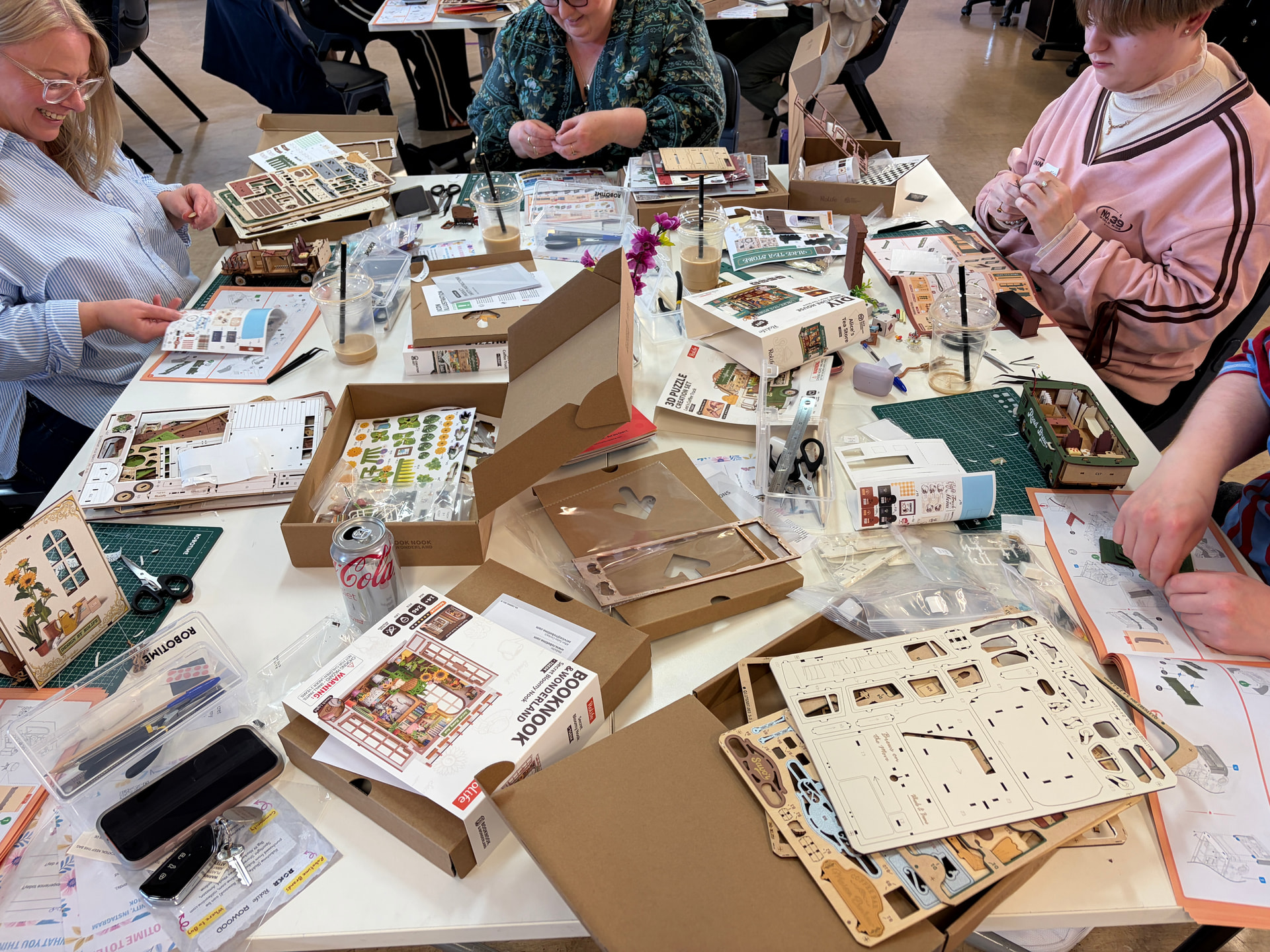
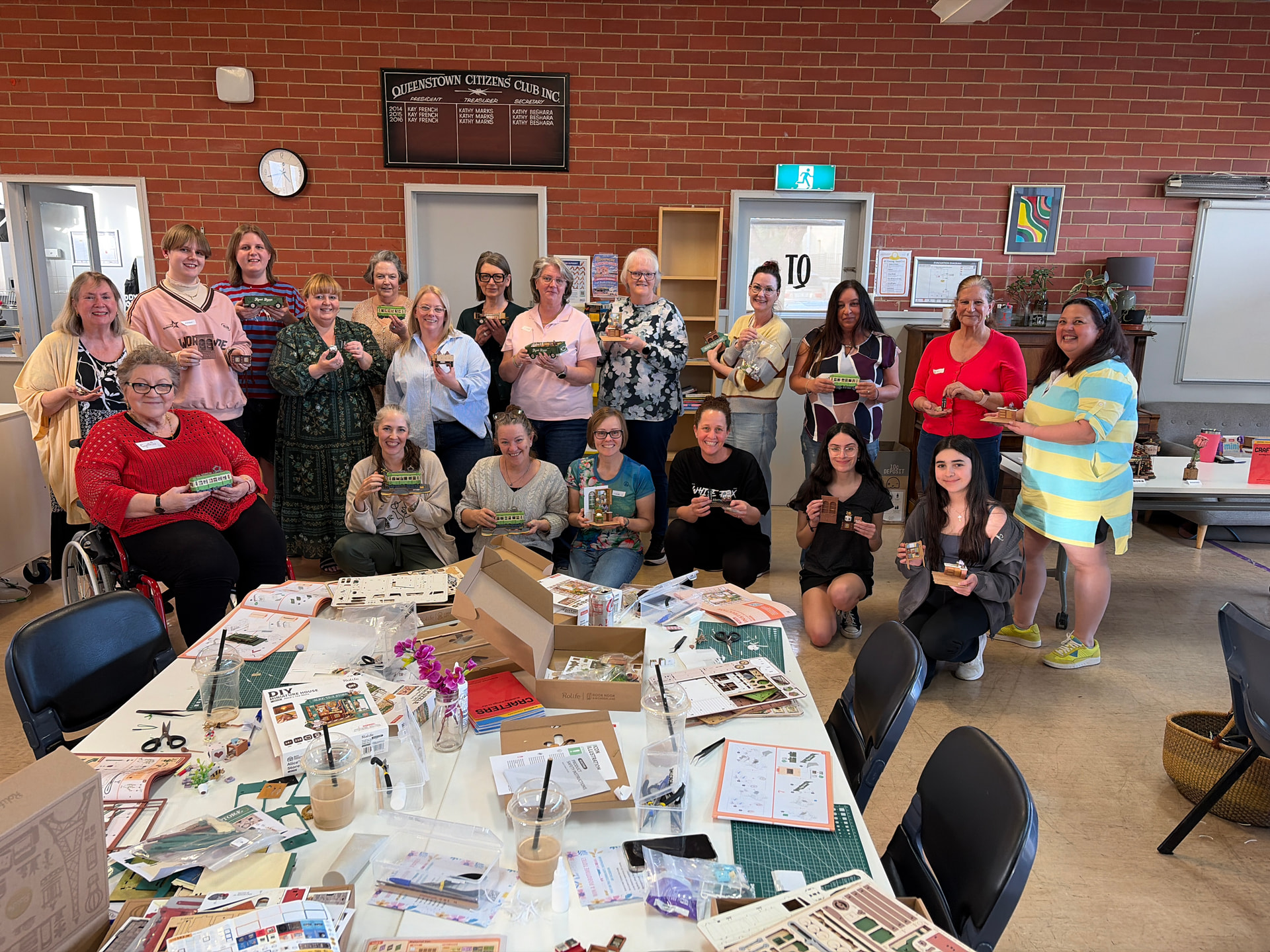
By mid-afternoon, one table at Queenstown Hall had disappeared beneath open boxes, instruction sheets, wooden panels, tools, and half-built miniature worlds. To host Jo Zanella, the cheerful disorder was not a problem to solve. It was proof that everyone had settled in.
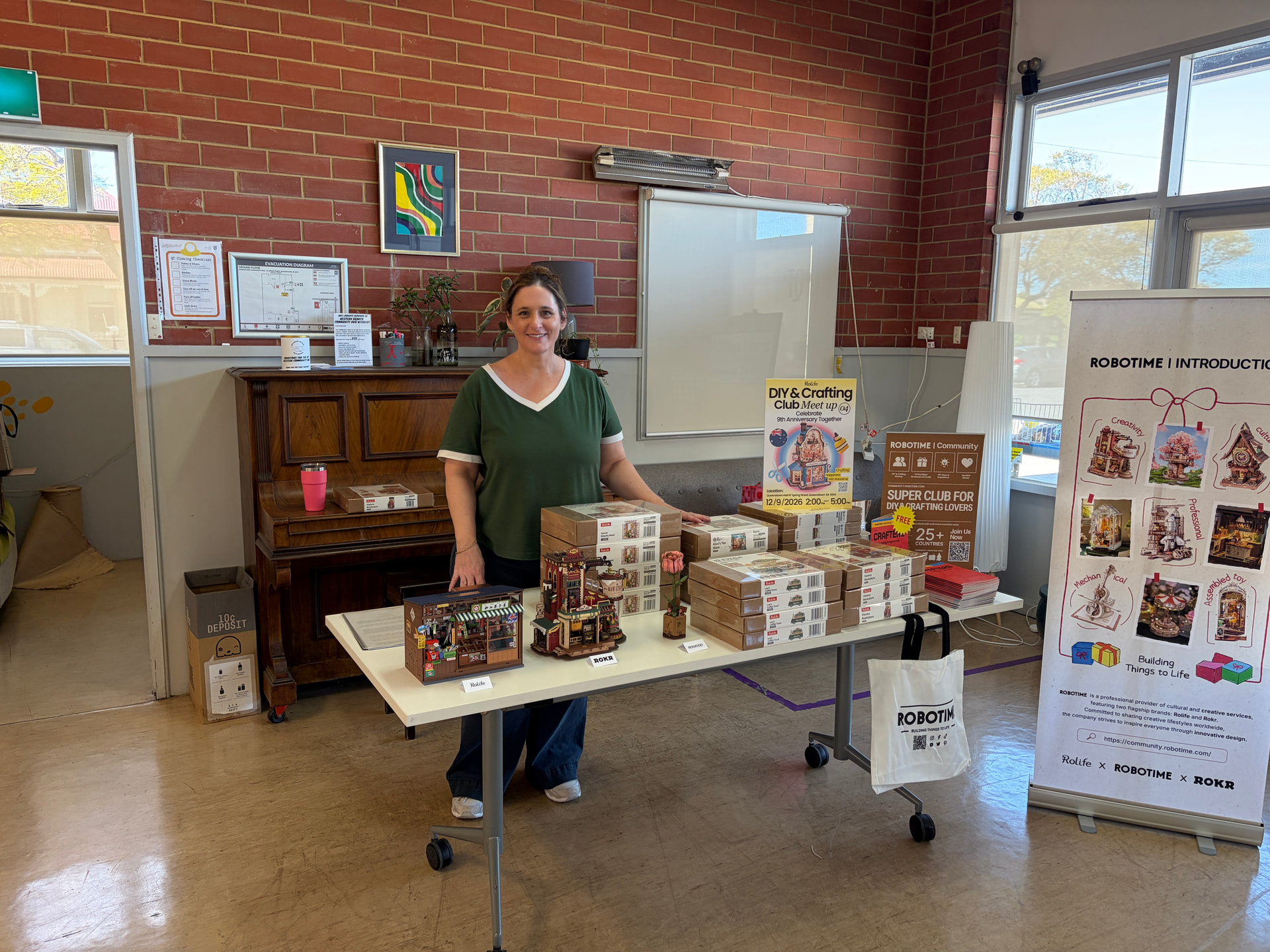
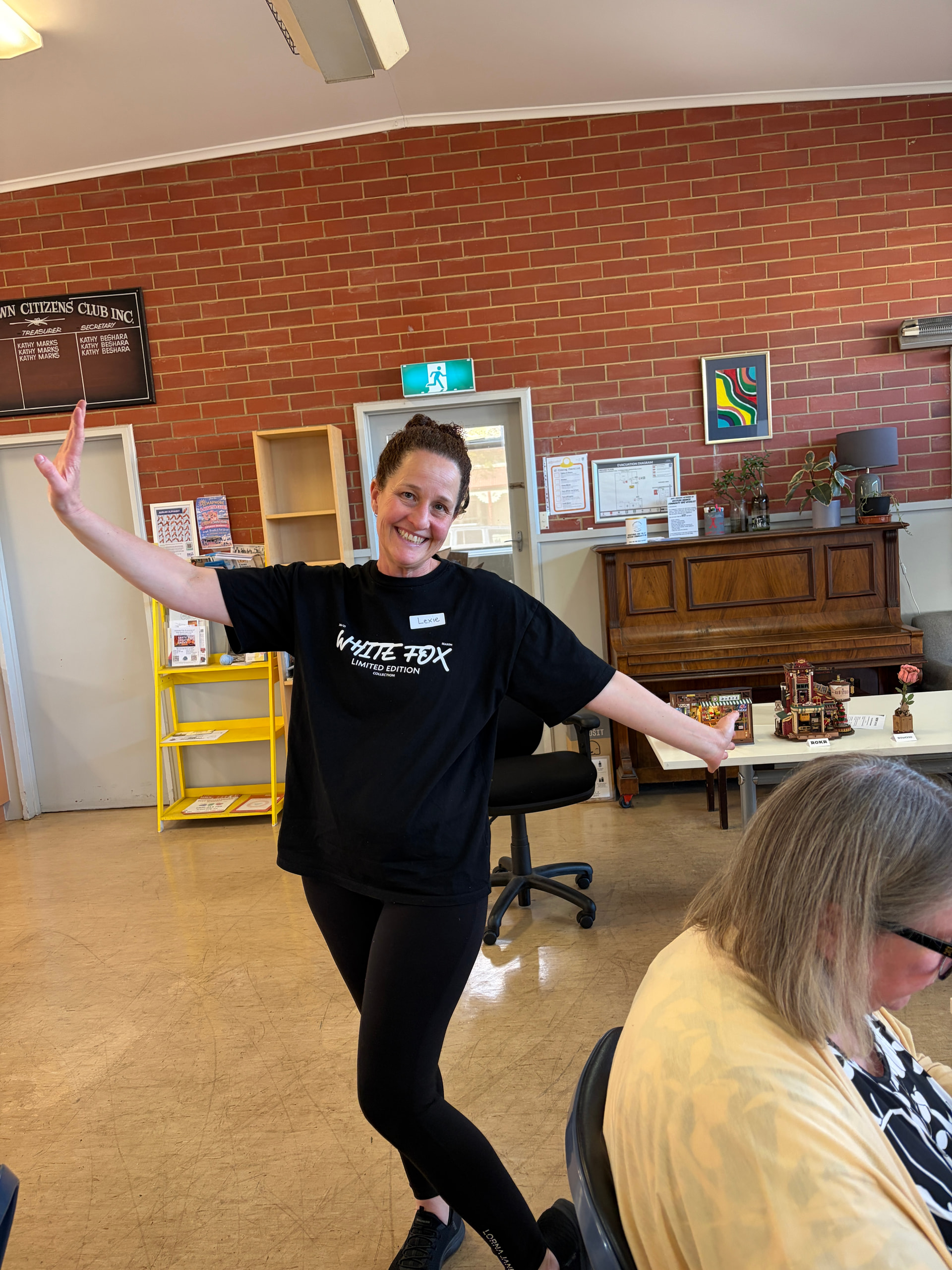
On September 12, 2026, Jo welcomed 20 participants to her second Robotime DIY & Crafting Club meetup in Queenstown, South Australia. Every booked place was filled. With her friend Lexie helping throughout the setup, workshop, and pack-up, Jo turned the local community hall into a free three-hour making space where concentration, conversation, and laughter could share the same table.
The afternoon's defining idea was simple: participants drew their kits at random. Instead of choosing the most familiar project, each maker opened a surprise. That small element of chance gave the gathering its momentum—and showed how a supportive room can make an unfamiliar build feel inviting.
Preparing the room before the makers arrived
Several days before the meetup, Jo was already cleaning toolkits, organizing boxes, and finishing printed materials. She credited fellow Community member Jade for sharing form designs that helped with the preparation. Jo had also selected the kits herself—a deceptively difficult job when the aim is to offer enough variety for 20 different makers.
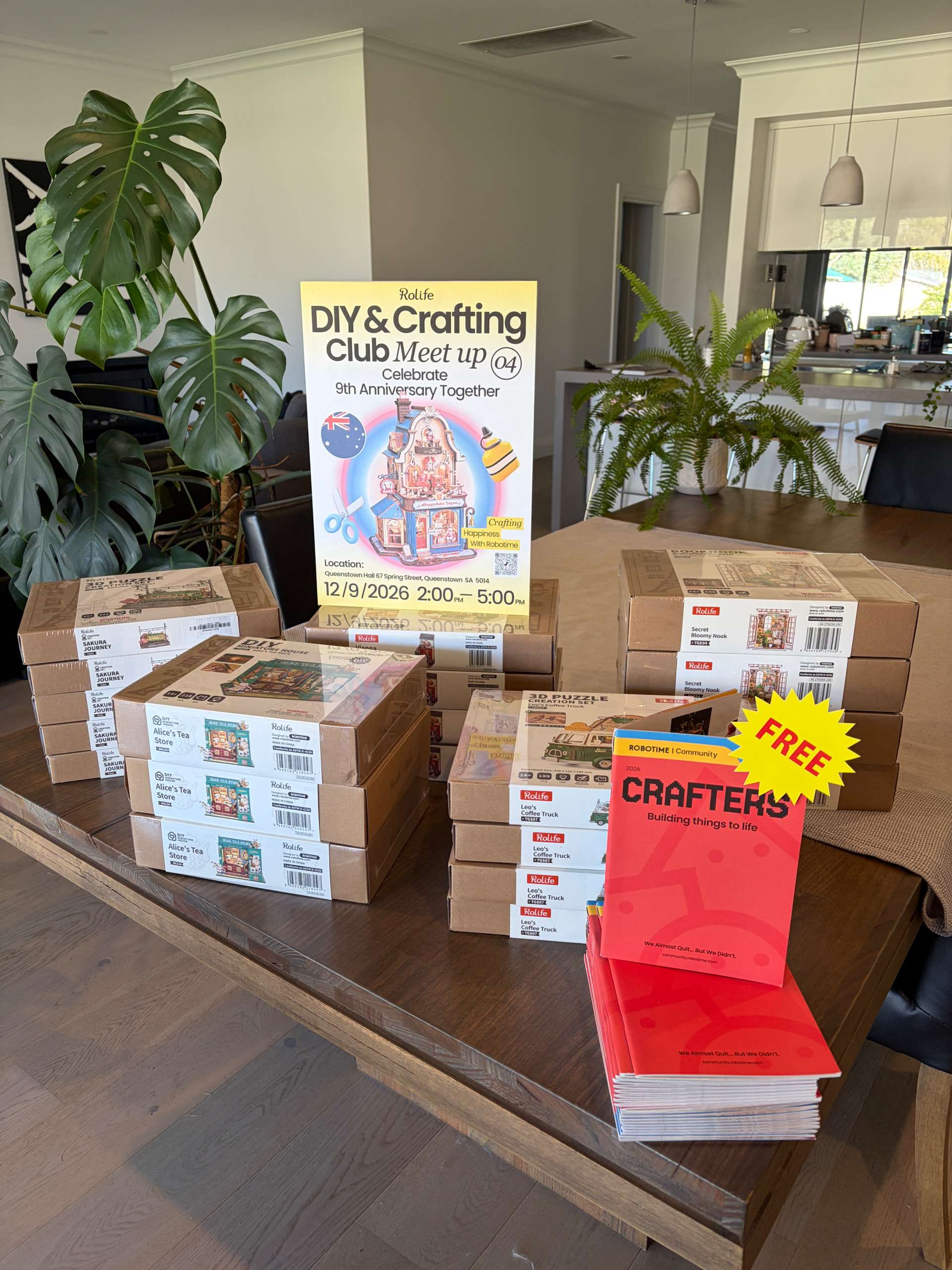
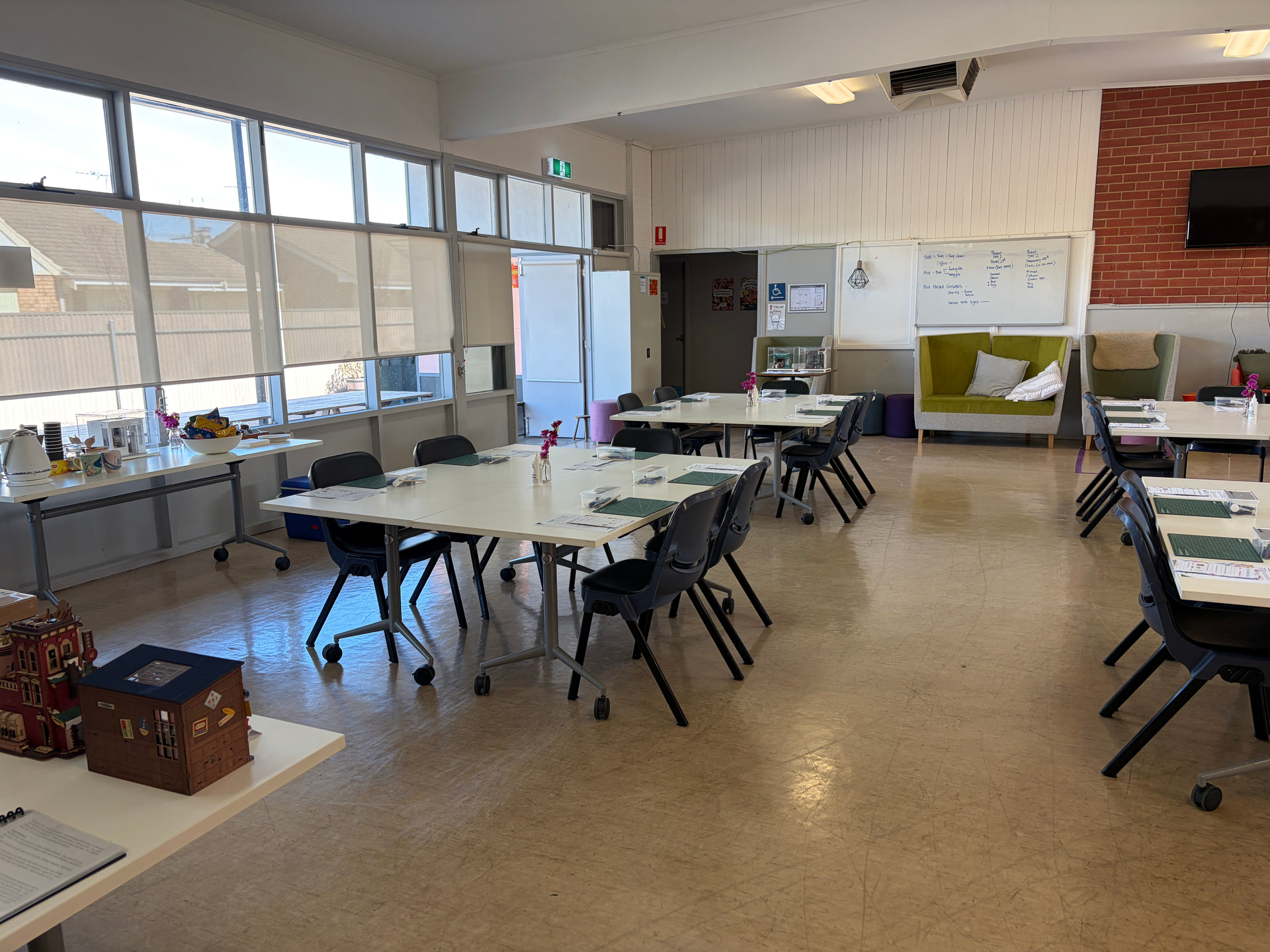
At Queenstown Hall, the empty room offered the right balance: enough space for several worktables, but compact enough for participants to notice what others were making. Jo prepared a product display and introduction area at the front, while shared tools and work surfaces waited around the room. The setup created a workshop without making it feel like a classroom.
A surprise kit changed the first question
Rather than asking everyone to arrive with a project already chosen, Jo used a draw to assign the kits. A surprise can create a moment of uncertainty, especially when a maker opens a style they would not normally select. In this room, that uncertainty became a conversation starter: What did you get? Where do these pieces begin? Has anyone built something like this before?
Jo believed the draw encouraged people to move beyond their usual preferences and try something they might otherwise have overlooked. The photographs show that variety spreading across the tables: miniature rooms, book nooks, and detailed wooden builds developing side by side instead of 20 identical projects moving at the same pace.
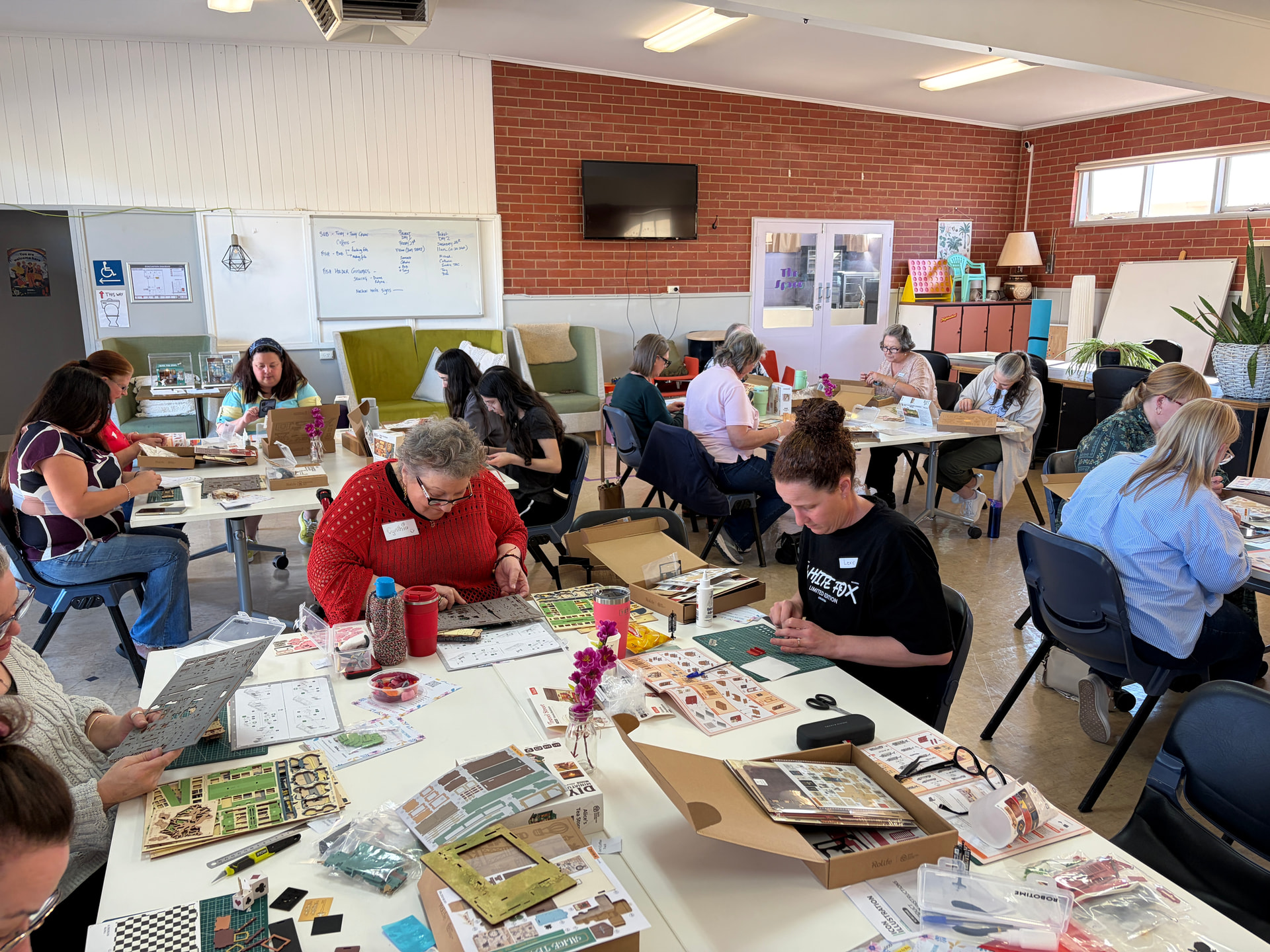
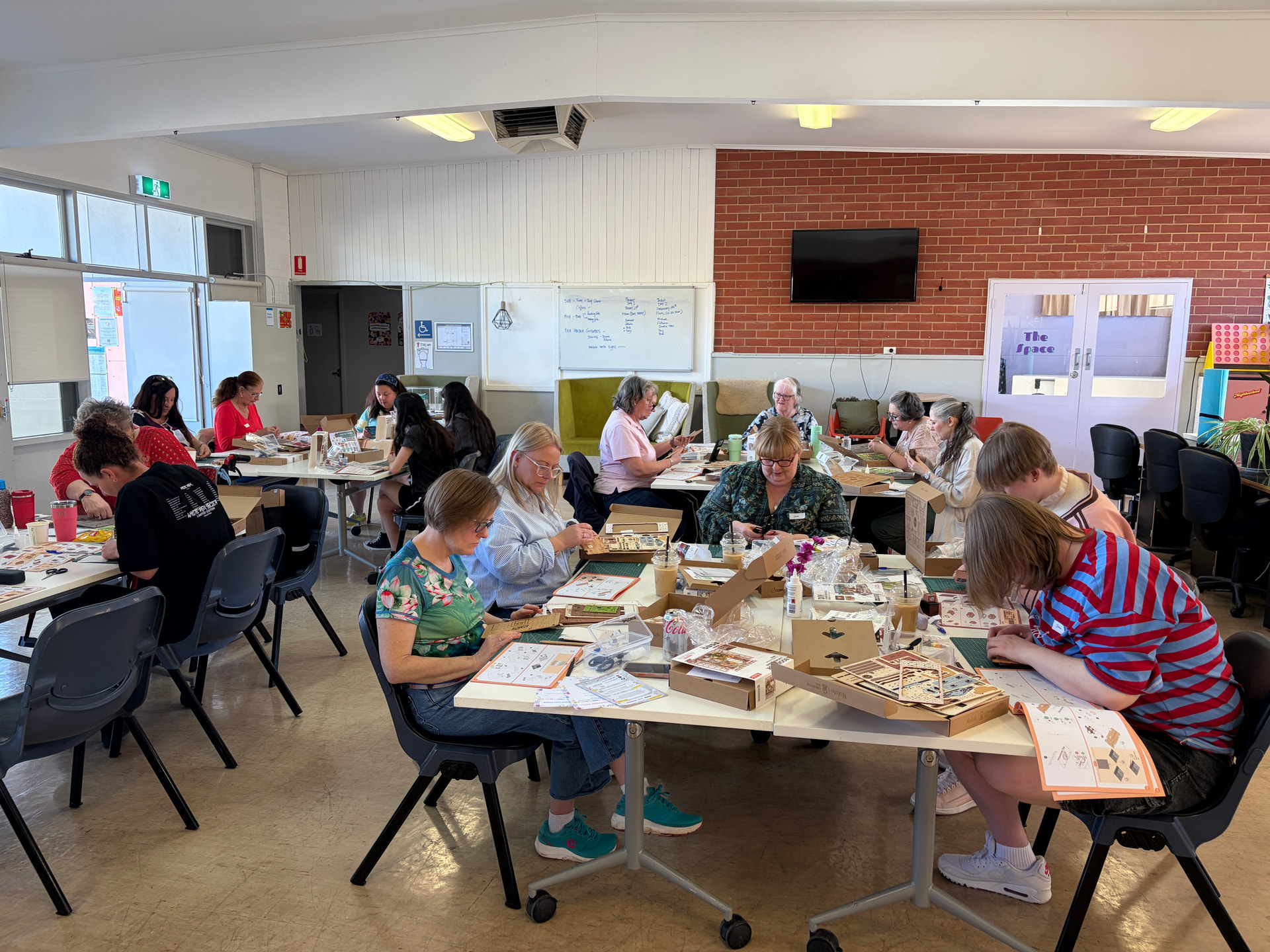
A random choice works only when people feel comfortable asking for help. That is where Jo found her favorite part of hosting: moving around the room for one-on-one guidance and talking about craft. The kit draw supplied the challenge; the people around each table made the challenge manageable.
The best kind of craft-day chaos
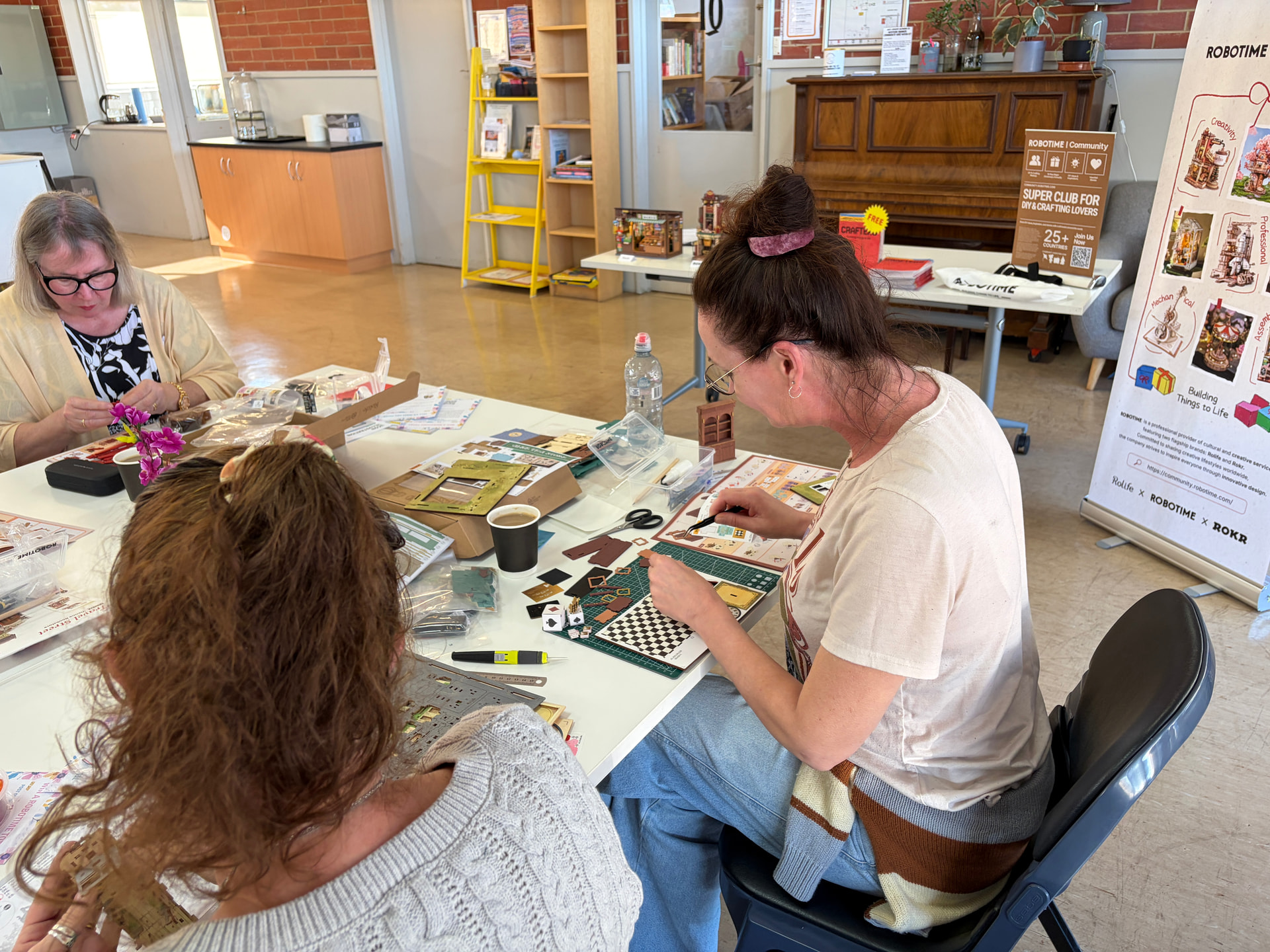
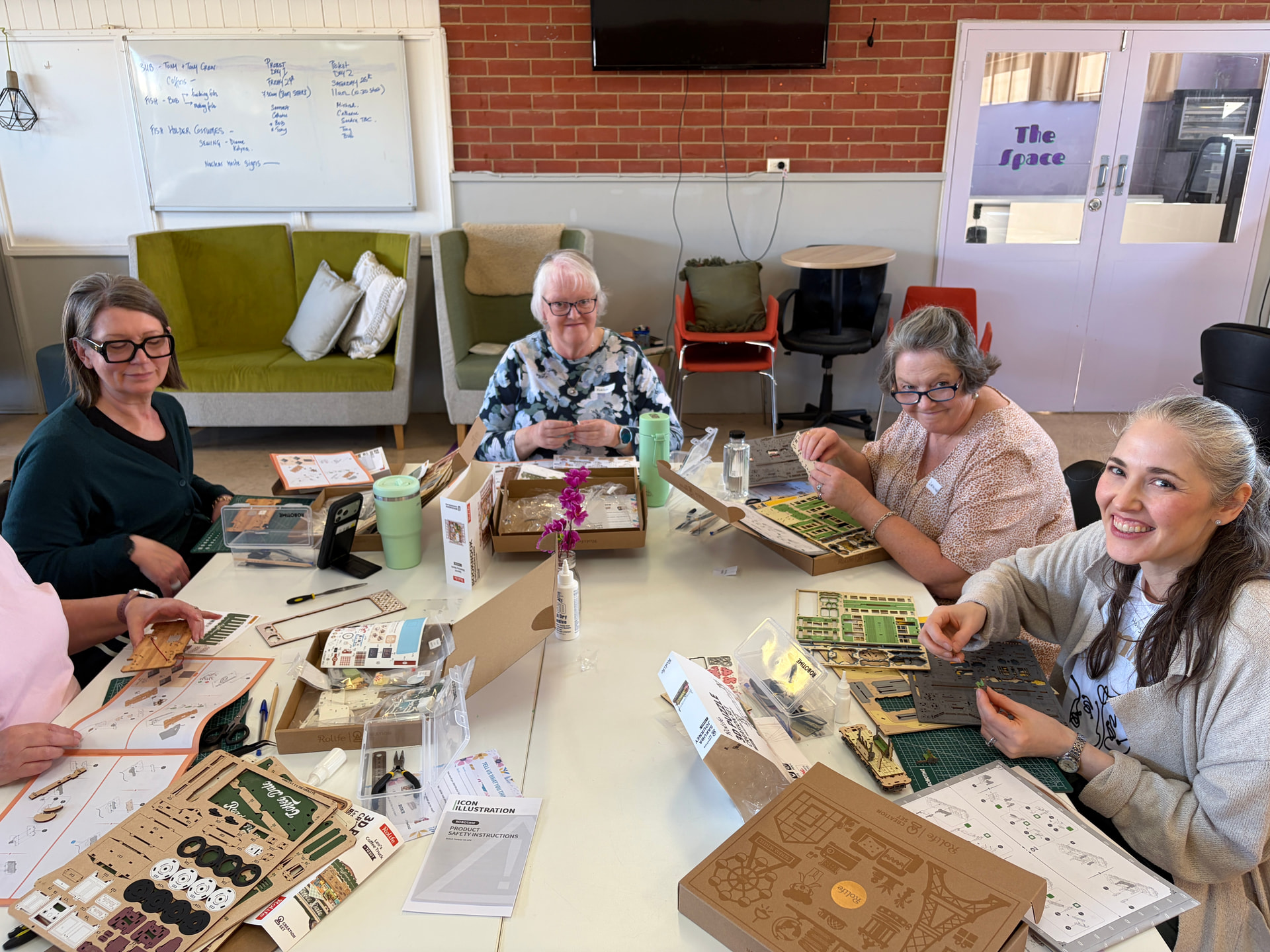
The room alternated between laughter and long stretches of concentration. Hands sorted tiny pieces, followed diagrams, and held new sections together while glue set. One participant worked on the recognizable green body of a miniature tram; another developed the interior of a book nook. These close-up moments show the event at its most practical: progress happened piece by piece, with instructions and neighboring makers always within reach.
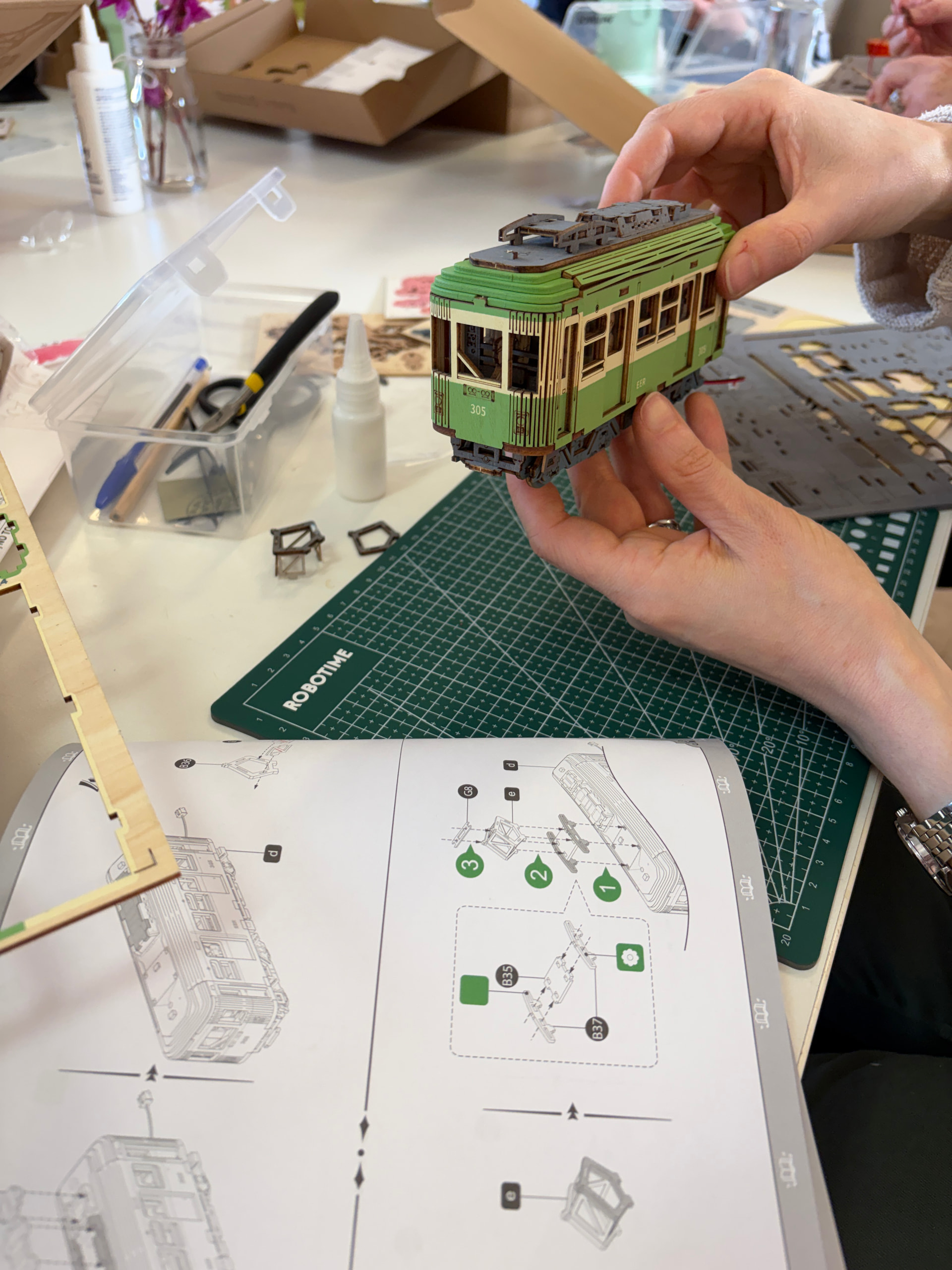
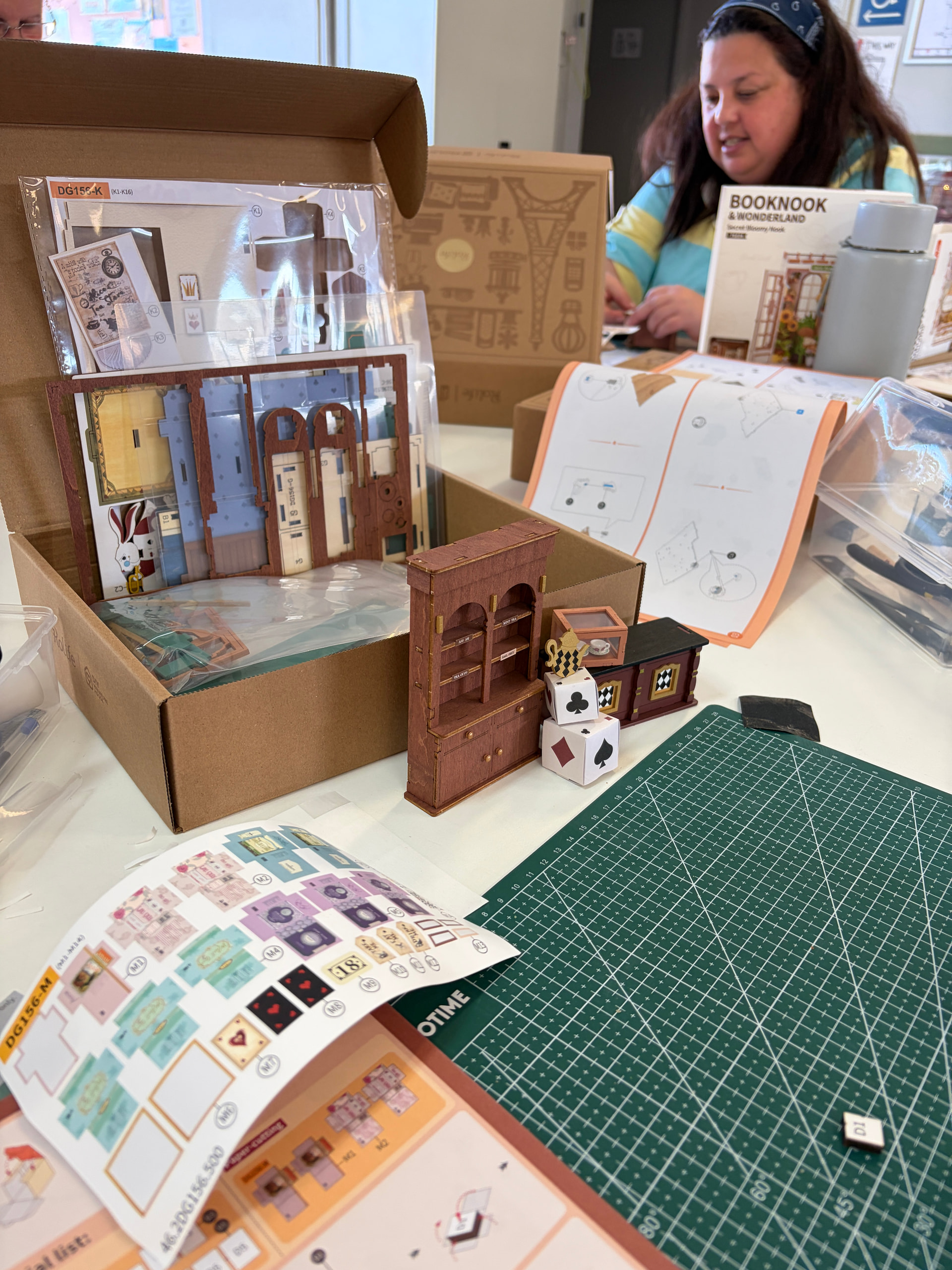
By then, the neat setup had given way to layers of open boxes, wooden sheets, cups, tools, and instructions. Jo described one especially busy table as “utter chaos, the signs of a successful craft day.” The line captures why the disorder felt joyful: every object on the table belonged to someone actively making, comparing, or helping.
A local circle ready for the next build
All 20 registered participants attended, including a replacement found after one guest became ill the night before. That complete turnout mattered to Jo because it reflected how much the group wanted to be there. It also gave the afternoon a sense of commitment: people arrived ready to participate, not simply observe.
The meetup did not end when the tables were cleared. Jo later shared that one participant had already bought another kit by the time she returned home that evening. A surprise project had not merely filled three hours; it had opened the door to the next build.
That is the quiet power of a local making circle. The kits give everyone something concrete to do, but the lasting result is confidence: confidence to begin an unfamiliar project, ask a stranger for help, and imagine returning with another box under one arm.
Want to find a gathering near you? Visit the Robotime Community and explore upcoming DIY & Crafting Club meetups.
Story and photos contributed by Jo Zanella and adapted by the Robotime Team. Read the Community announcement, preparation post, and host recap.

Robotime Creative Team
As Robotime's earliest audience and testers, they start from user needs and are dedicated to sharing stories and insights about the brand and its products.
Robotime is a creative lifestyle company dedicated to designing and developing 3D puzzles, toys, and wooden handicrafts. Subscribe to learn more.
Enjoy Robotime building guides and creative inspiration?
Add Robotime as a Preferred Source on Google to see more of our latest stories in Search.
 Add Robotime to your Preferred Sources
Robotime Creative Team
As Robotime's earliest audience and testers, they start from user needs and are dedicated to sharing stories and insights about the brand and its products.



Leave a comment
This site is protected by hCaptcha and the hCaptcha Privacy Policy and Terms of Service apply.