




What makes a miniature feel seasonal? It is not always a complete rebuild. Sometimes the strongest transformation begins by noticing what the original design already suggests.
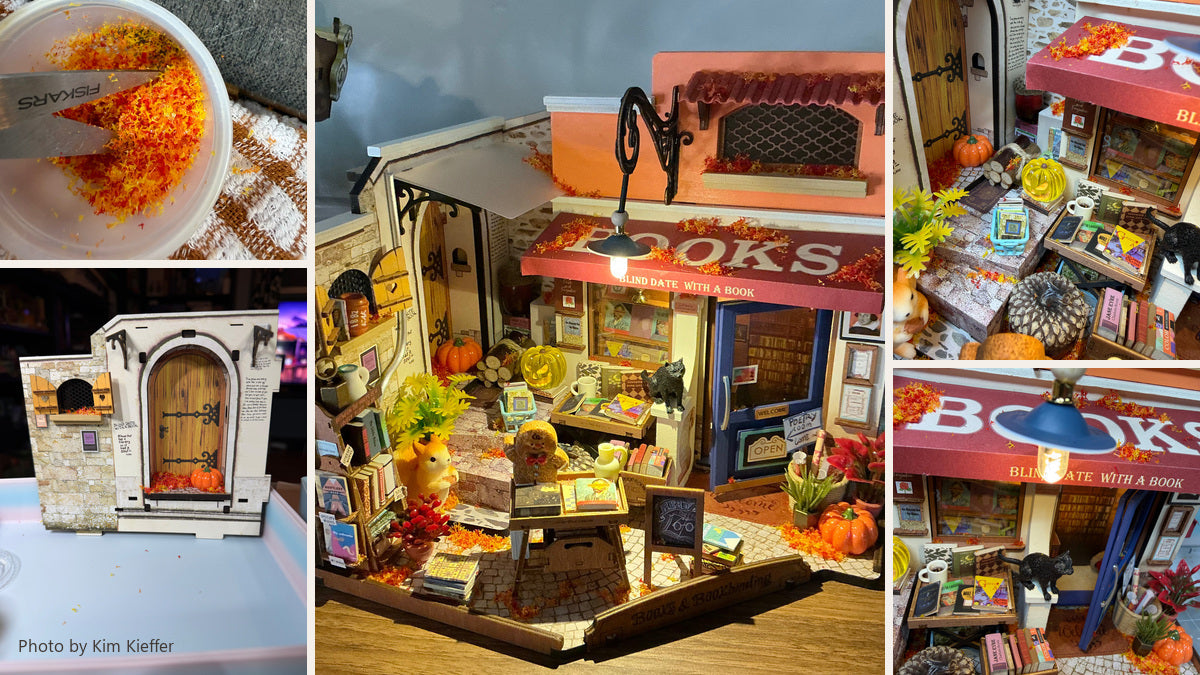
For her fall Rolife meetup in Fishers, Indiana, Community member Kim Kieffer chose the Rolife Corner Bookstore DG164 as one of the projects guests could build. Before the gathering, she made her own autumn version to show how a few deliberate choices could shift the atmosphere without hiding the character of the original bookstore.
Let the original palette choose the season
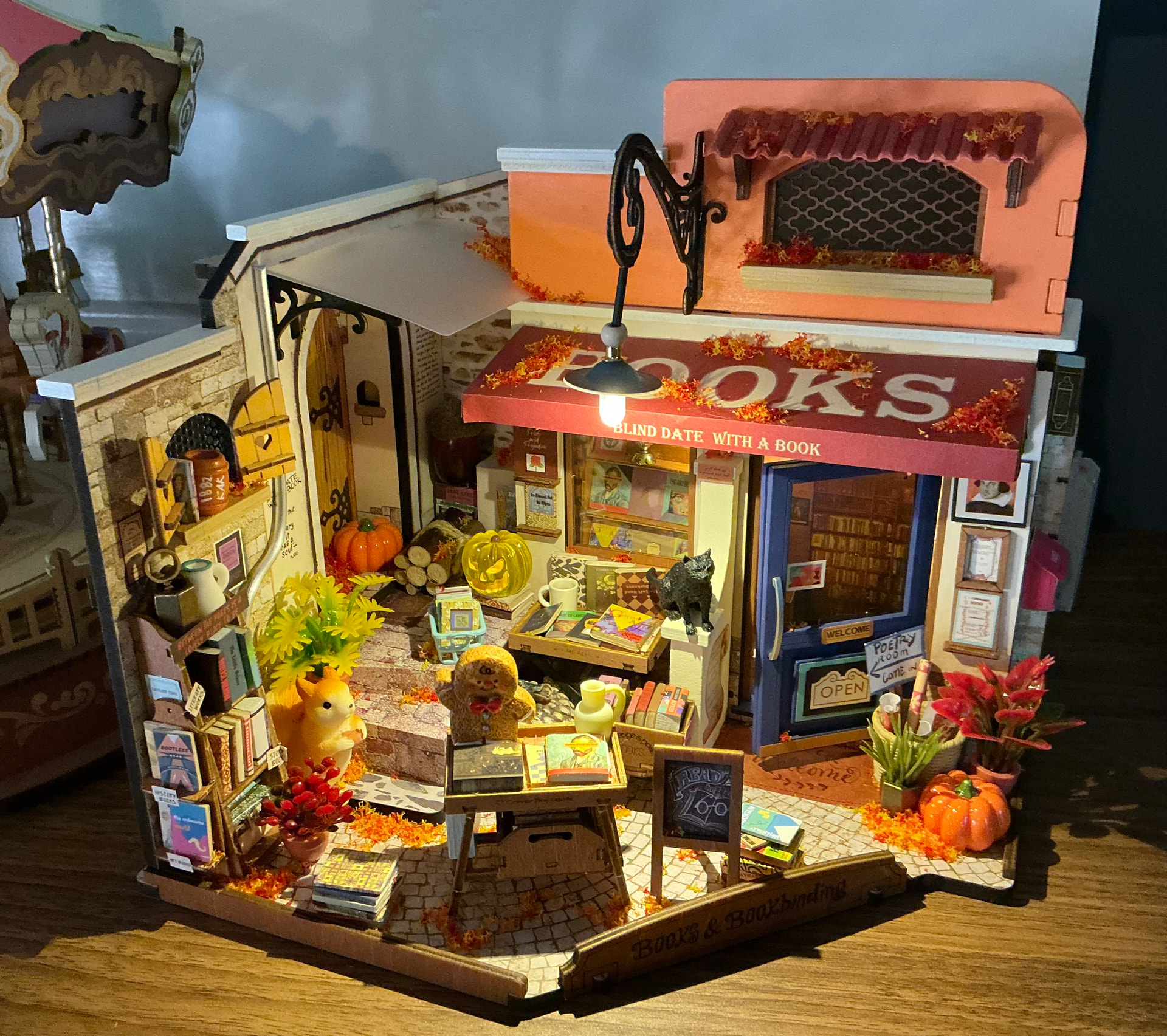
Kim did not begin with a theme and force it onto the model. She began with the model itself. The orange upper wall, red awning and blue door already felt compatible with a fall palette, so autumn became a natural extension of the kit rather than a layer placed on top of it.
That is a useful way to approach any customized miniature: look first for colors, textures and architectural details that can support the mood you want. Working with those cues creates a result that feels cohesive even when the added pieces come from several sources.
Customize selectively instead of changing everything
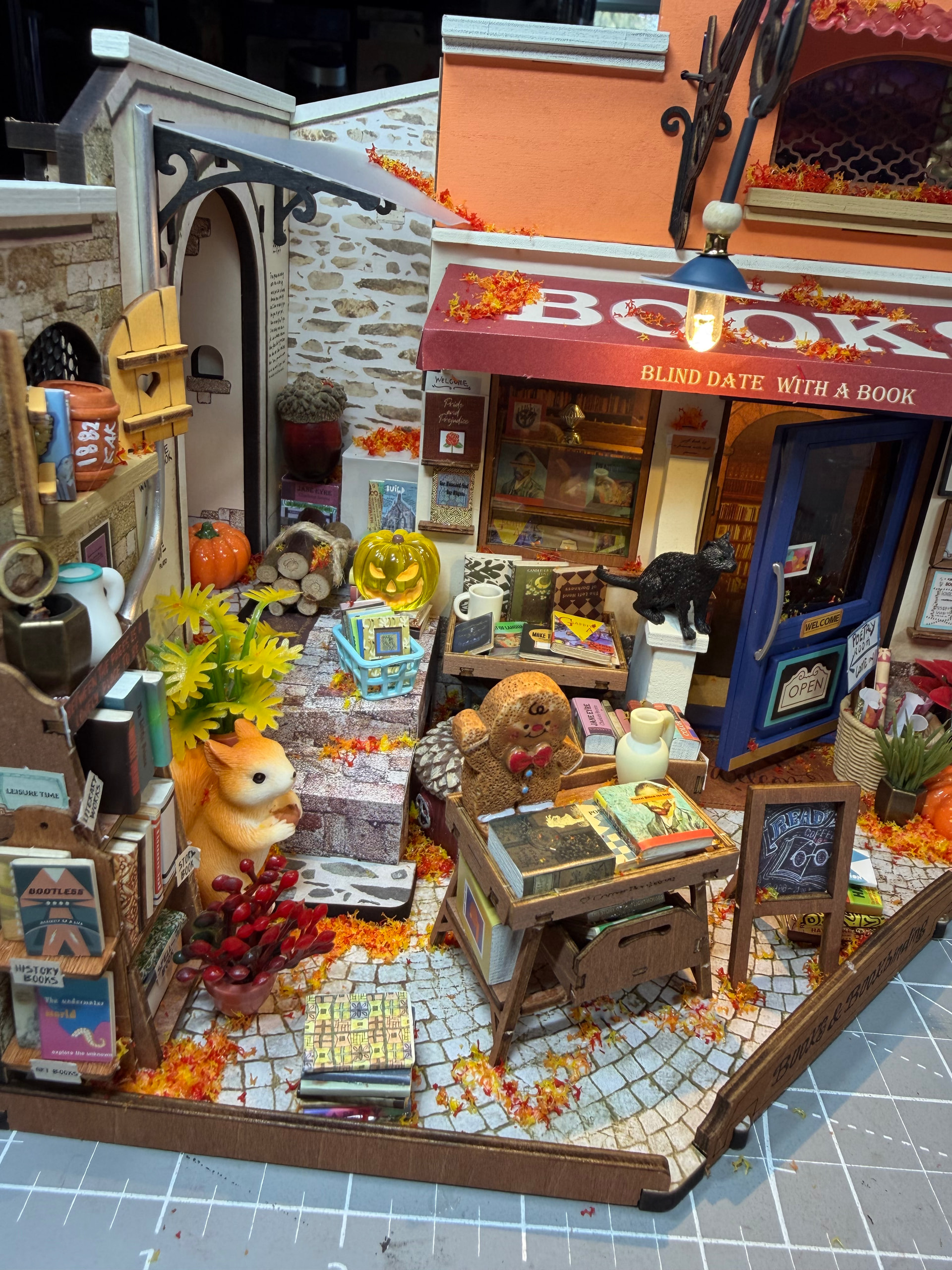
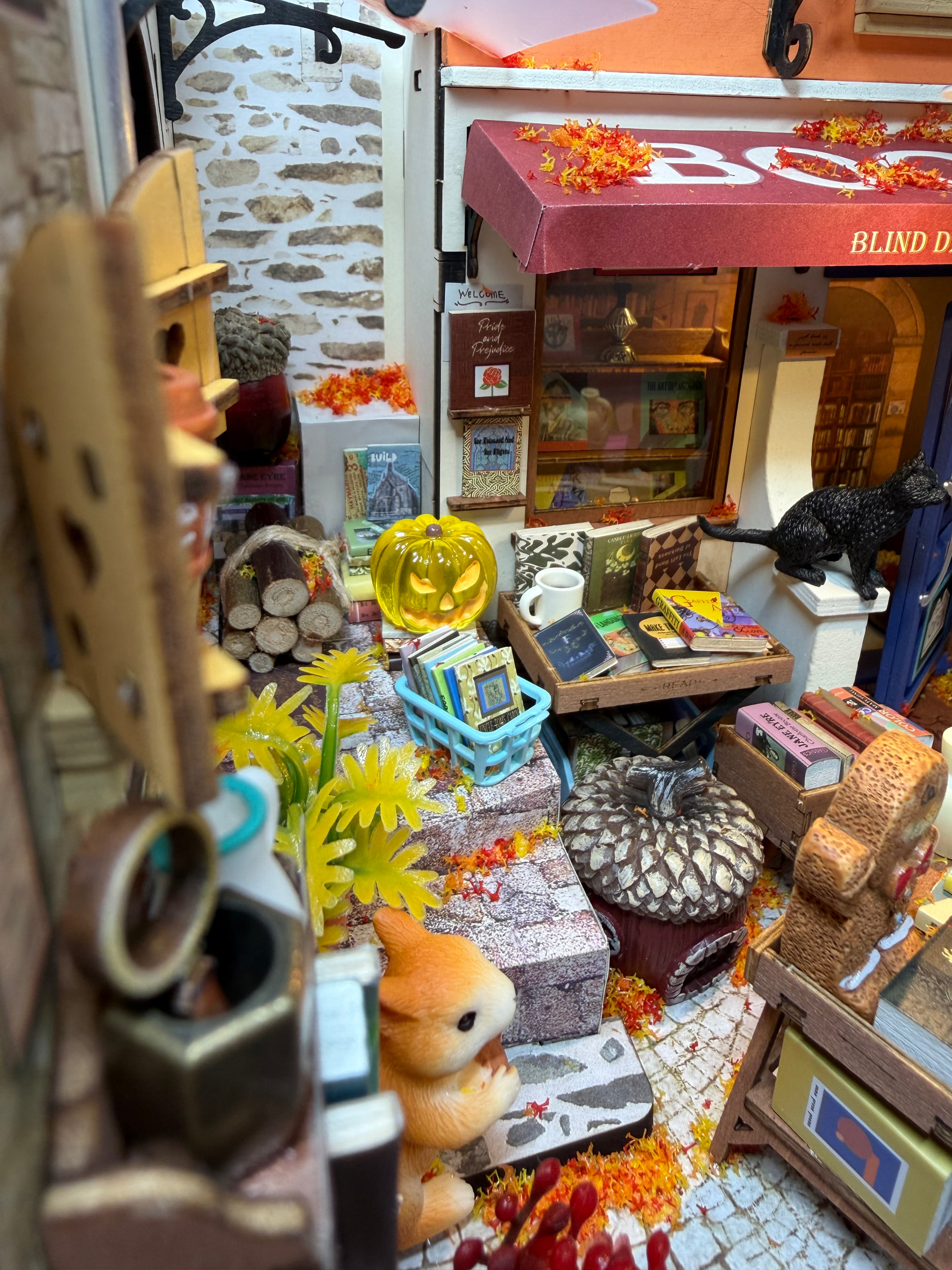
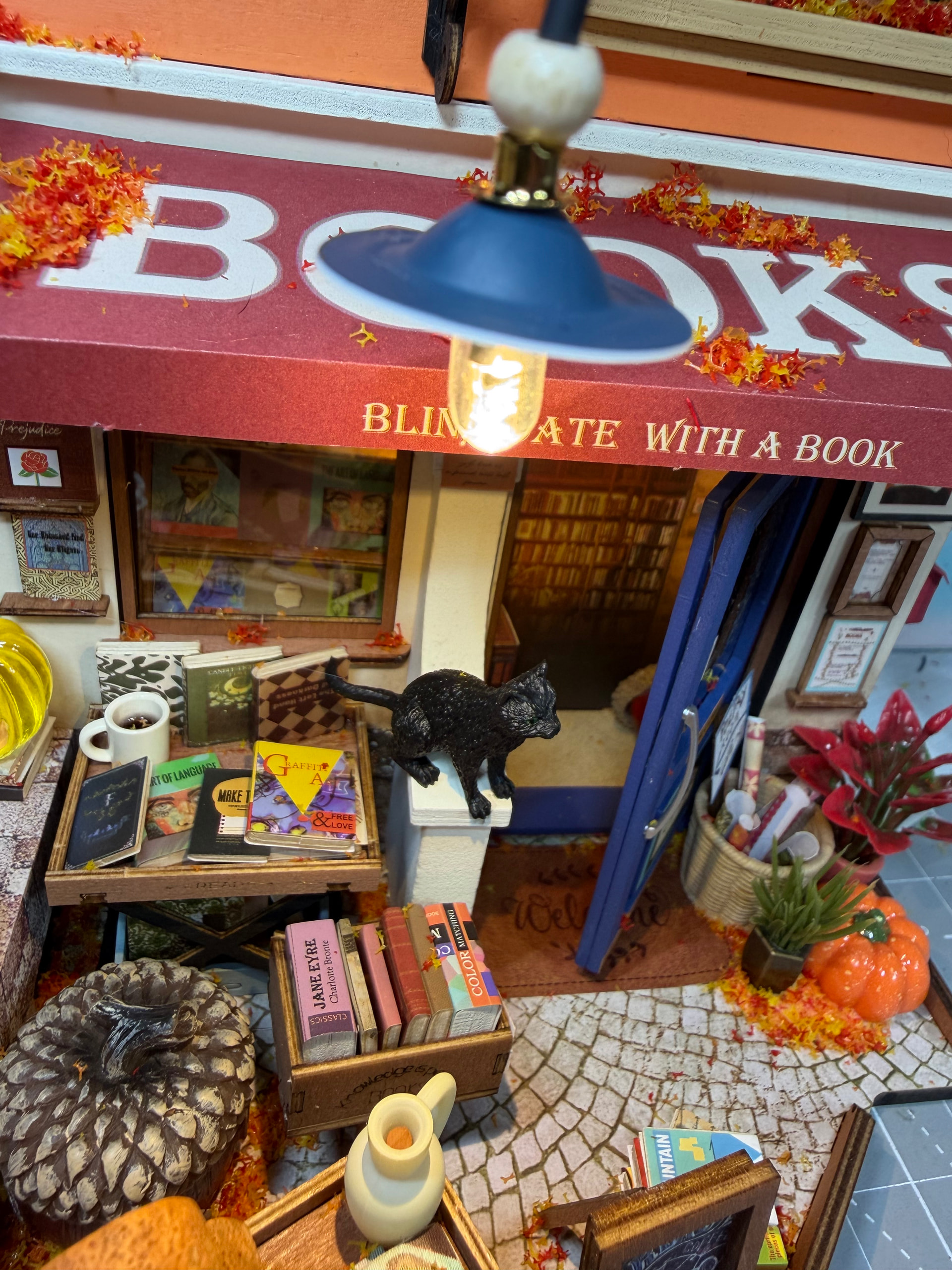
Rather than using every item in the customization materials, Kim edited. She changed placements, combined selected pieces with objects from her own miniature stash and replaced details only where they could strengthen the story. The original statue gave way to a squirrel, while fall-like plants, pumpkins, logs, a black cat, an acorn house and a gingerbread figure made the bookstore feel inhabited by a playful cast of seasonal visitors.
“You do not have to change everything to make something feel like your own.”
The lesson is restraint. A few specific substitutions can be more memorable than changing every surface, especially when the original design still provides the structure and visual rhythm.
Build depth with layered details
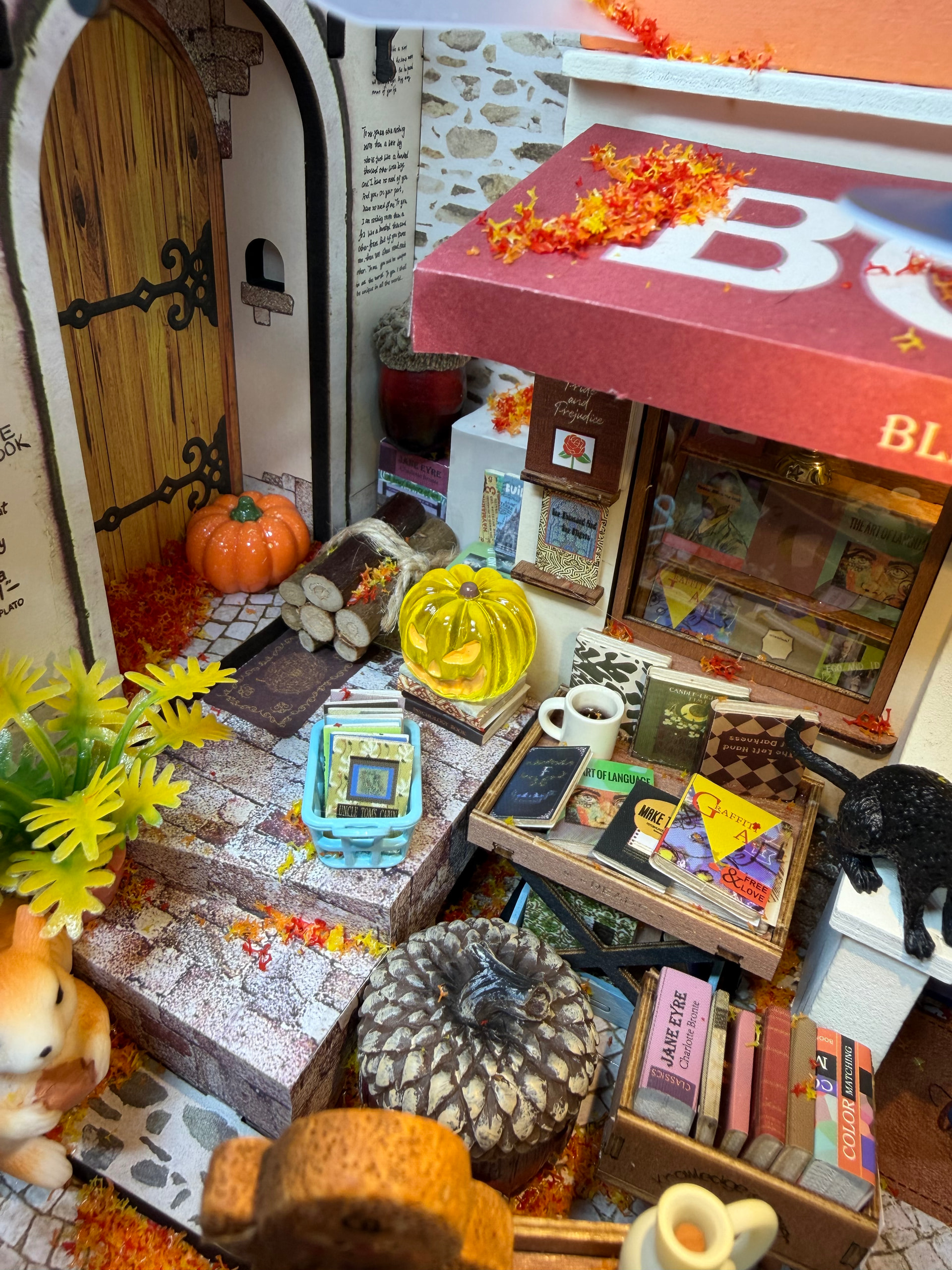
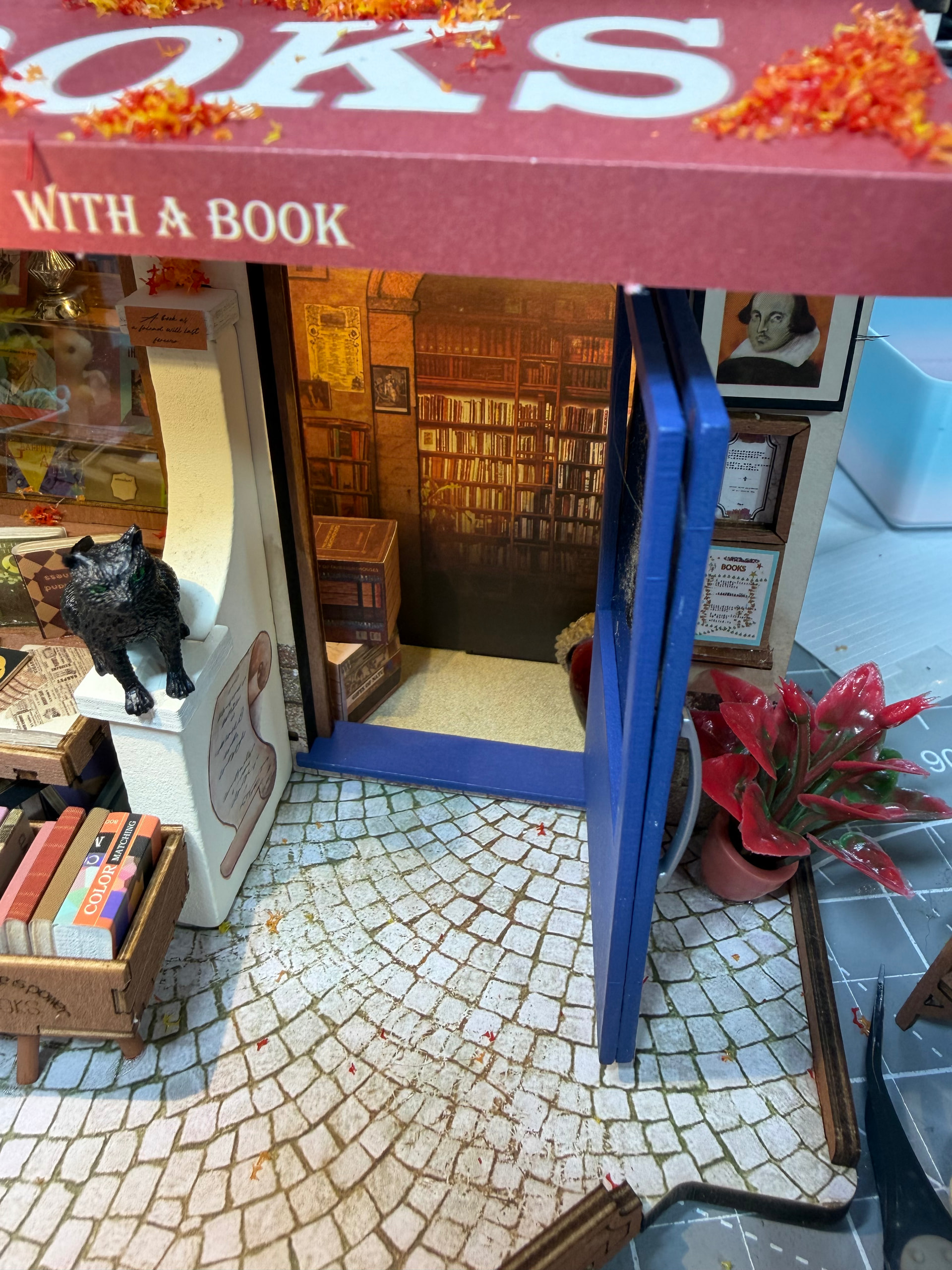
Kim placed some additions deeper inside the open-front structure, where they reveal themselves as the viewer changes position. Books and leaves lead the eye toward the doorway; animals, plants and tabletop objects occupy different depths instead of forming one flat decorative row.
This kind of layering matters in a miniature because the scene is experienced from more than one angle. A partially hidden object can reward a closer look, while an open path through the foreground keeps the main architecture readable.
Make flocking look like fallen leaves
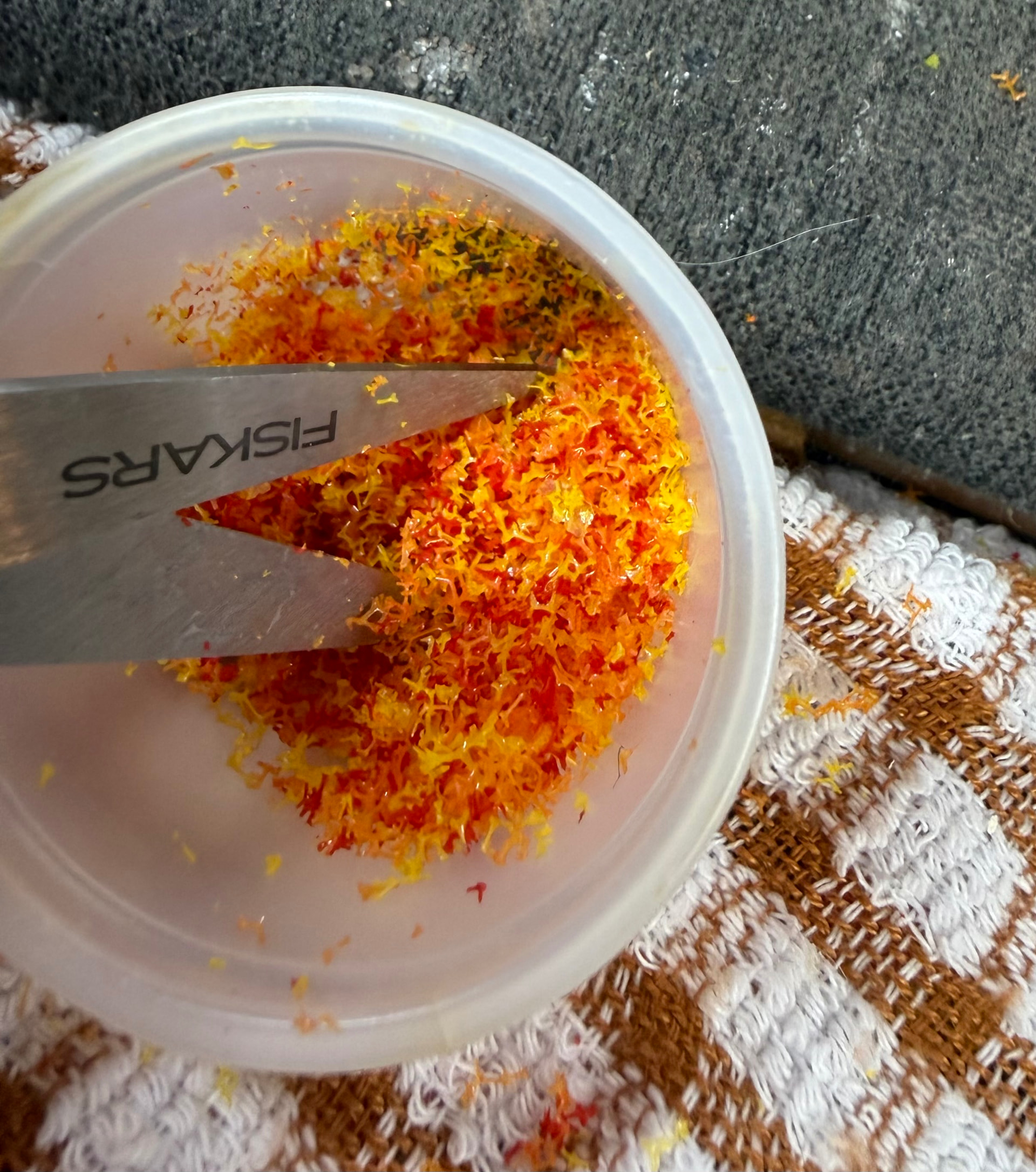
The biggest visual change came from flocking. Kim snipped some of the material into finer pieces, then mixed the smaller fragments with larger ones. The variation kept the leaf texture from looking too uniform.
She also used the flocking generously—across the roof, awning, steps, paths and corners—so the scene suggested that fall had actually happened around the building. The leaves connect separate areas of the model and make the seasonal idea visible at first glance.
Plan decoration during assembly
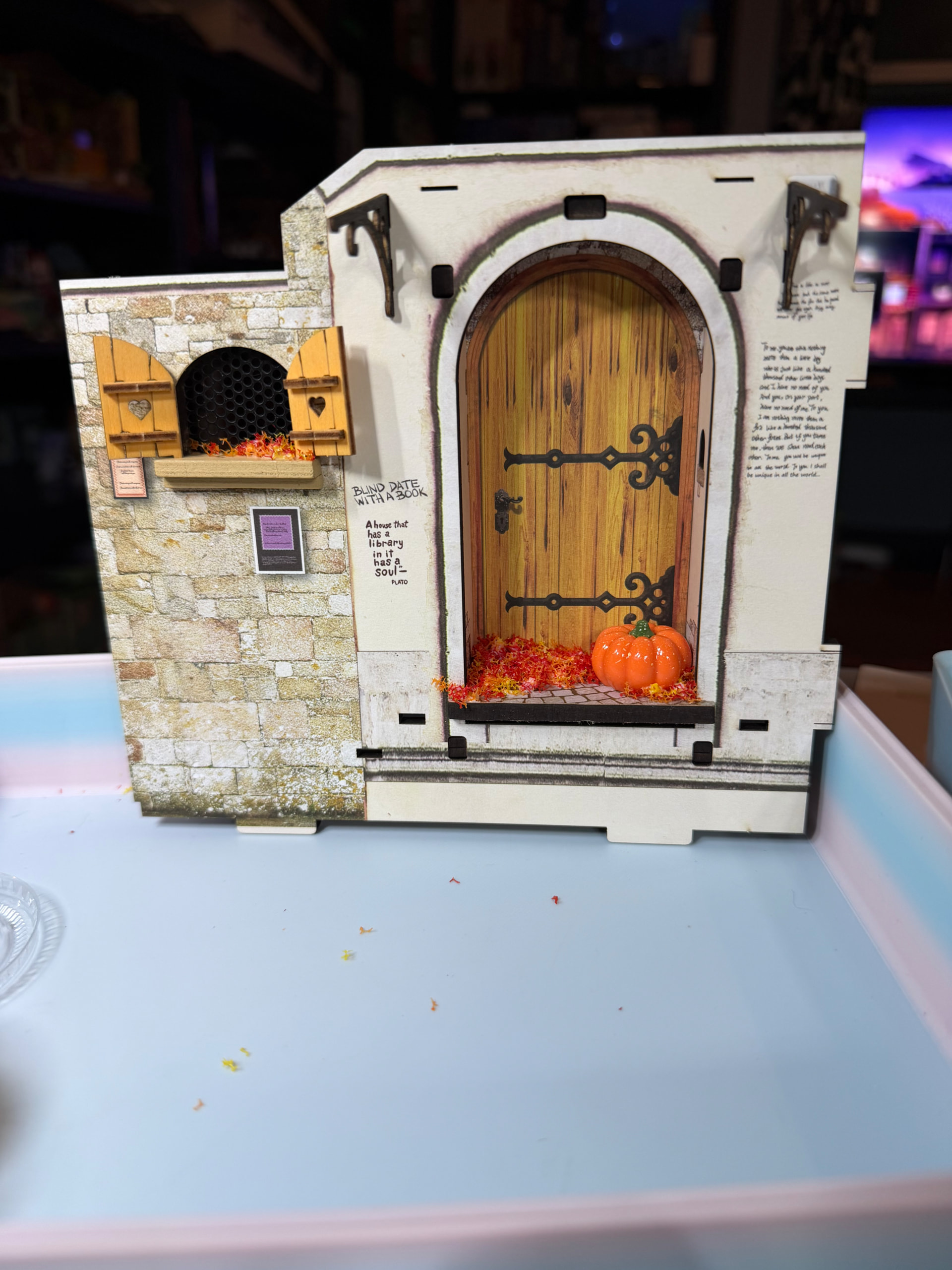
Seasonal details were not all added after the bookstore was complete. Kim applied flocking to difficult-to-reach places during construction and checked the product-box image as she worked, taking care not to cover components that still needed to be installed.
The process was not flawless—two delicate pieces broke—but planning the custom work alongside the standard assembly made inaccessible corners easier to finish. For builders adapting a kit, it helps to pause before closing a wall or attaching a facade and ask which surfaces will soon become hard to reach.
Use warm light to unify the scene
Kim especially enjoyed the kit's lighting and wiring. Once illuminated, the warm glow pulled together the reds, oranges and golden leaf tones. It also changed the bookstore from a display of separate objects into a place that seems ready for an evening visitor.
A familiar bookstore with a new season
Kim's Corner Bookstore remains unmistakably the original design, yet it tells a different story. Color guided the theme, selective substitutions gave it character, layered objects invited closer viewing and varied flocking made the season feel present throughout the scene.
For another take on the same starting point, explore the original Rolife Corner Bookstore DIY Miniature House Kit DG164.

Creative build and photography by Robotime Community member Kim Kieffer. This project includes personal modifications and additional materials that are not included with the original kit.
See every angle and read Kim's complete process in her original Robotime Community post.


Robotime Creative Team
As Robotime's earliest audience and testers, they start from user needs and are dedicated to sharing stories and insights about the brand and its products.
Robotime is a creative lifestyle company dedicated to designing and developing 3D puzzles, toys, and wooden handicrafts. Subscribe to learn more.
Enjoy Robotime building guides and creative inspiration?
Add Robotime as a Preferred Source on Google to see more of our latest stories in Search.
 Add us on Google
Robotime Creative Team
As Robotime's earliest audience and testers, they start from user needs and are dedicated to sharing stories and insights about the brand and its products.
Robotime is a creative lifestyle company dedicated to designing and developing 3D puzzles, toys, and wooden handicrafts. Subscribe to learn more.


Leave a comment
This site is protected by hCaptcha and the hCaptcha Privacy Policy and Terms of Service apply.